

Yes Dogs can eat watermelon in moderation. Fresh watermelon flesh can be a refreshing occasional treat for many healthy dogs, especially when the weather is warm.
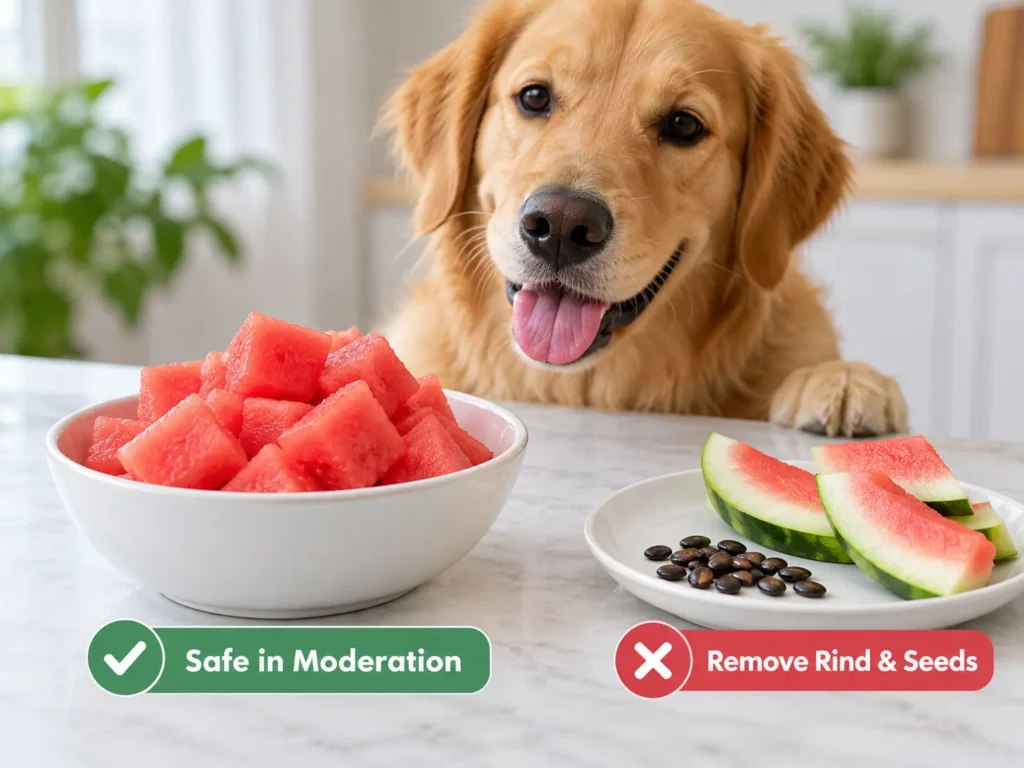
However, preparation matters. Remove the rind and seeds before giving watermelon to your dog cut the flesh into small bite-sized pieces and avoid watermelon products containing added sugar or artificial sweeteners. AKC and veterinary-reviewed PetMD guidance both warn that the rind is difficult to digest and may contribute to choking or intestinal blockage while seeds should also be removed.
Is Watermelon Good For Dogs?
Watermelon can be a nice occasional snack for dogs rather than an essential part of their diet.
One reason dogs may enjoy it during summer is its high water content. Watermelon is approximately 92% water, so a few pieces can provide some extra moisture alongside your dog’s normal access to fresh drinking water. It also naturally contains nutrients including vitamins A, B6 and C, along with potassium. That doesn’t mean your dog needs watermelon for these nutrients. A complete and balanced dog food should remain the main source of nutrition.
Benefits of Watermelon For Dogs
When served properly and in a sensible portion, watermelon has a few qualities that make it an appealing dog treat.
- It is relatively low in calories, contains a large amount of water and provides naturally occurring vitamins and minerals. Frozen pieces can also make an enjoyable warm-weather treat.
- The key word, however, is treat. Watermelon shouldn’t replace regular meals or be relied upon as a major source of hydration or nutrition.
How Much Watermelon Can a Dog Eat?
There isn’t one serving size that fits every dog. A Chihuahua and a Labrador obviously shouldn’t receive the same portion. Your dog’s size, weight, age, activity level and overall health all matter.
A practical approach is to start with one or two small bite-sized pieces if your dog has never eaten watermelon before. Larger dogs can generally have a few pieces, while smaller dogs need less.
Veterinary nutrition guidance commonly recommends keeping treats including fruit to no more than about 10% of a dog’s daily calories, with the majority of calories coming from complete and balanced dog food. If you are introducing watermelon for the first time, give a small amount and see how your dog responds before offering more.
Can Dogs Eat Watermelon Rind?
No. It is better to remove the watermelon rind completely. The rind is tough and much harder for dogs to digest than the soft fruit. A large piece may become a choking hazard or potentially contribute to an intestinal obstruction, particularly if a dog swallows it without chewing thoroughly.
If your dog steals a tiny bit of rind, it doesn’t automatically mean there will be a problem. Monitor your dog closely. Contact your veterinarian if your dog swallowed a large amount or develops symptoms such as repeated vomiting, abdominal discomfort, unusual tiredness, loss of appetite or difficulty passing stool.
Can Dogs Eat Watermelon Seeds?
It’s safest to remove the seeds before feeding watermelon to your dog. A dog accidentally swallowing one or two small seeds will not necessarily become ill, but deliberately feeding seeded watermelon isn’t recommended. Seeds can present a choking concern, particularly for smaller dogs, and consuming many seeds may contribute to digestive problems or blockage.
Solid Information: For easy preparation, seedless watermelon is usually the more convenient choice.
Can Dogs Eat Seedless Watermelon?
Yes. Seedless watermelon can be one of the easiest forms to prepare for dogs, provided you still remove the rind. Remember that seedless watermelons can contain small soft white seed coats. The main concern is avoiding large mature seeds and the tough rind. Serve only the plain flesh in appropriately sized pieces.
Can Dogs Eat Yellow Watermelon?
Yes, Healthy Dogs can generally eat yellow watermelon under the same basic rules as red watermelon: serve only the flesh, remove the rind and seeds, and keep the portion small. The color of the flesh doesn’t change the basic feeding precautions.
Can Dogs Eat The Green Part Of a Watermelon?
No. If by the green part you mean the outer rind, it should not be intentionally fed to your dog. The soft watermelon flesh is the part you want to serve.
This distinction is particularly important because many dogs don’t chew food as thoroughly as humans, making large pieces of tough rind more problematic.
Can Dogs Eat Watermelon Every Day?
Watermelon is better viewed as an occasional treat rather than a daily dietary requirement. A tiny amount may be tolerated by many healthy dogs, but serving it every day can unnecessarily add sugar and extra calories. Feeding too much fruit may also lead to digestive upset. Your dog’s normal food should provide the nutritional balance they need.
Can Small Dogs Eat Watermelon?
Yes, but portion size becomes especially important. Cut watermelon into very small pieces and start with only a little. Small dogs have lower calorie requirements, so what looks like a small human serving may actually be a significant treat for them.
Pro Tip: Removing every piece of rind and any large seeds is particularly important for smaller breeds.
Can Puppies Eat Watermelon?
Healthy puppies can generally have a very small amount of plain watermelon flesh, but they don’t need it nutritionally. Puppies need a carefully balanced diet to support growth, so treats should remain a small part of what they eat.
Start with a tiny piece and monitor for diarrhea, vomiting or other digestive changes. If your puppy has a sensitive stomach, medical condition or special diet, ask your veterinarian before introducing new human foods.

Can Dogs With Diabetes Eat Watermelon?
This is something to discuss with your veterinarian. Watermelon naturally contains sugar, and dogs with diabetes, obesity or other conditions requiring dietary control may need tighter limits or may be advised to avoid it altogether. PetMD and Purina specifically note that some dogs with health conditions such as diabetes may not be appropriate candidates for watermelon treats.
Pro Tip: For a healthy dog, small amounts are different from feeding large bowls of fruit.
Can Too Much Watermelon Be Bad For Dogs?
Yes. Even safe foods can cause problems when dogs eat too much of them.
Excess watermelon may cause:
- loose stool or diarrhea
- gas
- bloating
- stomach discomfort
- vomiting in some dogs
These issues are more likely when a dog suddenly eats a large amount or isn’t accustomed to fruit.
How To Give Watermelon To Your Dog Safely
Preparation is straightforward. Wash the outside of the watermelon first. Cut it open, remove the rind and large seeds, and then cut the flesh into pieces appropriate for your dog’s size. You can serve it fresh or freeze small pieces for a cool summer snack.
Avoid adding sugar, syrup, chocolate, whipped cream or other toppings. Watermelon-flavored candies and drinks are also different from fresh fruit and may contain ingredients that aren’t suitable for dogs. Purina advises against watermelon-flavored products containing added sugars, additives or sweeteners.
What About Frozen Watermelon?
Plain frozen watermelon can be a fun occasional treat. Remove the rind and seeds first, then freeze small pieces. Don’t make the chunks excessively large or hard for small dogs. Allowing them to soften slightly before serving can make them easier to eat.
Is Watermelon Better Than Regular Dog Treats?
Not necessarily. Watermelon can provide variety, but commercially formulated dog treats may be easier to portion and are specifically designed for dogs. Think of watermelon as an optional extra rather than a better replacement for your dog’s normal diet.
When Should You Avoid Giving Your Dog Watermelon?
It may be sensible to avoid watermelon or ask your veterinarian first if your dog:
- has diabetes or another condition requiring controlled sugar intake
- is on a prescription or restricted diet
- regularly experiences digestive problems
- has reacted poorly to fruit previously
- needs strict weight management
Dogs with known health conditions should have dietary changes considered in the context of their complete diet.
My Dog Ate Watermelon Rind What Should I Do?
First, consider how much your dog ate and your dog’s size. A tiny piece may pass without causing a problem. A large amount, particularly in a small dog, deserves more attention because the rind is difficult to digest.
Watch for persistent vomiting, abdominal pain, loss of appetite, unusual lethargy, diarrhea or difficulty passing stool. These can be signs that veterinary advice is needed. AKC and PetMD both highlight intestinal obstruction as one of the reasons watermelon rind should be avoided.
If you’re concerned about the amount swallowed, contacting your veterinarian is the safest course.
Final Takeaway
So can dogs eat watermelon? Yes most healthy dogs can enjoy a little watermelon as an occasional treat. Keep it simple: serve the soft flesh, remove the seeds and rind, use small portions, and don’t let fruit replace your dog’s complete diet.
For a healthy dog, a couple of bite-sized pieces can be a refreshing treat. For dogs with diabetes, digestive conditions, obesity or another medical condition, check with your veterinarian before adding watermelon or other human foods to their diet.