
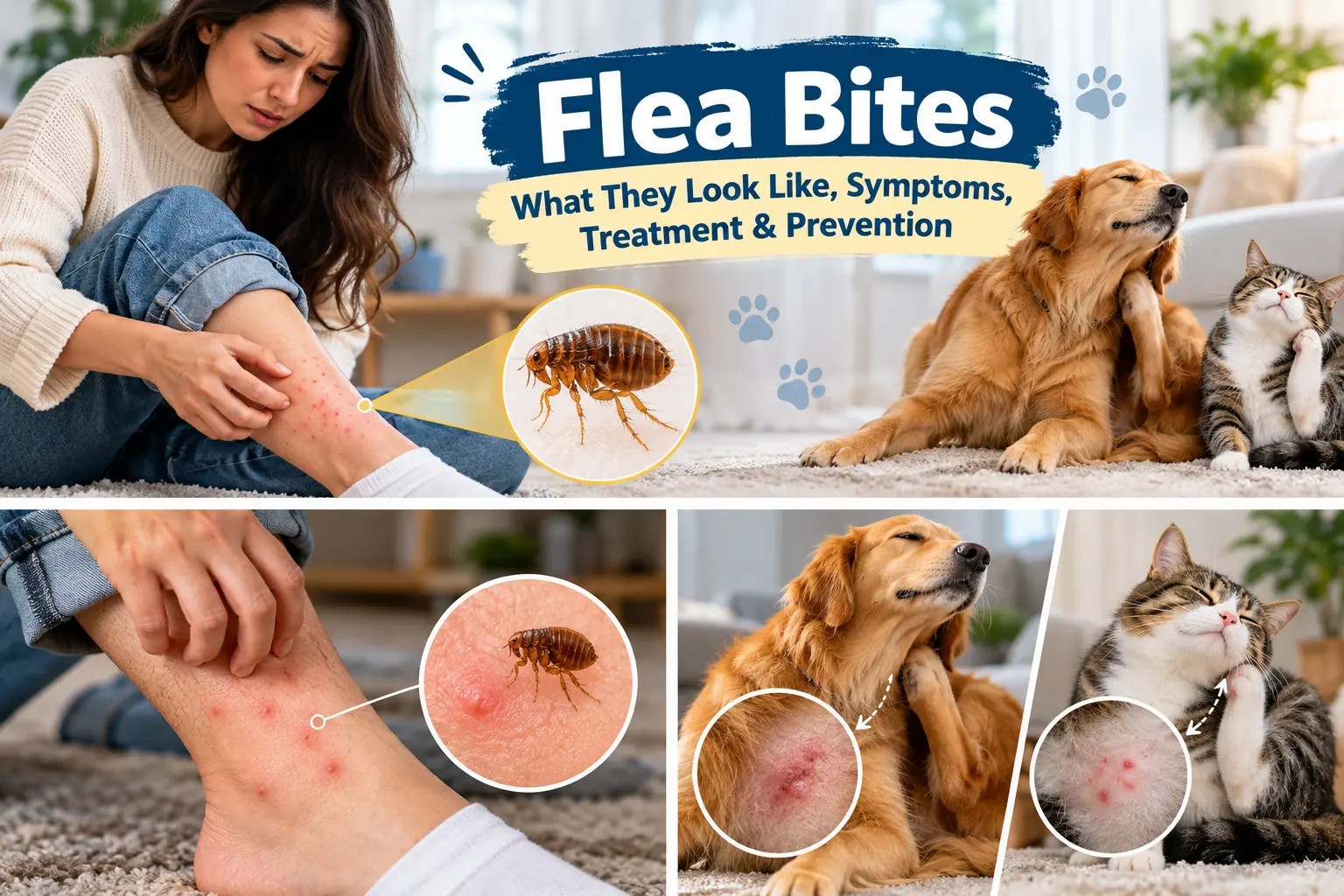
Flea Bites are small, itchy bumps caused when fleas feed on blood. They commonly appear around the ankles, feet and lower legs in humans, although they can occur elsewhere on the body.
Dogs and cats can also develop intense itching and skin irritation from fleas. In many homes, noticing flea bites on people can be one of the first signs that a pet or living area has a flea infestation.
Most flea bites are uncomfortable rather than serious, but excessive scratching can damage the skin and sometimes lead to infection. Some fleas can also carry organisms associated with disease, which is another reason flea control is important.
Quick Answer: What Do Flea Bites Look Like?
Flea Bites usually look like small, red, itchy bumps, often appearing in clusters or close together.
Common signs include:
- Small red or raised bumps
- Strong itching
- Mild swelling around the bite
- Several bites close together
- Bites concentrated around the ankles, feet, or lower legs
Because fleas usually stay close to ground level, bites commonly affect the feet and ankles. However, flea bites can sometimes look similar to mosquito bites, bed bug bites, allergic rashes, or other insect bites. Appearance alone may not always confirm the cause.
What Causes Flea Bites?
Fleas are tiny insects that survive by feeding on blood from animals or humans. Dogs and cats are common hosts and fleas can enter a home through pets, wildlife, or flea-infested environments.
Once inside, fleas and their developing stages may be found around:
- Pet bedding
- Carpets
- Rugs
- Upholstered furniture
- Floor edges
- Cracks and crevices
- Areas where pets frequently sleep
Although most common fleas prefer animal hosts, humans can still be bitten when they are near an infested pet or environment.
Flea Bites on Humans
Flea bites on humans are particularly common around the lower part of the body.
You may notice them on the:
- Ankles
- Feet
- Lower legs
- Calves
They can also occur on other exposed areas depending on where the fleas are located. A typical human flea bite may begin as a small itchy red spot. Scratching can make the area look more inflamed and may increase the risk of skin irritation.
Flea Bite Symptoms in Humans
Common symptoms include:
- Itchy skin
- Small red bumps
- Localized redness
- Mild swelling
- Irritation or tenderness
- Clusters of bites
Some people react more strongly than others. A person who is particularly sensitive to insect bites may develop more noticeable swelling or an allergic-type skin reaction.
What Do Flea Bites Look Like on Humans?
Flea bites on humans often appear as tiny red bumps rather than large welts. One useful clue is their location. Flea bites frequently appear near the ankles and feet because fleas often live near floor level and can jump onto exposed skin.
They may appear:
- Individually: One or two isolated red bumps.
- In clusters: Several bites located in the same small area.
- Close together: Multiple bites may occur because a flea can move and feed again nearby.
If your article uses flea bites pictures, clearly state that images are examples only and should not be treated as a medical diagnosis.
Do Flea Bites Itch?
Yes. Flea bites commonly itch. The itching happens because the body reacts to substances introduced during the flea’s feeding process. For some people, itching is mild. Others may experience stronger irritation.
Try to avoid scratching because repeated scratching can damage the skin and increase the chance of a secondary infection.
How Long Do Flea Bites Last?
Mild flea bites often improve within several days, although the exact healing time varies from person to person.
How long flea bites last can depend on:
- Individual skin sensitivity
- Severity of the reaction
- Amount of scratching
- Whether additional bites are occurring
- Whether the skin becomes infected
If new bumps continue appearing the problem may not simply be that old bites are healing slowly. There may still be active fleas in the home or on a pet.
Flea Bites on Dogs
Fleas can cause much more than a few visible bumps on dogs.
A dog with fleas may repeatedly:
- Scratch
- Bite at its skin
- Lick certain areas
- Chew around the tail or hindquarters
- Appear restless
You may also notice:
- Red or irritated skin
- Hair thinning
- Small dark specks in the coat
- Fleas moving through the fur
- Scabs caused by scratching
Dogs that are sensitive to flea saliva can develop a stronger skin reaction and may become extremely itchy even with relatively few flea bites.
What Do Flea Bites Look Like on Dogs?
Flea Bites on dogs can be difficult to see because their fur hides much of the skin.
Instead of relying only on visible bites, look for signs such as:
- Frequent scratching
- Red skin
- Irritated patches
- Hair loss from chewing
- Small scabs
- Flea dirt in the coat
Use a flea comb to inspect areas around the neck, back, abdomen, groin, and base of the tail.
Flea Bites on Cats
Cats can also develop considerable irritation from fleas.
Possible signs include:
- Persistent grooming
- Scratching
- Biting the coat
- Small crusted bumps
- Hair thinning
- Restlessness
- Fleas or flea dirt in the fur
Some cats groom so efficiently that owners may rarely see an actual flea. If your cat is showing unexplained itching or skin irritation, a veterinarian can help determine whether fleas, allergies, mites, infection or another skin problem is responsible.
Can Cat Fleas Bite Humans?
Yes. The common cat flea can feed on humans, even though pets are usually the preferred host. This means you can develop cat flea bites on humans when spending time around an infested cat, bedding, carpeting, furniture or other flea-contaminated areas. Treating only the person’s bites will not solve the problem if fleas remain on the animal or inside the home.
Flea Bites vs Bed Bug Bites
Flea bites and bed bug bites can look similar, so location and circumstances often provide better clues than appearance alone.
| Feature | Flea Bites | Bed Bug Bites |
| Common location | Ankles, feet, lower legs | Exposed skin while sleeping |
| Appearance | Small itchy red bumps | Red itchy bumps or welts |
| Pattern | Small clusters | May appear grouped or in lines |
| Common source | Pets, carpets, animal areas | Beds, mattresses, furniture |
| Activity | Fleas can jump | Bed bugs crawl |
Pro Tip: Neither pattern is completely diagnostic. If you are finding bites repeatedly, inspect the environment rather than deciding based only on a picture.
Flea Bites vs Mosquito Bites
Mosquito bites generally create larger, more isolated itchy welts.
Flea bites are often:
- Smaller
- More numerous
- Closer together
- Concentrated around the ankles or lower legs
Environmental clues can also help. Multiple ankle bites plus a scratching pet suggest fleas more strongly than mosquitoes, although other causes are still possible.
Flea Bites vs Chigger Bites
Both can produce intensely itchy red bumps. Chigger bites are more strongly associated with outdoor exposure to grassy or brush-filled areas, while flea exposure is commonly associated with animals, pet bedding, flooring, or flea-infested environments.
Because many insect bites resemble one another, avoid identifying an insect based solely on skin appearance.
Flea Bites vs Sand Flea Bites
The term sand flea bites can refer to different organisms depending on the location. Some sand flea-related bites can affect the feet and ankles and cause redness, itching, and swelling. Certain species found in tropical areas can behave very differently from the ordinary fleas associated with dogs and cats.
For that reason, recent travel history is important if unusual lesions appear after visiting tropical or coastal areas.
How To Treat Flea Bites
Most mild flea bites can be managed with simple skin care.
For uncomplicated insect bites, commonly recommended measures include:
- Wash the affected skin with soap and water.
- Apply a cold compress for about 10–20 minutes.
- Avoid scratching.
- Consider calamine lotion or an appropriate anti-itch treatment.
- Ask a pharmacist or healthcare professional about suitable antihistamines or hydrocortisone when necessary.
These approaches can help reduce itching and swelling from minor insect-bite reactions. Treatment for a child, pregnant person, someone with allergies, or anyone taking medication should be discussed with an appropriate healthcare professional.
How To Get Rid Of Flea Bites Fast
There isn’t a method that makes an existing flea bite disappear immediately.
The practical goal is to:
- Reduce itching.
- Protect the skin from scratching.
- Prevent additional bites.
- Remove the flea source.
The fourth step is especially important. If fleas remain in your pet’s coat or home, you may continue developing new bites even while older ones are healing.
How To Stop Flea Bites From Itching
A few measures may make itchy flea bites more manageable:
- Apply a cool compress.
- Avoid hot scratching or rubbing.
- Keep fingernails short.
- Use an appropriate anti-itch product.
- Wear loose clothing over irritated areas when comfortable.
If itching is severe, persistent, or spreading well beyond the bites, speak with a healthcare professional.
Allergic Reaction To Flea Bites
Some people have a stronger reaction to flea bites than others.
Possible signs of a more significant reaction include:
- Larger areas of swelling
- Extensive redness
- Hives
- Severe itching
Seek urgent medical help if an insect bite is followed by signs of a severe allergic reaction, particularly breathing difficulty, swelling involving the face or mouth, dizziness, or collapse.
Can Flea Bites Be Dangerous?
Most flea bites produce itching and irritation, but fleas can sometimes carry organisms that cause disease. CDC notes that fleas can be associated with infections including flea-borne typhus and plague in certain circumstances and locations.
For most pet owners, however, the immediate concern is more commonly:
- Persistent itching
- Skin irritation
- Scratching
- Secondary skin infection
- Ongoing household infestation
Flea control is therefore important even when the bites themselves appear mild.
Can Fleas Live In Your Bed?
Fleas may be found around beds, but a human bed is not necessarily their primary habitat. If a pet sleeps on or near the bed, flea eggs and developing flea stages may end up around:
- Bedding
- Rugs
- Carpeting
- Furniture
- Floor cracks
So the better question is usually not simply,
- Can fleas live in my bed?
- Is there a flea infestation somewhere in the home?
That is why both the pet and household environment need to be checked.
Will a Shower Get Rid of Fleas?
A shower may wash away a flea that happens to be on your skin, but it will not eliminate a household flea infestation.
Fleas may still be present:
- On pets
- In carpets
- In pet bedding
- Under furniture
- Around floor edges
- In other areas where pets spend time
Therefore, washing yourself is not a substitute for treating the source.
How to Get Rid Of Fleas In The Home
Controlling fleas usually requires more than one action because different flea life stages may be present at the same time. CDC recommends a combined approach involving sanitation, pet treatment, and environmental control.
1. Treat Every Pet
All pets in the home should be checked.
Speak with your veterinarian about an appropriate flea-control product based on:
- Species
- Age
- Weight
- Health status
- Other medications
Never assume that a flea product made for dogs is safe for cats.
2. Wash Pet Bedding
Wash bedding and washable fabrics that pets frequently use.
This includes:
- Pet blankets
- Beds
- Washable covers
- Throws
3. Vacuum Thoroughly
Vacuum:
- Carpets
- Rugs
- Upholstery
- Under furniture
- Around baseboards
- Areas where pets sleep
CDC specifically recommends frequent vacuuming and cleaning as part of controlling household flea infestations.
4. Treat the Environment When Needed
More established infestations may require appropriate environmental flea-control measures.
The full flea lifecycle can make infestations difficult to eliminate quickly, so repeated cleaning and treatment may be needed.
How To Prevent Flea Bites
The best flea-bite prevention strategy for pet households is to prevent flea infestations in the first place.
Useful measures include:
- Check dogs and cats regularly.
- Groom pets routinely.
- Use veterinarian-recommended flea prevention.
- Wash pet bedding.
- Vacuum carpets and upholstered areas.
- Limit pets’ exposure to flea-infested animals.
- Address fleas promptly when discovered.
CDC recommends maintaining flea prevention for pets because fleas can persist whenever suitable animal hosts are available.
When Should You See a Doctor?
Most minor bites can be monitored at home, but medical advice is appropriate when symptoms become unusual or severe.
Seek medical attention if you notice:
- Increasing pain
- Significant swelling
- Pus or drainage
- Spreading redness
- Fever
- Open sores
- Severe allergic symptoms
- Bites that aren’t improving
- Unusual symptoms after recent travel
Also seek professional advice if you are unsure whether the skin problem is actually caused by fleas.
When Should Your Pet See a Veterinarian?
Contact your veterinarian if your dog or cat has:
- Severe or continuous scratching
- Significant hair loss
- Raw or bleeding skin
- Open sores
- Signs of skin infection
- Heavy flea infestation
- Weakness or unusual lethargy
- Recurring flea problems despite treatment
Young, small, elderly or medically vulnerable animals may need particularly prompt evaluation if an infestation is severe.
Final Thoughts
Flea bites are usually small, itchy bumps that often appear around the ankles and lower legs, but finding the source is more important than treating the skin alone. If you have dogs or cats, check them for fleas and flea dirt, clean the places where they sleep, and use an appropriate veterinarian-recommended flea prevention plan.
Treating the person, the pet and the environment together is the most effective way to stop the cycle of recurring flea bites.