
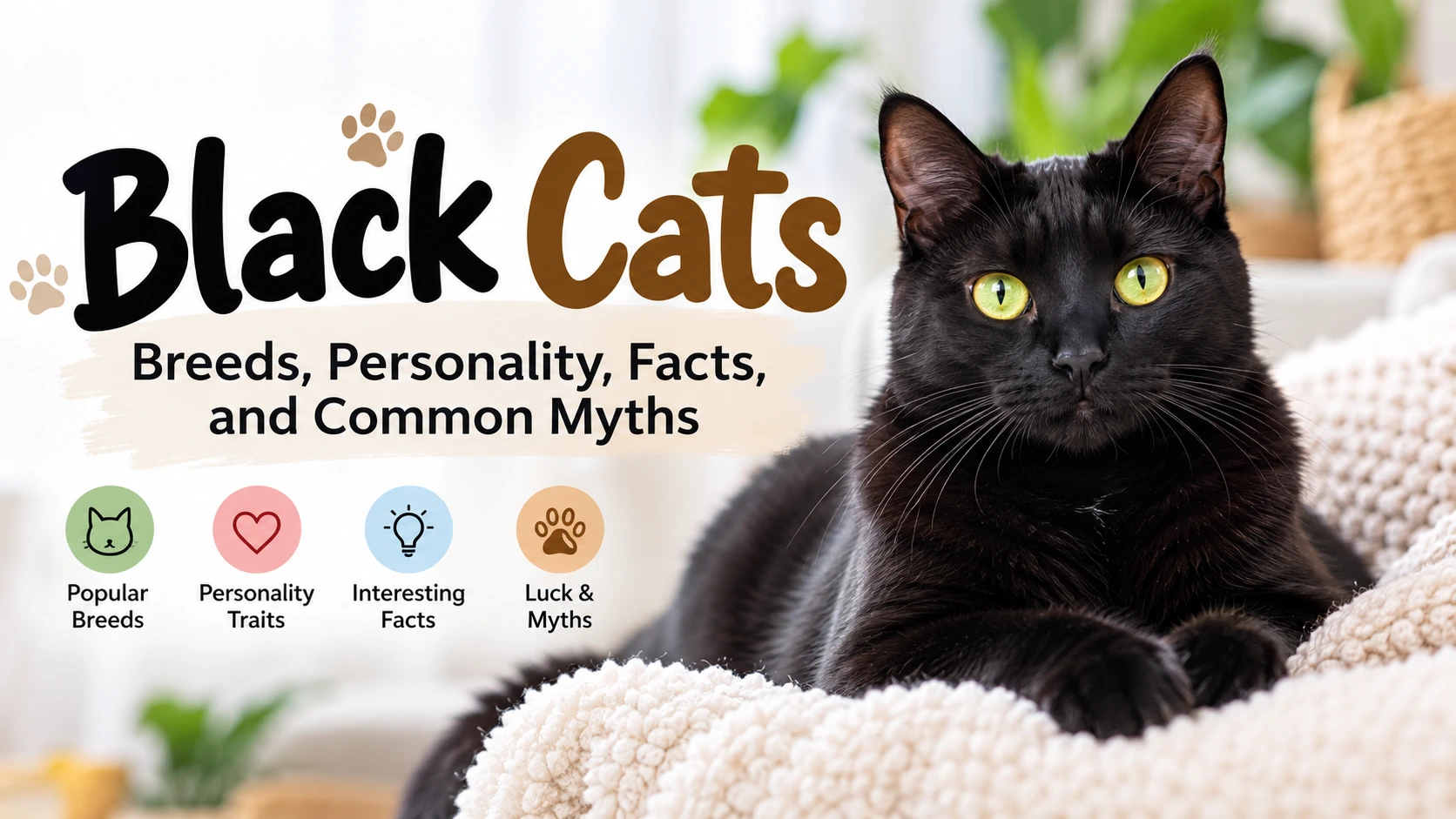
Black cats have a way of catching your attention. Their glossy coats, bright eyes and quiet movements make them look almost mysterious. But behind that striking appearance is an ordinary domestic cat with its own personality, habits, and needs. Some black cats are playful and outgoing. Others would rather curl up somewhere warm and watch the world go by. Their fur color doesn’t determine whether they’ll be affectionate, independent or energetic.
So what makes black cats different? Are they a specific breed? Why do some have green eyes while others have golden eyes? And where did the idea that black cats bring bad luck come from? Here’s what to know about their breeds, genetics, personalities and care.
What Are Black Cats?
- A black cat is a domestic cat with predominantly or completely black fur. The dark color comes from eumelanin, a pigment responsible for black and brown coloration in animals.
- Black cats are not a separate breed. They can belong to several recognized cat breeds or be mixed-breed domestic cats.
- For example, a Bombay, Persian, Maine Coon or American Shorthair may have a black coat, although their body types, grooming requirements, and personalities can differ.
- Some black cats have completely solid coats, while others show subtle stripes, reddish highlights or small white markings.
- According to the Cat Fanciers’ Association black is a coat color rather than a breed designation.
Why Are Some Cats Completely Black?
A cat’s coat color is inherited from its parents. Black fur develops through genetic variations that influence how pigments are produced and distributed. Two important factors are:
- Eumelanin: The pigment responsible for black and brown fur.
- The agouti gene: Certain inherited variants can prevent individual hairs from developing the lighter and darker bands typically found in tabby coats.
When a cat inherits the appropriate combination of genes, its fur may appear uniformly black. Research published in Current Biology identified a mutation in the ASIP gene associated with solid black coloration in domestic cats.
Explore Cute, Unique And Fun Pet Name Ideas
Why Do Some Black Cats Look Brown in Sunlight?
- Have you noticed that a black cat sometimes looks reddish-brown while sitting in sunlight?
- This appearance is often called rusting. Sun exposure can change the appearance of dark hair pigments, making the coat look warmer or brownish.
- Some black kittens also develop temporary lighter shades before their adult coats fully mature.
- A brownish tint isn’t necessarily a problem. However, if the coat changes suddenly or is accompanied by hair loss, itching, weight loss or other symptoms, consult a veterinarian.
Popular Black Cat Breeds
Several cat breeds can have beautiful black coats. However appearance alone cannot reliably identify a cat’s breed. Here are some examples.
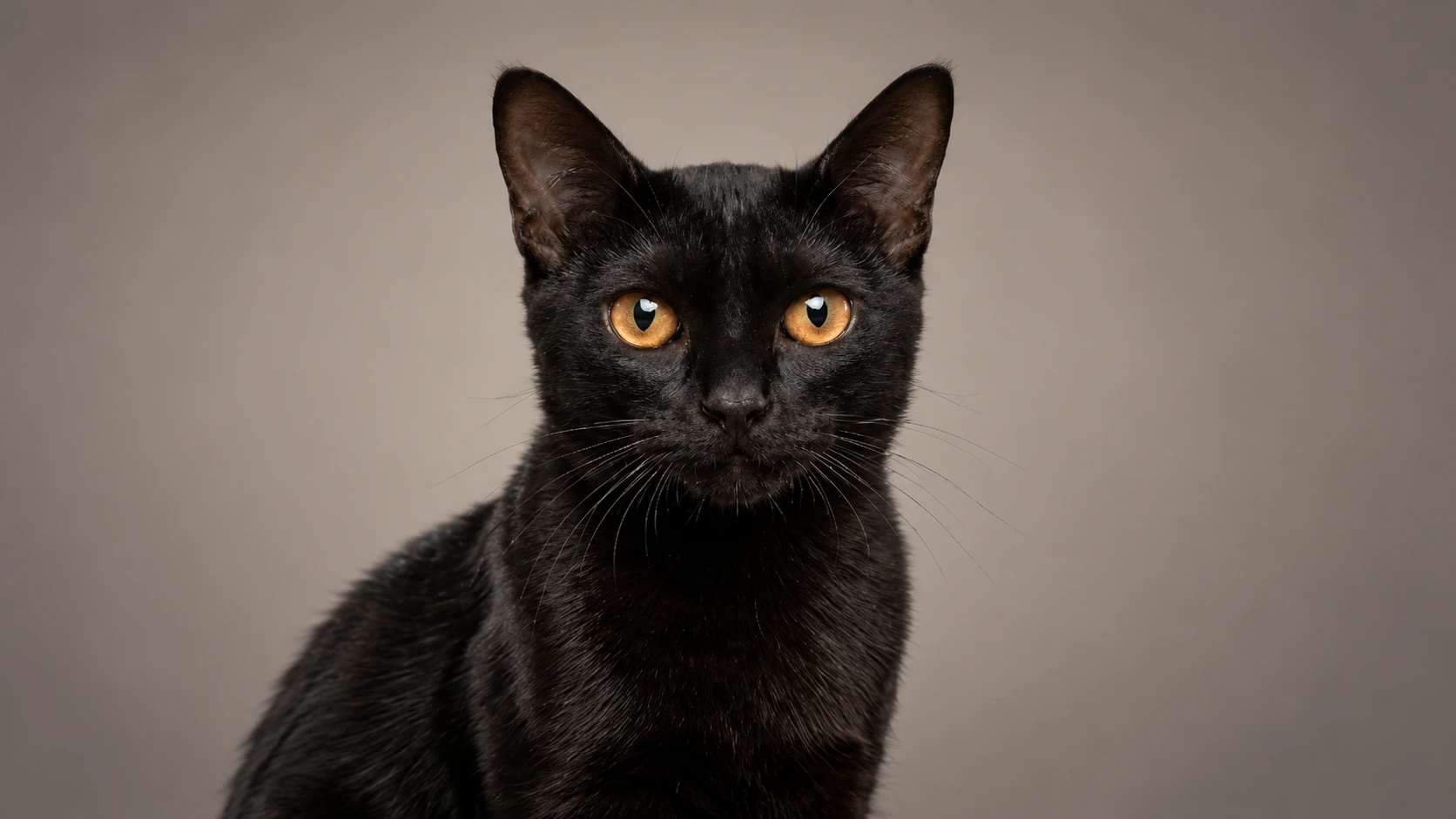
1. Bombay Cat
The Bombay is known for its sleek, jet-black coat and expressive gold-to-copper eyes. Its polished appearance often earns it comparisons to a miniature panther. This breed is frequently affectionate, social and people-oriented.
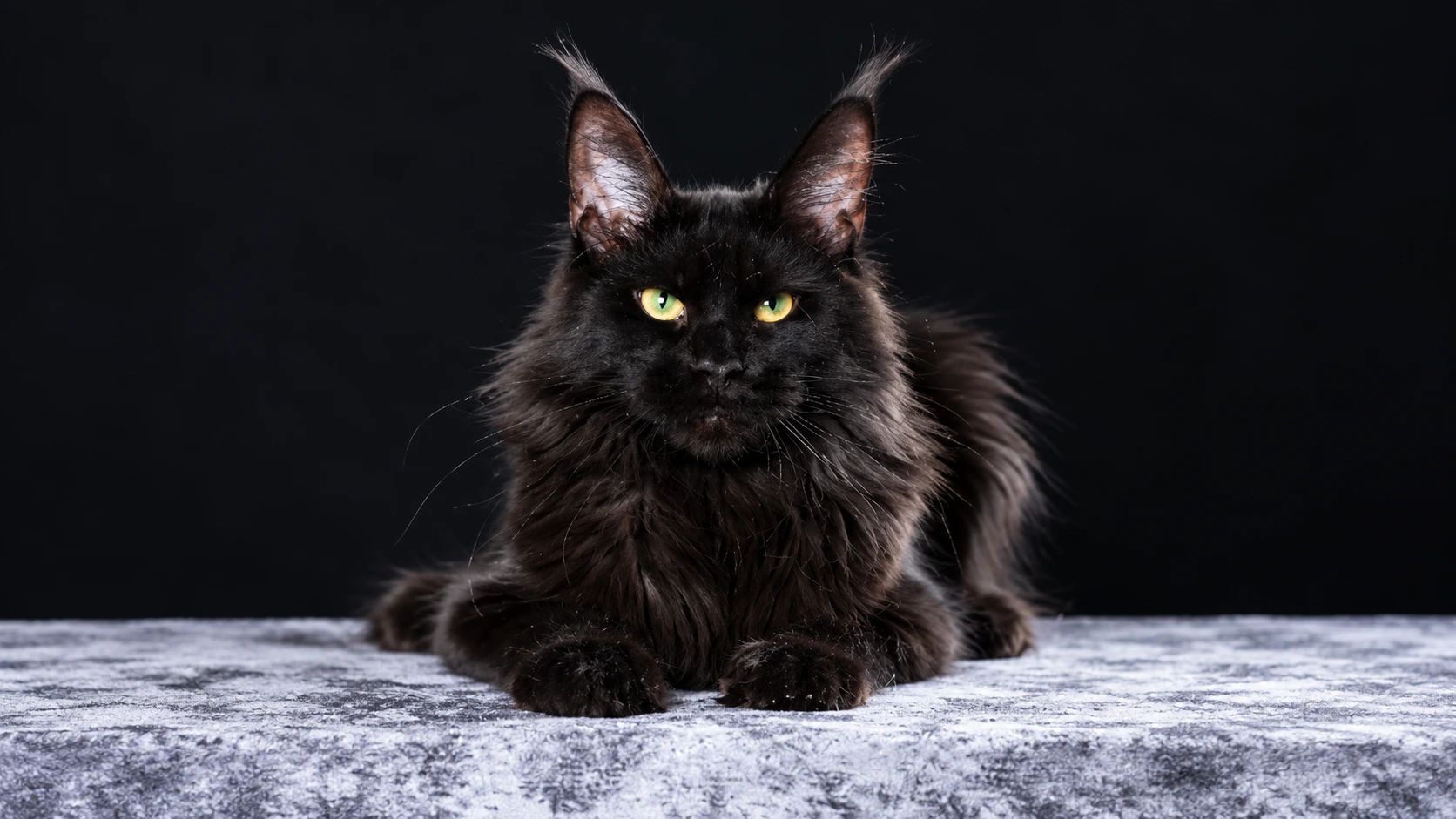
2. Maine Coon
Maine Coons are large cats with long, thick coats and distinctive tufted ears. Black Maine Coons can look particularly impressive because of their fluffy tails and substantial builds. Many are friendly, curious, and playful.
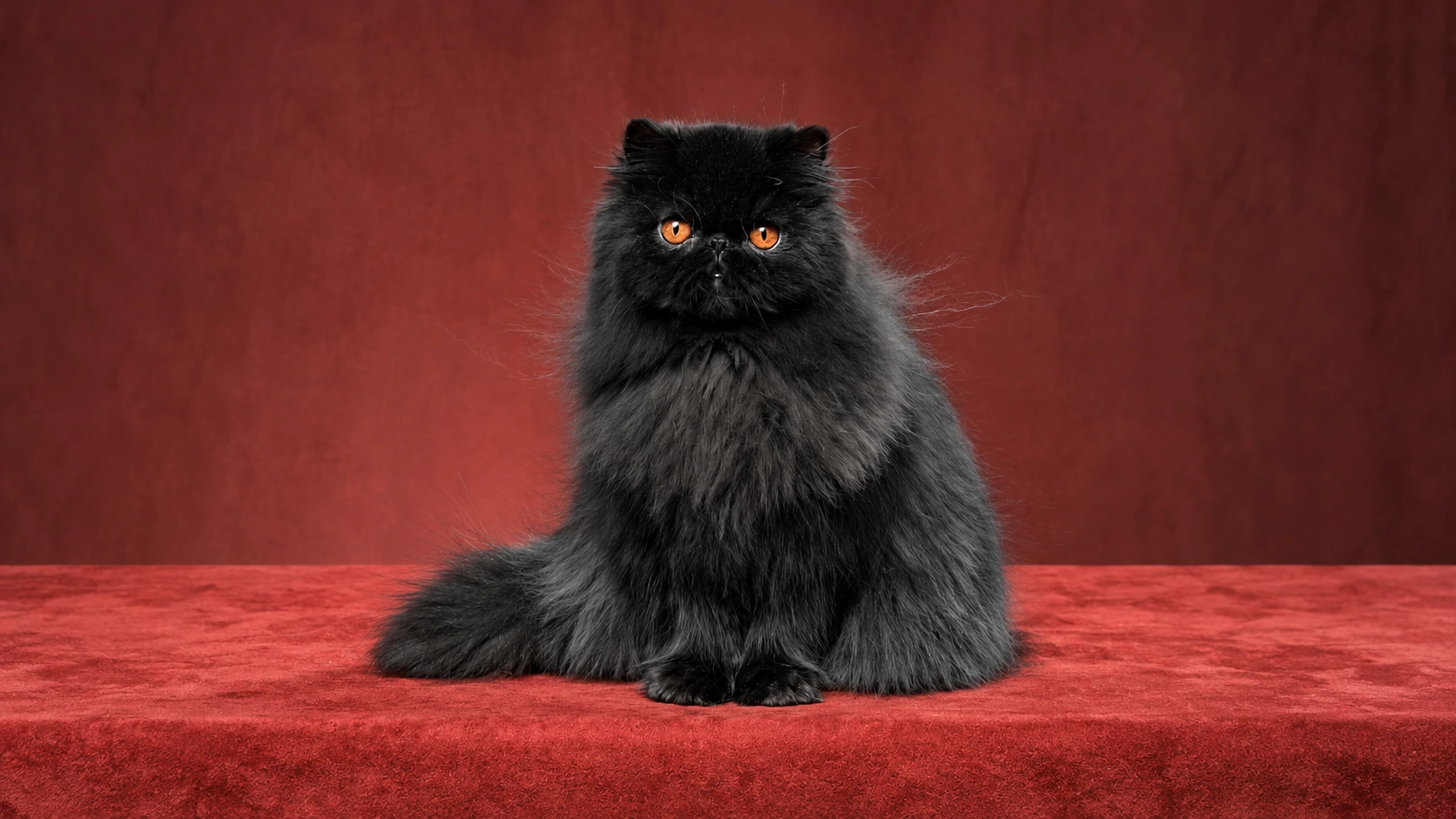
3. Persian Cat
Black Persian cats have long, luxurious coats and round faces. They are often calm companions that enjoy comfortable indoor environments. Their dense fur requires regular brushing to prevent tangles and mats.
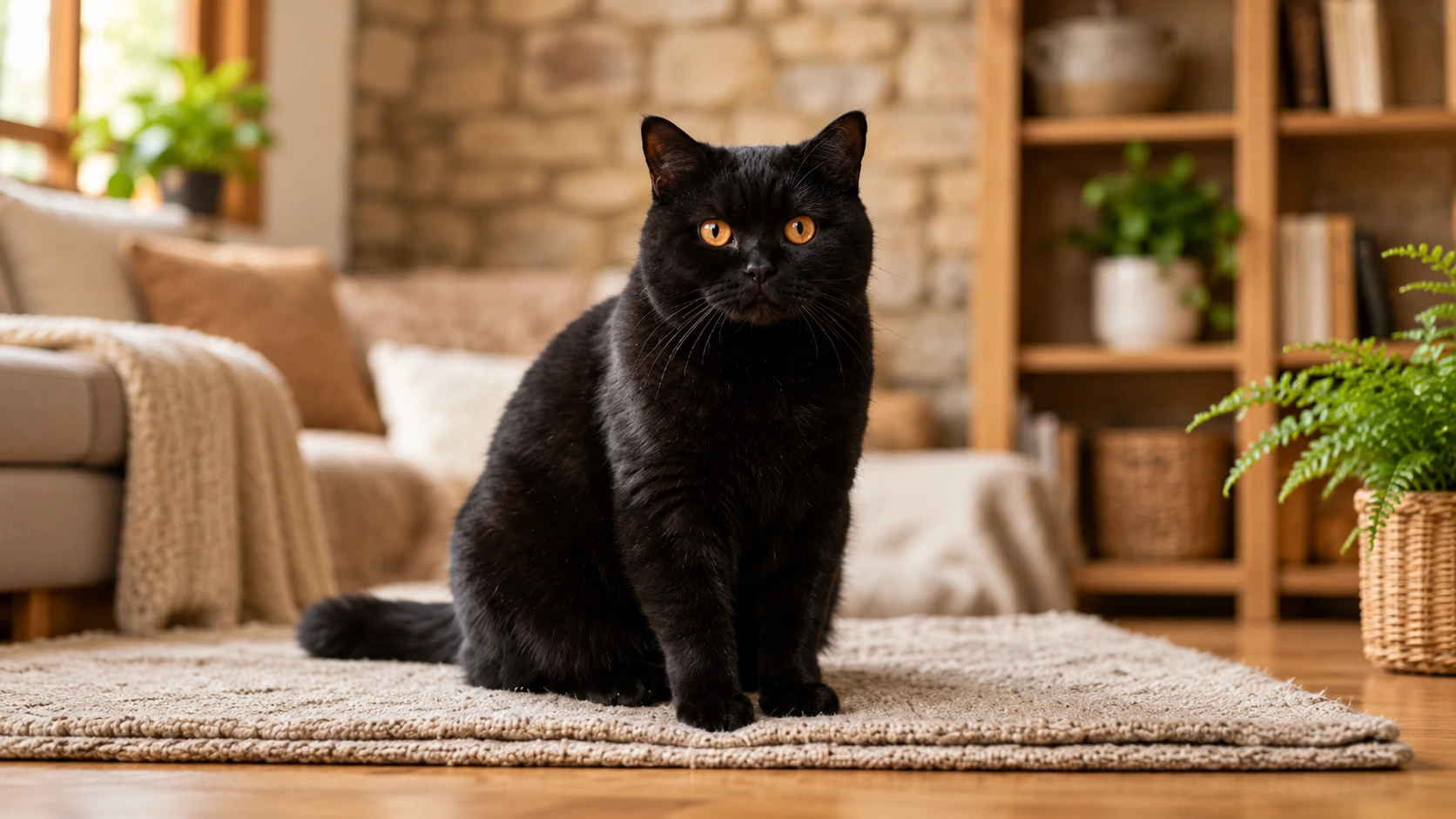
4. British Shorthair
This breed is recognized for its sturdy build, round face, and dense, plush coat. Black British Shorthairs can have striking copper-colored eyes. They are generally known for a relaxed, relatively independent temperament.
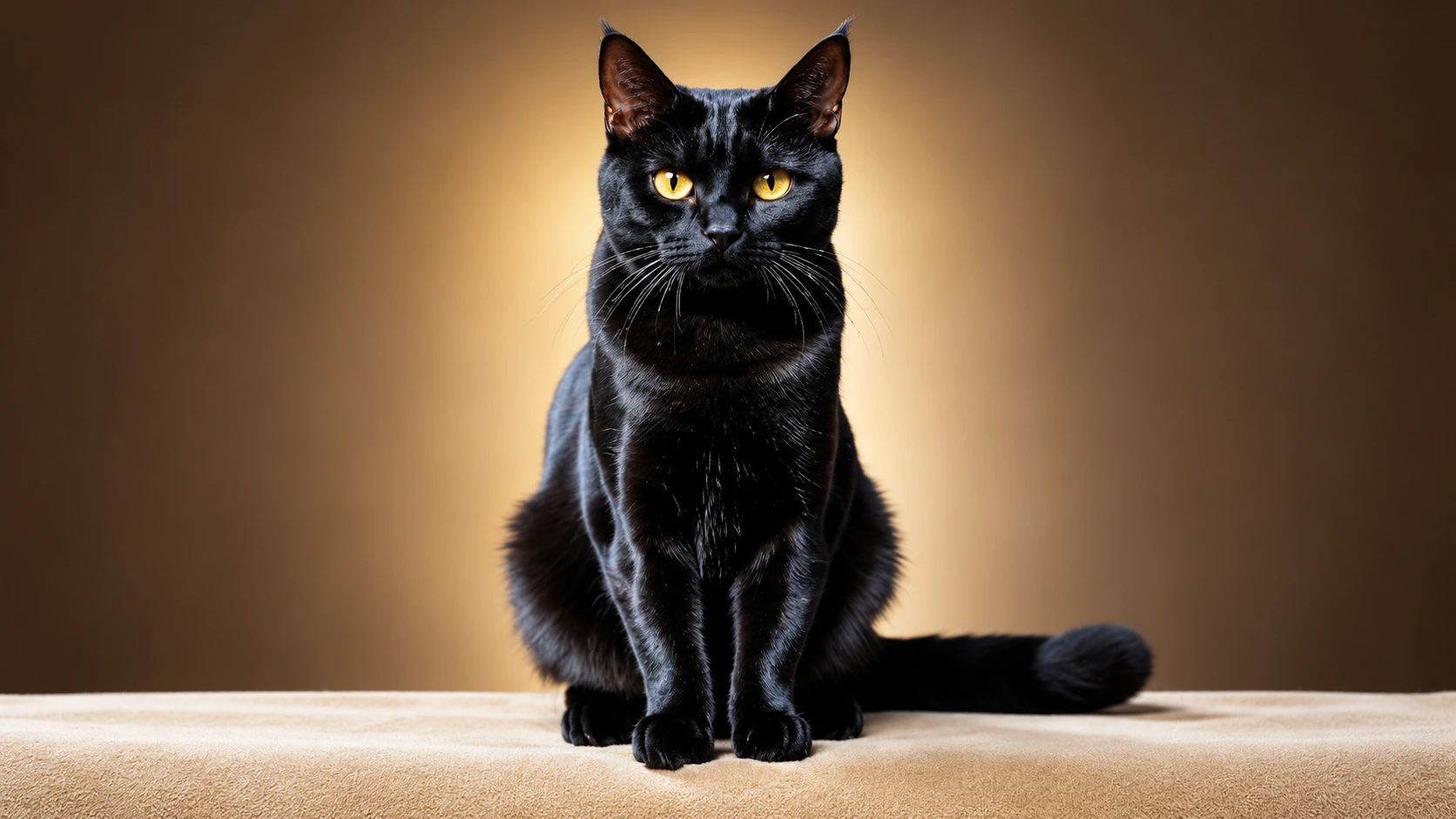
5. American Shorthair
American Shorthairs are adaptable cats with strong builds and easy-to-maintain coats. Those with black fur have a smooth, classic appearance. They are often suitable for households looking for an active but generally easygoing companion.
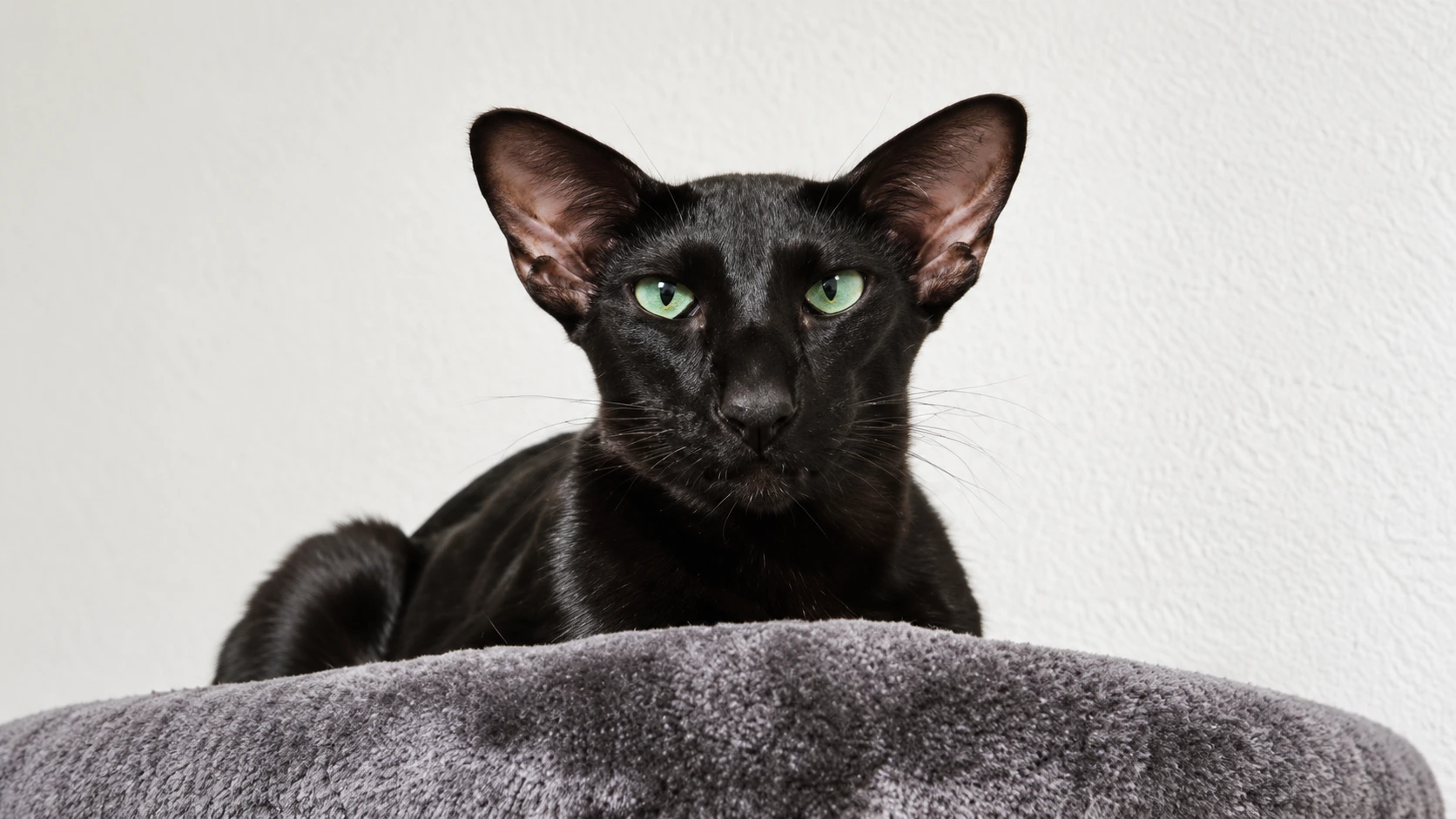
6. Oriental Shorthair
The Oriental Shorthair has a slender body, large ears, and an elegant profile. Solid-black individuals are often described as ebony. These cats are typically active, communicative, and interested in interacting with their owners.
If you have adopted a black kitten from a shelter, it may simply be a domestic shorthair or domestic longhair. A black coat doesn’t mean the cat is necessarily a Bombay or another pedigree breed.
Black Cats Personality Are They Friendly?
- Black cats can be just as loving, playful, curious, or independent as cats with other coat colors.
- There is no reliable scientific basis for assuming that every black cat shares a particular personality because of its fur color.
- A cat’s behavior depends on several influences, including genetics, early socialization, health, past experiences and its environment.
Are Black Cats Affectionate?
Yes, many black cats are affectionate with their owners. Some enjoy sitting on laps, following family members around the house, or sleeping beside someone they trust. Others prefer showing affection by staying nearby rather than being held. The important thing is to understand the individual cat’s preferences.
Are Black Cats More Aggressive?
- Black fur does not make a cat naturally more aggressive.
- Fear, pain, stress, overstimulation and lack of appropriate socialization can all influence a cat’s behavior, regardless of coat color.
- If your cat suddenly starts biting, hiding, or becoming unusually defensive, look for changes in its health or surroundings rather than blaming its appearance.
Black Cats With Green, Yellow or Blue Eyes
One of the most beautiful features of black cats is the contrast between their dark fur and bright eyes. Their eye color can vary according to genetics, breed and age.
Black Cats With Green Eyes
Green eyes can give a black cat a particularly striking appearance. Different shades may range from pale green to deeper emerald tones.
Black Cats With Yellow or Copper Eyes
Golden, yellow, amber, and copper eyes are commonly seen in black cats. Bombay cats are particularly associated with rich gold-to-copper eye colors.
Black Cats With Blue Eyes
Blue eyes are common in young kittens before their permanent eye color develops. Solid-black adult cats with naturally blue eyes are unusual although some specific genetic combinations can produce them. Eye color alone cannot tell you a cat’s exact breed. If an adult cat’s eye color changes unexpectedly a veterinary examination is recommended.
Are Black Cats Bad Luck or Good Luck?
Black cats have appeared in folklore for centuries. Depending on the country and tradition, people have viewed them as symbols of either good fortune or misfortune.
Why Are Black Cats Considered Bad Luck?
- Some European superstitions historically connected black cats with witches, mysterious events, and bad omens.
- These beliefs eventually became associated with stories about black cats crossing someone’s path.
- However there is no scientific evidence that encountering a black cat affects a person’s luck.
- A black cat crossing the road is simply an animal going somewhere.
Where Are Black Cats Considered Good Luck?
In other cultural traditions, black cats have been associated with protection, prosperity, and positive fortune. For example, Japanese folklore includes favorable associations with black cats, while some British and Scottish traditions have connected them with good fortune. These beliefs are cultural stories not established facts about animals.
Why Are Black Cats Associated With Halloween?
- Black cats became connected with Halloween through older European folklore involving witches, nighttime, and supernatural imagery.
- Their dark appearance made them memorable subjects in seasonal illustrations, films, and decorations.
- But outside these traditions black cats are ordinary pets that deserve the same care and respect as any other cat.
7 Interesting Facts About Black Cats
Black cats have more going for them than their beautiful coats. Here are some facts that may surprise you.
1. Not Every Black Cat Is a Bombay
A black domestic shorthair can look similar to a Bombay, but that doesn’t automatically make it one. Confirming a specific pedigree requires more than coat color and eye appearance.
2. Their Coats Can Hide Faint Stripes
Some black kittens have subtle tabby markings that become visible in bright sunlight. These are sometimes called ghost markings.
3. Black Cats Can Have White Whiskers
Although many have dark whiskers, whisker color can vary. Some cats develop individual white whiskers as they mature.
4. Black Cats Can Be Male or Female
Black fur is not exclusive to either sex. Both male and female cats can inherit the genes responsible for a solid-black coat.
5. Their Coats Can Change With Age
A black kitten’s coat may look slightly different when it grows up. Changes in texture, shade and sheen can occur as the adult coat develops.
6. Black Cats Have Faced Adoption Challenges
A 2020 study examining outcomes at one urban US animal shelter found that black cats had lower adoption rates than cats with several other coat colors. However, results from an individual shelter shouldn’t be treated as universal adoption statistics.
The study highlights why it is important to evaluate adoptable cats based on their temperament, healthW and suitability rather than their color.
7. A Black Coat Doesn’t Predict a Cat’s Health
Black cats aren’t automatically healthier or less healthy than other cats. Their health depends on inherited conditions, nutrition, preventive healthcare and living environment.
How Long Do Black Cats Live?
Black cats generally have the same lifespan potential as other domestic cats. Many well-cared-for cats live into their teens and some reach 20 years or longer. Their life expectancy depends on factors such as:
- Indoor versus outdoor living conditions
- Nutrition and healthy body weight
- Genetics and inherited conditions
- Vaccinations and preventive veterinary care
- Early detection and treatment of illnesses
According to Cornell Feline Health Center, advances in veterinary medicine, nutrition and indoor living have helped cats live longer. For a more detailed explanation read our guide on how long cats live.
How To Care For a Black Cat
Black cats don’t need special care simply because their fur is dark. However, a few everyday habits can help keep them healthy and comfortable.
Brush Their Coat Regularly
Shorthaired black cats usually need less grooming than longhaired breeds, but regular brushing helps remove loose hair and keeps the coat looking healthy. For Persian cats and longhaired Maine Coons more frequent grooming helps prevent mats and tangles.
Provide Balanced Nutrition
Choose a complete and balanced cat food suitable for your pet’s age and health needs. Fresh drinking water should always be available. Avoid unnecessary supplements unless your veterinarian recommends them.
Keep Them Active
Interactive toys, scratching posts, climbing areas, and short play sessions can help cats stay physically and mentally stimulated. Even a relaxed cat may enjoy chasing a wand toy or watching birds from a secure window.
Check Their Skin And Coat
Because dark fur can make some skin changes harder to notice, take time to inspect your cat while grooming. Look for unusual bumps, hair loss, flaky skin, fleas or signs of irritation.
Schedule Veterinary Checkups
Routine examinations, vaccinations, parasite prevention and dental care matter more to your cat’s health than its coat color. Cornell’s feline care guidance also recommends observing changes in eating, grooming, activity and litter-box habits as these can indicate illness.
Should You Adopt a Black Cat?
- If you’re thinking about adopting a cat a black cat can be an excellent choice.
- Many shelter cats are affectionate, playful and ready to settle into a loving home. But every cat is different, so spend some time learning about its personality before deciding.
- Ask the shelter about its age, medical history, activity level, and experience with children or other pets.
- A confident, energetic kitten may be perfect for one household, while an older, quieter cat might suit another.
- The best match depends on your lifestyle and the individual animal not its coat color.
Final Thoughts
Black cats are much more than symbols of Halloween or old superstitions. They are ordinary cats with beautiful dark coats, individual personalities, and the same need for affection, safety and proper care as any other feline companion. Whether you prefer a playful black kitten, a fluffy Maine Coon or a quiet adult rescue cat, the right companion comes down to personality and compatibility. If you’re considering adoption, don’t overlook a cat simply because of its color. You might find exactly the companion you’ve been looking for.