
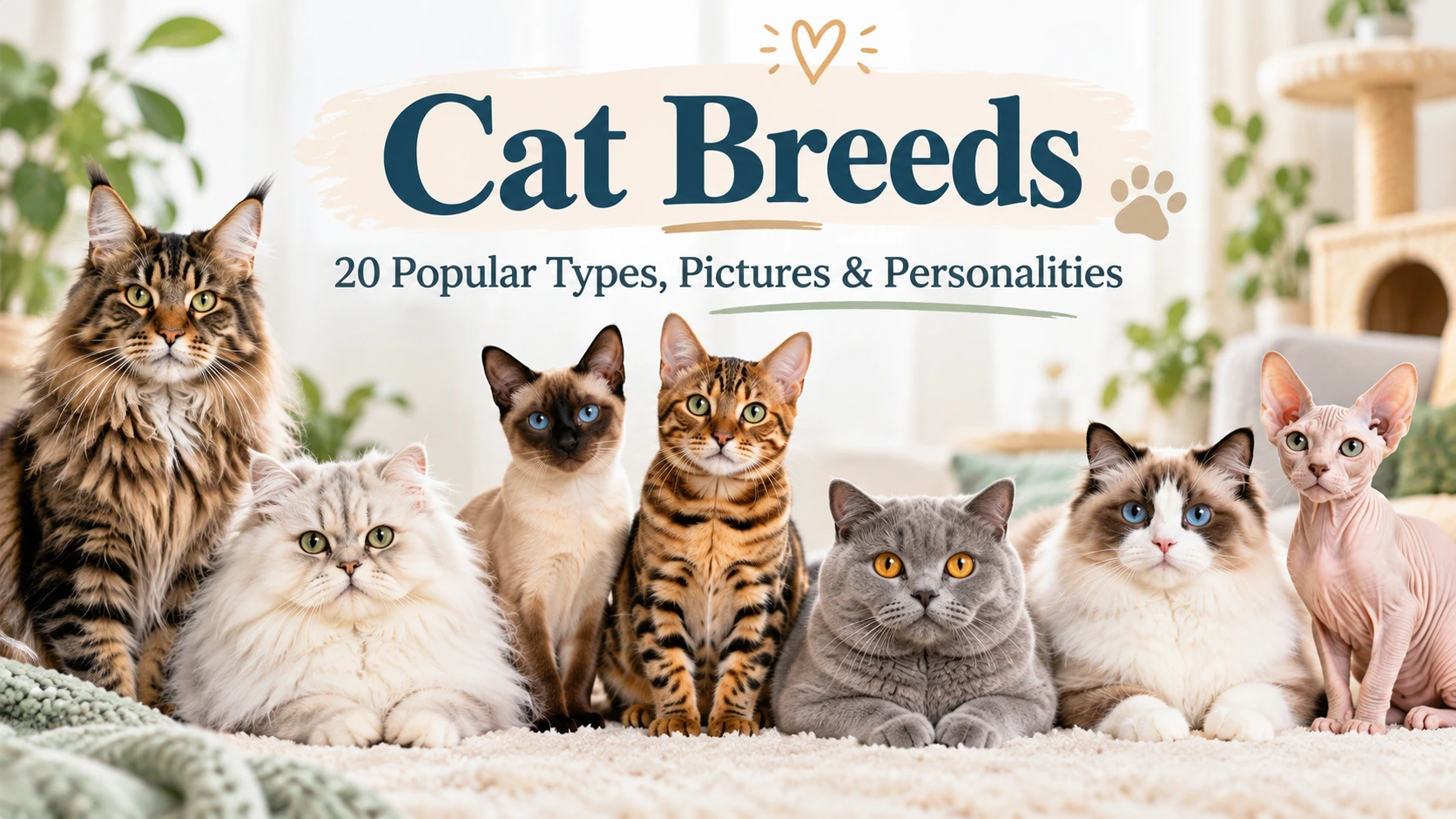
Cats come in all shapes and sizes. Some are fluffy and affectionate, others are sleek, energetic, or happiest watching the world from a quiet corner. With so many cat breeds to explore, choosing the right one can feel overwhelming.
The Maine Coon is famous for its impressive size, the Siamese for its talkative personality, and the Persian for its luxurious coat. But looks are only part of the story. Every breed has its own typical behavior, grooming needs, and activity level. Whether you’re looking for a friendly family companion, a playful indoor cat, or a breed that requires less brushing, this guide introduces 20 popular types of cats, explains their differences and helps you find a good match for your home.
What Are The Different Cat Breeds?
Cat breeds are groups of domestic cats developed or recognized for particular physical characteristics, such as coat length, body shape, eye color and inherited traits. Some breeds, including the Maine Coon developed naturally over time. Others were established through selective breeding. According to The International Cat Association (TICA), 73 cat breeds are currently recognized by the organization. The total varies depending on which cat registry you consult.
It’s also important to distinguish a breed from a coat color. A black cat, orange tabby, or calico isn’t automatically a separate breed. Those descriptions usually refer to the cat’s coloring or markings. Most household cats are not registered purebreds. Domestic shorthair and domestic longhair cats are common examples, and they can have just as much personality as pedigreed cats.
20 Popular Cat Breeds With Pictures and Characteristics
These cat breeds are recognizable for their appearance, temperament, and distinctive personalities. Some are suitable for quieter households, while others need plenty of play, attention and space to explore.
1. Maine Coon
Best For: Families looking for a large, sociable cat.
The Maine Coon is one of the largest domestic cat breeds. Its bushy tail, tufted ears, broad chest, and thick coat give it a distinctive appearance. Despite its impressive size, this breed is generally gentle and friendly. Maine Coons often enjoy following family members around the house and joining everyday activities.
- Size: Large
- Coat: Long, thick and shaggy
- Personality: Gentle, playful, sociable
- Grooming: Regular brushing
- Activity level: Moderate to high
Maine Coons often get along with respectful children and other pets, making them an appealing choice for active households.
How Long Do Cats Live? Average Lifespan & Care Tip
2. Ragdoll
Best For: People seeking an affectionate, relaxed companion. Ragdolls are known for their striking blue eyes, semi-long coats, and generally laid-back personalities. They often enjoy staying close to their owners and may tolerate being held, although individual cats have different preferences.
- Size: Large
- Coat: Silky, semi-long
- Personality: Affectionate, gentle, relaxed
- Grooming: Weekly brushing or more as needed
- Activity level: Low to moderate
Ragdolls can suit families who appreciate a sociable indoor companion.
3. Persian
Best for: Owners who prefer a quieter cat and can manage daily grooming. Persian cats have long, flowing coats, round faces, and a calm reputation. They commonly prefer comfortable resting spaces over constant activity. Their beautiful coats require consistent care to prevent tangles and painful matting.
- Size: Medium
- Coat: Long and dense
- Personality: Gentle, quiet, affectionate
- Grooming: Daily
- Activity level: Low to moderate
Prospective owners should also understand that extremely flat-faced Persians may experience breathing and eye problems associated with their facial structure.
4. Siamese
Best For: People who want an interactive, talkative cat. The Siamese has a slender body, large ears, blue eyes, and distinctive darker coloring on the face, paws, ears and tail. This breed is particularly famous for vocal communication. Siamese cats often enjoy interacting with people and can become bored without enough stimulation.
- Size: Medium
- Coat: Short and smooth
- Personality: Vocal, social, intelligent
- Grooming: Low
- Activity level: High
A Siamese may be a good choice for someone who enjoys an involved, energetic companion.
5. British Shorthair
Best For: Households looking for a calm, relatively independent cat. British Shorthairs are recognizable for their round faces, dense plush coats, and sturdy bodies. They are generally calm and affectionate without constantly demanding attention. Many prefer sitting beside their owners rather than being carried.
- Size: Medium to large
- Coat: Short and dense
- Personality: Calm, independent, gentle
- Grooming: Weekly brushing
- Activity level: Low to moderate
Their easygoing nature makes them worth considering for quieter homes.
6. Bengal
Best For: Experienced owners who enjoy active, intelligent cats. Bengals have distinctive spotted or marbled coats that resemble those of wild felines. These athletic cats often love climbing, chasing toys, exploring, and solving puzzles. Their energy level can be challenging for someone expecting a quiet lap cat.
- Size: Medium to large
- Coat: Short
- Personality: Curious, energetic, intelligent
- Grooming: Low
- Activity level: Very high
Bengals benefit from climbing structures, interactive toys, and daily play sessions.
7. Sphynx
Best For: Owners seeking a highly social cat who can provide specialized skin care. The Sphynx is one of the most recognizable hairless cat breeds. Although it appears completely bald, many Sphynx cats have a fine layer of soft down. They are often affectionate, energetic, and eager to spend time with people.
- Size: Medium
- Coat: Nearly hairless
- Personality: Social, playful, affectionate
- Grooming: Regular skin and ear care
- Activity level: High
A lack of fur doesn’t mean zero maintenance. Sphynx cats need appropriate skin care and protection from temperature extremes.
Bernese Mountain Dog Size, Lifespan, Temperament & Care
8. Russian Blue
Best For: Owners who prefer a gentle, intelligent cat with a short coat. Russian Blues have shimmering silver-blue fur, green eyes, and elegant bodies. They are often affectionate with familiar people while remaining cautious around strangers.
- Size: Medium
- Coat: Short, dense, silver-blue
- Personality: Loyal, intelligent, sometimes reserved
- Grooming: Low to moderate
- Activity level: Moderate
They commonly appreciate predictable routines, interactive toys, and quiet resting areas.
9. American Shorthair
Best For: Families wanting an adaptable, moderately active companion. American Shorthairs have muscular bodies, rounded faces, and dense short coats. They are generally playful without being excessively demanding and often adapt well to family routines.
- Size: Medium to large
- Coat: Short and dense
- Personality: Easygoing, curious, adaptable
- Grooming: Weekly brushing
- Activity level: Moderate
The registered American Shorthair breed should not be confused with any domestic shorthair cat.
10. Scottish Fold
Best For: Potential owners prepared to investigate significant inherited health concerns. Scottish Folds are famous for their folded ears, round faces, and sweet expressions. However, the same genetic mutation responsible for their folded ears is associated with abnormal cartilage and bone development.
- Size: Medium
- Coat: Short or long
- Personality: Often gentle and affectionate
- Grooming: Depends on coat length
- Activity level: Moderate
Important: Scottish Fold cats can develop painful joint disease. Their welfare concerns should be carefully considered, and prospective owners should discuss the risks with a veterinarian rather than choosing the breed solely for its appearance.
11. Abyssinian
Best for: Active households that enjoy playful cats. The Abyssinian has a lean, athletic body and a short ticked coat that gives its fur a warm, distinctive appearance. These cats are often curious, alert, and eager to explore.
- Size: Medium
- Coat: Short and fine
- Personality: Curious, intelligent, energetic
- Grooming: Low
- Activity level: High
Abyssinians are well suited to homes with climbing opportunities and interactive activities.
12. Birman
Best For: Families looking for a gentle, social cat. Birmans are known for their blue eyes, silky semi-long coats, darker point coloring, and distinctive white paws. They typically enjoy companionship and can be playful without being overwhelmingly energetic.
- Size: Medium to large
- Coat: Semi-long and silky
- Personality: Affectionate, gentle, social
- Grooming: Regular brushing
- Activity level: Moderate
Their friendly nature makes them appealing companions for many households.
13. Norwegian Forest Cat
Best For: Owners who appreciate large, fluffy, active cats. The Norwegian Forest Cat has a strong body, long bushy tail, and dense coat adapted to colder climates. These cats are often independent but enjoy spending time around their families.
- Size: Large
- Coat: Long, thick, weather-resistant
- Personality: Gentle, curious, independent
- Grooming: Regular brushing
- Activity level: Moderate to high
They often appreciate sturdy cat trees and elevated resting places.
14. Siberian
Best For: Families wanting an affectionate, active longhaired cat. Siberians are muscular cats with dense, layered coats and expressive faces. They are commonly playful and people-oriented, often enjoying climbing and interactive games.
- Size: Medium to large
- Coat: Long, thick, triple-layered
- Personality: Affectionate, adventurous, intelligent
- Grooming: Regular brushing, especially during shedding
- Activity level: Moderate to high
Although sometimes marketed as hypoallergenic, Siberians can still trigger cat allergies.
15. Devon Rex
Best For: Owners seeking an energetic, unusual-looking companion. Devon Rex cats have large ears, prominent eyes, and short, wavy coats. Their playful personalities and interest in human activities make them engaging household companions.
- Size: Small to medium
- Coat: Short and wavy
- Personality: Playful, affectionate, mischievous
- Grooming: Gentle coat and skin care
- Activity level: High
Their delicate coats require careful handling during grooming.
16. Cornish Rex
Best For: People who enjoy athletic and interactive cats. Cornish Rex cats are recognizable for their slender bodies, oversized ears, and soft, curly coats. They are often energetic, social, and enthusiastic about games.
- Size: Small to medium
- Coat: Very short and wavy
- Personality: Active, friendly, playful
- Grooming: Low, with gentle handling
- Activity level: High
These cats often enjoy climbing, running, and exploring indoor environments.
17. Burmese
Best For: Owners who want a people-oriented companion. Burmese cats have compact muscular bodies, expressive eyes, and smooth, glossy coats. They are generally affectionate and often seek attention from family members.
- Size: Medium
- Coat: Short and glossy
- Personality: Social, affectionate, playful
- Grooming: Low
- Activity level: Moderate to high
Burmese cats can be a good match for households where someone is regularly available for interaction.
18. Egyptian Mau
Best For: Owners who appreciate athletic, distinctive cats. The Egyptian Mau is known for its naturally spotted coat and graceful body. These cats are often alert, agile, and playful, with strong bonds to familiar people.
- Size: Medium
- Coat: Short and spotted
- Personality: Intelligent, active, sometimes reserved
- Grooming: Low
- Activity level: High
Interactive play and opportunities to climb help keep them engaged.
19. Singapura
Best For: People looking for a small but lively companion. The Singapura is known for its petite build, large expressive eyes, and warm sepia-toned coat. Despite its small size, this breed is typically curious, affectionate, and active.
- Size: Small
- Coat: Short and fine
- Personality: Curious, affectionate, lively
- Grooming: Low
- Activity level: Moderate to high
A Singapura may be small, but it still needs playtime and enrichment.
20 Japanese Bobtail
Best For: Owners who enjoy friendly, active cats. Japanese Bobtails are recognized for their naturally short, distinctive tails and athletic bodies. They are commonly social, curious, and enthusiastic about interactive games.
- Size: Medium
- Coat: Short or long
- Personality: Playful, intelligent, outgoing
- Grooming: Low to moderate
- Activity level: High
Their playful nature can make them enjoyable companions in homes with plenty of enrichment.
Cat Breeds Comparison Chart
If you’re still deciding which type of cat might suit your home, this chart offers a quick comparison.
| Cat Breed | Size | Personality | Grooming |
|---|---|---|---|
| Maine Coon | Large | Gentle, social | Moderate |
| Ragdoll | Large | Calm, affectionate | Moderate |
| Persian | Medium | Quiet, gentle | High |
| Siamese | Medium | Vocal, active | Low |
| British Shorthair | Medium–large | Calm, independent | Low |
| Bengal | Medium–large | Energetic, curious | Low |
| Sphynx | Medium | Playful, social | Specialized |
| Russian Blue | Medium | Loyal, reserved | Low |
| American Shorthair | Medium–large | Adaptable, friendly | Low |
| Scottish Fold | Medium | Gentle | Varies |
| Abyssinian | Medium | Active, curious | Low |
| Birman | Medium–large | Affectionate, gentle | Moderate |
| Norwegian Forest Cat | Large | Independent, playful | Moderate–high |
| Siberian | Medium–large | Friendly, active | Moderate–high |
| Devon Rex | Small–medium | Mischievous, social | Specialized |
| Cornish Rex | Small–medium | Athletic, playful | Low |
| Burmese | Medium | Affectionate, social | Low |
| Egyptian Mau | Medium | Active, alert | Low |
| Singapura | Small | Lively, curious | Low |
| Japanese Bobtail | Medium | Playful, outgoing | Low–moderate |
Pro Tip: These are general breed tendencies, not guarantees. Individual personality, age, early socialization, and health can make a significant difference.
Cat Breeds By Size, Coat And Appearance
Not everyone starts their search with a specific breed name. Sometimes the first thing you notice is a fluffy tail, unusually large ears, or a striking coat color. Here are some common ways to explore different cat breeds.
Large Cat Breeds
If you prefer big cats, consider:
- Maine Coon
- Ragdoll
- Norwegian Forest Cat
- Siberian
These breeds are often larger than the average domestic cat, although adult size varies by individual. Large cats may need appropriately sized carriers, litter boxes, and scratching furniture.
Small Cat Breeds
Some cats naturally have smaller frames. Examples include:
- Singapura
- Devon Rex
- Cornish Rex
A smaller cat can still have an energetic personality and require plenty of space for exercise.
Fluffy And Long-Haired Cat Breeds
Long coats can look beautiful, but they usually require more maintenance. Popular examples include:
- Persian
- Maine Coon
- Siberian
- Norwegian Forest Cat
- Ragdoll
Regular brushing helps remove loose fur and reduce tangles. Some cats need more frequent grooming during seasonal shedding.
Short-Haired Cat Breeds
Short-haired cats can be appealing to people who prefer simpler coat maintenance. Examples include:
- American Shorthair
- Russian Blue
- Siamese
- Burmese
- Bengal
Short coats are generally easier to maintain, but these cats still shed and benefit from occasional brushing.
Cats Coat Color
Coat color can help describe a cat, but it does not necessarily identify its breed. For example:
- Black cats: Bombay cats are famous for their glossy black coats, but many other breeds and domestic cats can be black.
- White cats: Persians, Turkish Angoras, and several other breeds may have white coats.
- Gray cats: Russian Blues, Chartreux, and British Shorthairs are known for blue-gray coat variations.
- Orange cats: Orange coloring can appear in Maine Coons, Persians, and many domestic cats.
Similarly, tabby, calico and tortoiseshell usually describe coat patterns or coloring rather than separate cat breeds.
Which Cat Breeds Are Best For Different Lifestyles?
A cat’s appearance may catch your attention, but temperament and care needs matter far more when choosing a companion.
Best Cat Breeds For Families
Ragdolls, Maine Coons, Birmans and American Shorthairs are often considered family-friendly because of their generally sociable or adaptable personalities. However, no breed is automatically safe or comfortable with every child. Teach children to respect a cat’s boundaries and supervise interactions.
Jelly Cats Popular Plush Toys, Prices & Buying Guide
Best Cat Breeds For Apartment Living
British Shorthairs, Russian Blues, Ragdolls and some adult domestic shorthairs can adapt well to apartments. Apartment suitability depends on more than size. Cats also need scratching posts, hiding areas, vertical space, toys, and daily interaction. An energetic cat can live happily in a smaller home when its enrichment needs are met.
Most Affectionate Cat Breeds
If you’re looking for a cat that frequently seeks human attention, consider:
- Ragdoll
- Burmese
- Birman
- Sphynx
- Maine Coon
These breeds are often described as affectionate, but individual cats show love differently. Some enjoy cuddling, while others prefer sitting nearby.
Flea Bites What They Look Like, Symptoms & How to Treat Them
Cat Breeds That Don’t Shed Much
No cat breed is guaranteed to be completely non-shedding. However, breeds such as the Cornish Rex and Devon Rex may leave less loose hair around the home than some heavily coated breeds. Sphynx cats have very little visible fur but require dedicated skin care. Remember that low shedding does not mean hypoallergenic.
Hypoallergenic Cat Breeds Are Any Truly Allergy-Free?
- There is no scientifically guaranteed allergy-free cat breed.
- Cat allergies are commonly triggered by proteins such as Fel d 1, which are distributed through saliva, skin secretions, and dander.
- Siberians, Russian Blues and some Rex breeds are frequently advertised as better options for allergy sufferers, but reactions vary considerably between individual cats and people.
- If you have cat allergies, speak with an allergy specialist and spend time around the individual cat before committing to adoption. A foster-to-adopt arrangement may also help assess compatibility.
How To Choose The Right Cat Breed
Before bringing a cat home consider the following practical questions.
1. How Much Time Can You Spend With Your Cat?
Active, people-oriented breeds may become bored without regular play and interaction. Cats that are comfortable with a more independent routine may suit households with quieter schedules, but every cat needs companionship and daily care.
2. Can You Manage Regular Grooming?
A Persian generally needs much more brushing than a Siamese. Consider whether you’re prepared for coat maintenance, seasonal shedding, cleaning, and the occasional professional grooming appointment when appropriate.
3. Do You Prefer an Active or Relaxed Cat?
Bengals and Abyssinians are typically energetic, while British Shorthairs and Ragdolls are often more relaxed. Remember that kittens of almost any breed can be extremely playful.
4. Are There Children or Other Pets at Home?
A cat’s previous experiences, confidence, and individual personality influence how well it adjusts to children, dogs or other cats. Slow introductions and supervised interactions are important regardless of breed.
5. What Health Concerns Should You Consider?
Some pedigreed cats have increased risks of inherited conditions. For example, hypertrophic cardiomyopathy is a recognized concern in Maine Coons and Ragdolls, while Persian cats can be affected by inherited kidney disease and problems associated with extremely flat faces. Ask responsible breeders about relevant health screening, veterinary records and the health history of the kitten’s parents. For rescue cats, discuss known medical needs and arrange an initial veterinary examination.
Purebred vs Mixed-Breed Cats Which Is Better?
- A purebred cat comes from a documented breeding line and may have more predictable physical characteristics.
- Mixed-breed domestic cats have more varied ancestry which means their appearance and temperament can differ widely.
- Neither option guarantees better behavior, affection or health.
- Many mixed-breed cats make wonderful family pets and shelters frequently have affectionate adult cats whose personalities are already easier to observe.
- If your main goal is finding a compatible companion, meeting an individual cat may be more valuable than choosing one solely from a breed description.
Conclusion
There are many beautiful cat breeds, but the best cat isn’t necessarily the rarest, biggest, or most expensive one. Maine Coons are known for their friendly personalities, Siamese cats for their vocal nature, Persians for their long coats and Bengals for their energy. Each comes with different care requirements.
Before choosing, think about your lifestyle, available time, grooming preferences, and the cat’s individual temperament. Whether you adopt a purebred or a mixed-breed cat a comfortable home, appropriate veterinary care and regular interaction will matter far more than pedigree alone.