
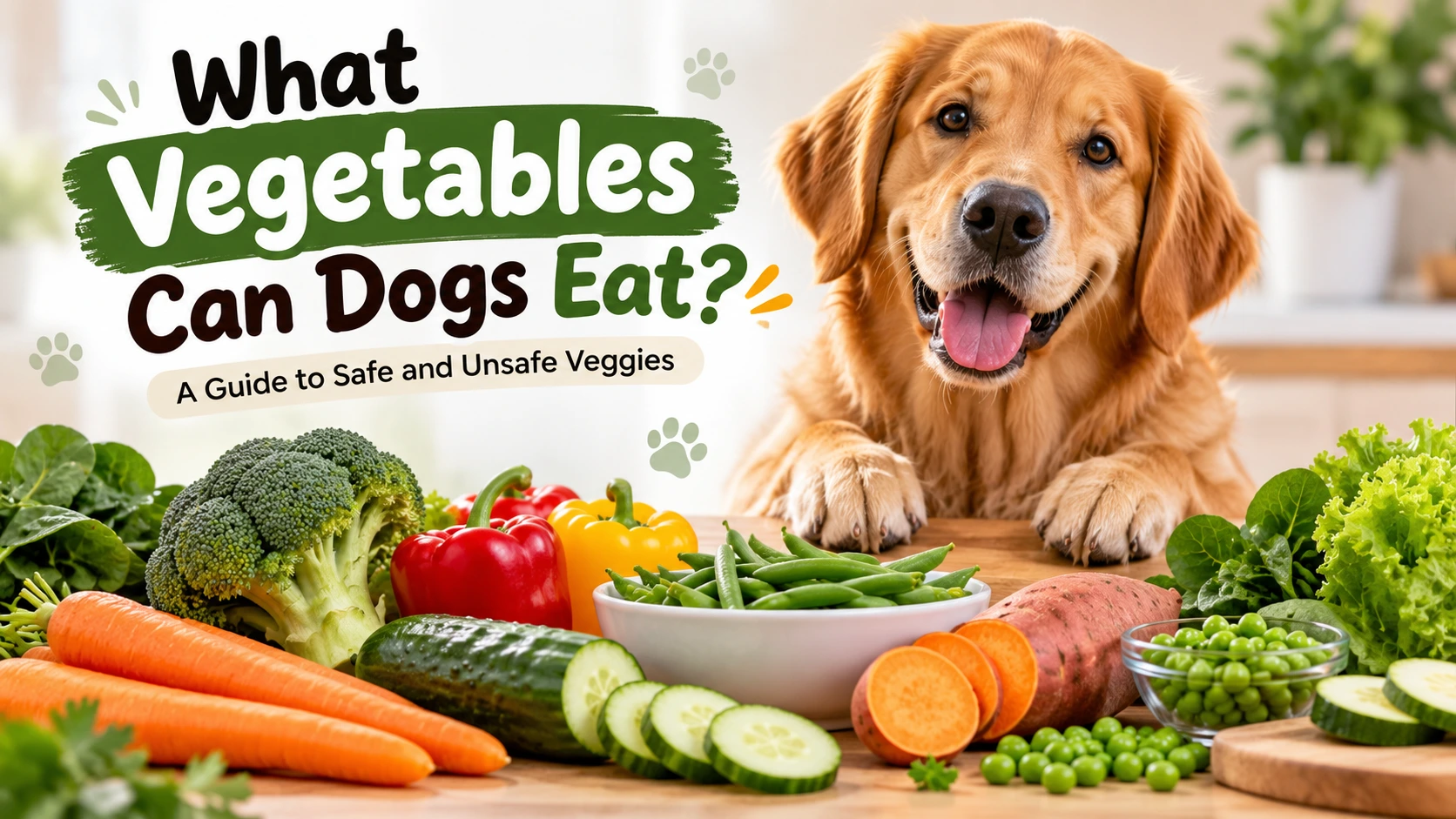
Caught your dog staring at the carrots you’re chopping for dinner? You’re probably wondering which vegetables are safe to share. Dogs can eat several vegetables, including carrots, green beans, cucumbers, broccoli, peas and zucchini. However not every vegetable belongs in your dog’s bowl. Some can cause digestive problems, while others such as onions and garlic are toxic. Here’s what vegetables dogs can eat, which ones to avoid and how to prepare them safely.
What Vegetables Can Dogs Eat Safely?
Many vegetables are safe for healthy dogs when served plain and in small portions. They can add variety to your dog’s treats but they shouldn’t replace a complete and balanced dog food. Here’s a quick guide to commonly available vegetables.
| Vegetable | Safe For Dogs? | Best Way To Serve |
|---|---|---|
| Carrots | Yes | Raw or cooked, chopped |
| Green beans | Yes | Plain, raw or cooked |
| Cucumbers | Yes | Raw, bite-sized pieces |
| Broccoli | Yes, limited | Plain, preferably cooked |
| Peas | Yes | Fresh or cooked |
| Zucchini | Yes | Raw or cooked |
| Pumpkin | Yes | Plain, cooked or puréed |
| Sweet potatoes | Yes | Fully cooked |
| Bell peppers | Yes | Deseeded, chopped |
| Celery | Yes | Finely chopped |
| Cauliflower | Yes, limited | Cooked, small amounts |
| Brussels sprouts | Yes, limited | Cooked, small amounts |
| Lettuce | Yes | Washed, chopped |
| Cabbage | Yes, limited | Cooked, small amounts |
| Spinach | Limited | Small amounts, vet guidance |
Dogs with kidney disease, digestive conditions or prescription diets may need different restrictions.
15 Vegetables Dogs Can Eat
1. Carrots
- Carrots are one of the simplest vegetables to share with your dog. They’re low in calories and contain beta-carotene, which the body converts into vitamin A.
- Dogs can eat carrots raw or cooked. Cut them into bite-sized pieces, especially for smaller breeds to reduce choking risks.
2. Green Beans
- Green beans provide fiber and make a convenient alternative to calorie-dense dog treats.
- Serve them raw, steamed or boiled without salt, butter or seasoning. Unsalted canned green beans can also work.
3. Cucumbers
- Cucumbers are mostly water, making them a refreshing snack during warm weather.
- They’re low in calories and suitable for many dogs watching their weight. Wash them and slice them into manageable pieces.
4. Broccoli
- Broccoli contains vitamin C and fiber, but it’s a vegetable that requires moderation.
- Large amounts can irritate your dog’s digestive system and thick stalks can be choking hazards. Offer small pieces of plain cooked broccoli occasionally.
5. Peas
- Green peas, snow peas, and sugar snap peas can be offered occasionally.
- They provide fiber and several nutrients. Fresh or frozen peas are preferable to canned varieties containing added sodium.
6. Zucchini
- Zucchini is a low-calorie vegetable containing water and fiber.
- Dogs can eat plain zucchini raw or cooked. Remove tough ends and cut it into small pieces before serving.
7. Pumpkin
- Plain pumpkin contains fiber and can be a useful addition to some dogs diets.
- Serve cooked pumpkin or 100% pure canned pumpkin. Avoid pumpkin pie filling, added sugar and spices.
8. Sweet Potatoes
- Sweet potatoes contain beta-carotene and dietary fiber.
- Always cook sweet potatoes thoroughly before feeding them to your dog. Remove the skin if necessary and serve small, plain portions without butter or sugar.
9. Bell Peppers
- Red, yellow, orange and green bell peppers can be safe treats for dogs.
- Remove the stem and seeds then chop the pepper into small pieces. Avoid hot peppers and spicy seasonings.
10. Celery
- Celery contains water, fiber and several vitamins.
- Its stringy texture can be difficult for some dogs to chew, so slice it into small manageable pieces.
11. Cauliflower
- Cauliflower is generally safe in modest quantities.
- Cooked plain cauliflower is often easier to chew. Because it can cause gas, introduce it slowly.
12. Brussels Sprouts
- Brussels sprouts contain fiber and various micronutrients.
- However, they can cause considerable gas and digestive discomfort. Offer only small, cooked portions occasionally.
13. Lettuce
- Romaine and iceberg lettuce are generally safe for dogs.
- Their high water content makes them a light snack, although they offer limited nutritional benefits in the small portions dogs should eat.
14. Cabbage
- Dogs can eat small quantities of plain cabbage.
- Cooked cabbage may be easier to digest but too much can cause bloating or gas.
15. Spinach
- Spinach contains vitamins and minerals but it isn’t the best regular vegetable treat for dogs.
- Its oxalate content can be a concern particularly for dogs with certain kidney or urinary conditions. Speak with your veterinarian before offering it regularly.
What Vegetables Can Dogs Not Eat?
Not every vegetable safe for humans is safe for dogs. Some contain toxic compounds while others present choking or intestinal blockage risks.
| Vegetable or Plant | Why Dogs Should Avoid It |
|---|---|
| Onions | Toxic; can damage red blood cells |
| Garlic | Toxic; can cause oxidative damage to red blood cells |
| Leeks | Toxic; part of the Allium family |
| Chives | Toxic; part of the Allium family |
| Wild mushrooms | Some species can cause severe poisoning |
| Raw or green potatoes | May contain harmful levels of glycoalkaloids |
| Corn cobs | Can cause choking or intestinal obstruction |
| Green tomato plants | Stems and leaves contain toxic glycoalkaloids |
Onions, garlic, leeks and chives are dangerous whether raw, cooked, dried or powdered. Contact your veterinarian promptly if your dog eats one of these foods do not wait for symptoms.
What Raw Vegetables Can Dogs Eat?
- Dogs can eat several raw vegetables, provided they’re washed and chopped properly.
- Good options include carrots, cucumbers, celery, bell peppers, zucchini and green beans. Some dogs can also tolerate small amounts of raw broccoli.
- Raw vegetables can be difficult for some dogs to chew or digest. If your dog has sensitive digestion or dental problems, lightly steaming suitable vegetables may be a better option.
- Avoid giving dogs whole, hard vegetables that could become choking hazards.
What Vegetables Can Dogs Eat Every Day?
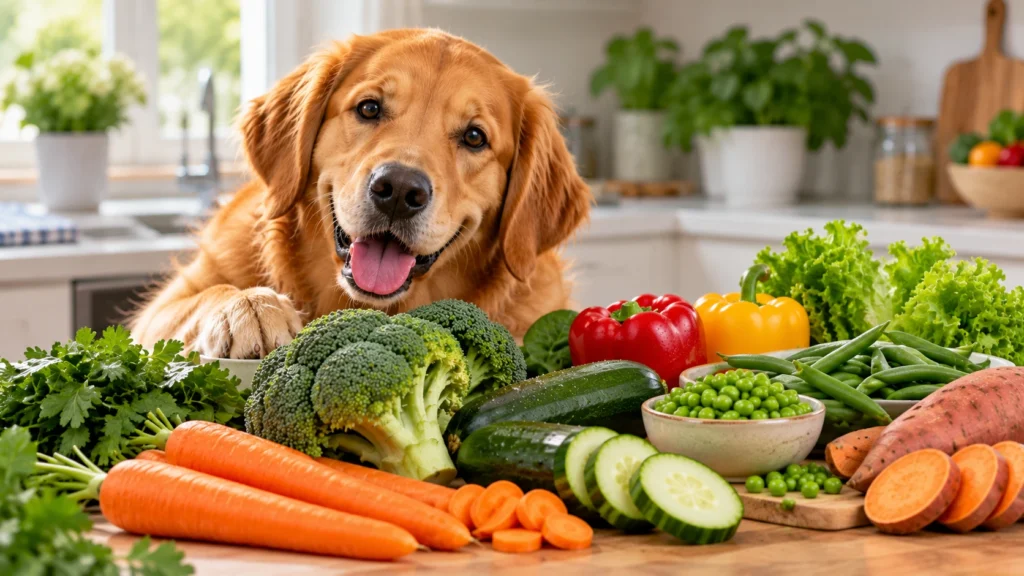
- Carrots, green beans, cucumbers and zucchini can be suitable for frequent small treats in healthy dogs that tolerate them.
- However, daily feeding doesn’t mean unlimited portions.
- Veterinary guidance recommends keeping all treats, including vegetables, within approximately 10% of your dog’s daily calories. At least 90% should come from a complete and balanced diet.
- A dog’s size, health, activity level and usual food intake determine how much is appropriate. If you’re introducing a vegetable for the first time start with a small piece and watch for vomiting, diarrhea or discomfort.
What Fruits And Vegetables Can Dogs Eat?
- Along with vegetables, some fruits can be safe occasional treats.
- Apples without seeds or cores, blueberries, strawberries and seedless watermelon flesh are common choices.
- However grapes and raisins are toxic to dogs and must never be offered. Fruit also tends to contain more natural sugar than many vegetables, so portion control matters.
Can Dogs Eat Frozen or Canned Vegetables?
- Some frozen vegetables are suitable for dogs including plain green beans, peas and carrots.
- Thaw or cook them when needed and cut larger pieces to reduce choking risks. Frozen vegetables shouldn’t contain sauces, garlic, onion or other seasonings.
- For canned vegetables, choose varieties with no added salt or harmful ingredients. Rinse them when appropriate and check labels carefully.
How To Prepare Vegetables For Dogs
Even safe vegetables can cause problems when they’re prepared incorrectly.
- Wash Thoroughly: Remove dirt and possible pesticide residue.
- Cut Into Small Pieces: Choose sizes appropriate for your dog’s breed and chewing ability.
- Keep Them Plain: Avoid butter, salt, onion powder, garlic and sauces.
- Cook When Necessary: Sweet potatoes and pumpkin should be thoroughly cooked.
- Introduce Slowly: Start with small amounts and watch for digestive upset.
- Limit Portions: Vegetables are treats not replacements for balanced dog food.
Dogs with chronic illnesses or special diets should only receive new foods after veterinary approval.
Are Vegetables Good For Dogs?
Vegetables can provide fiber water and a variety of micronutrients. Lower-calorie options such as cucumbers, carrots and green beans may also work as alternatives to more calorie-dense treats. However dogs eating complete and balanced food don’t necessarily need extra vegetables to meet their nutritional requirements. The biggest benefit often comes from replacing less nutritious treats with appropriately sized portions of dog-safe vegetables, rather than adding extra calories to the diet.
Final Thoughts
Carrots, green beans, cucumbers, zucchini and several other vegetables can make enjoyable occasional snacks for dogs. The important part is knowing which vegetables are safe, preparing them correctly and offering reasonable portions. If your dog has a medical condition or follows a prescription diet speak with your veterinarian before introducing vegetables.