

Yes, dogs can eat pineapple, and most healthy dogs can enjoy a few small pieces as an occasional treat. Fresh pineapple contains vitamin C, fiber, manganese and other nutrients. However its natural sugar and acidity mean that giving your dog too much can lead to digestive problems.
The safest option is fresh, ripe pineapple with the tough skin leaves and hard core completely removed. Cut the soft flesh into small, bite-sized pieces before serving. But what about canned pineapple, frozen chunks or pineapple juice? And how much pineapple can your dog actually eat?
Pro Tip: This guide explains which parts are safe the potential benefits and risks and how to share pineapple with your dog without upsetting their stomach.
Is Pineapple Safe For Dogs?
Pineapple is generally safe for healthy dogs when served in small amounts. Unlike grapes or raisins, the soft flesh of ripe pineapple isn’t considered toxic to dogs. However not every part of the fruit is edible.
| Pineapple Part | Safe For Dogs? |
| Fresh pineapple flesh | Yes, in moderation |
| Pineapple chunks | Yes, if cut small |
| Pineapple core | No |
| Pineapple skin | No |
| Pineapple leaves | No |
| Frozen pineapple | Yes, with precautions |
| Canned pineapple in syrup | Avoid |
| Dried pineapple | Not recommended |
| Pineapple juice | Best avoided |
American Kennel Club
If your dog has diabetes, digestive issues, or follows a prescription diet ask your veterinarian before introducing pineapple.
Is Pineapple Good For Dogs?
Pineapple can be a nutritious occasional snack, but dogs don’t need it to stay healthy. A complete and balanced dog food already provides the nutrients they require. Pineapple simply offers a little variety and can make treat time more interesting. Fresh pineapple contains:
- Vitamin C
- Vitamin B6
- Manganese
- Potassium
- Dietary fiber
- Natural antioxidants
- Bromelain, a protein-digesting enzyme
These nutrients contribute to normal bodily functions although eating pineapple has not been shown to produce major health improvements in otherwise healthy dogs. The biggest advantage is that many dogs enjoy its naturally sweet taste.
For other occasional fruit treats, see our guides to feeding apples to dogs and safe banana servings for dogs.
Health Benefits Of Pineapple For Dogs
Pineapple contains several nutrients that can complement a dog’s regular diet when given in moderation.
1. Provides Vitamin C And Antioxidants
- Pineapple contains vitamin C, which helps protect cells from oxidative damage and supports normal immune function.
- Healthy dogs naturally produce vitamin C in their bodies so they don’t usually need additional vitamin C from fruit.
- Still pineapple can contribute small amounts of antioxidants as part of an occasional treat.
2. Contains Dietary Fiber
- The fiber in pineapple supports normal digestive function.
- However more fiber isn’t always better. A dog that eats too much pineapple may experience loose stools, gas or diarrhea.
- This is why a few small pieces are preferable to an entire bowl.
3. Provides Important Minerals
- Pineapple contains manganese and smaller amounts of potassium and magnesium.
- These minerals play roles in normal metabolism, muscle function and other bodily processes.
- However, pineapple should never replace a balanced diet or a veterinarian-recommended supplement.
4. Contains Bromelain
- Bromelain is a group of enzymes naturally found in pineapple.
- These enzymes help break down proteins but there is limited evidence that ordinary servings of pineapple produce meaningful digestive benefits in dogs.
- You may also have heard that pineapple can stop dogs from eating their poop. There isn’t reliable scientific evidence that feeding pineapple consistently prevents this behavior.
5. Makes a Refreshing Occasional Treat
- Pineapple has a high water content, and a small chilled piece can be refreshing during warm weather.
- It shouldn’t replace fresh drinking water, but it can offer variety alongside your dog’s normal food.
Can Pineapple Be Bad For Dogs?
Yes Although pineapple flesh isn’t toxic excessive amounts can cause problems.
High Natural Sugar Content
- Pineapple contains natural sugars, making it less suitable for dogs that need strict calorie or blood sugar management.
- Repeatedly feeding large amounts of sugary treats can also contribute to unwanted weight gain.
- Dogs with diabetes should only receive pineapple if their veterinarian approves it.
Digestive Problems
Pineapple contains fiber, sugar and organic acids. Eating too much may cause:
- Diarrhea
- Vomiting
- Gas
- Abdominal discomfort
- Reduced appetite
Information: Some dogs have sensitive stomachs and may react even to a small serving.
Acidity And Mouth Irritation
- Pineapple is acidic and some dogs may experience mouth discomfort or stomach irritation after eating it.
- If your dog drools unusually paws at their mouth or seems uncomfortable after pineapple stop offering it.
Choking And Intestinal Blockage
- The pineapple core, skin, and leaves are difficult to chew and digest.
- Swallowing these tough parts can cause choking or an intestinal obstruction, particularly in smaller dogs.
- Always remove them before serving pineapple.
If your dog enjoys citrus fruit too, read about the benefits and risks of oranges for dogs.
How Much Pineapple Can Dogs Eat?
Most healthy adult dogs can have a few small pieces of pineapple occasionally. The amount depends on their size, daily calorie requirements, overall health and tolerance. The following table provides conservative starting suggestions rather than veterinary-prescribed serving limits.
| Dog Size | Suggested Starting Amount |
| Extra-small dogs (under 10 lbs) | 1 tiny piece |
| Small dogs (10–20 lbs) | 1–2 small pieces |
| Medium dogs (21–50 lbs) | 2–3 small pieces |
| Large dogs (51–90 lbs) | 3–4 small pieces |
| Extra-large dogs (over 90 lbs) | 4–5 small pieces |
A piece should be a small, soft, bite-sized cube, not a large pineapple chunk. For a first introduction offer less than the amount listed.
A useful guideline is the 90/10 rule: at least 90% of a dog’s daily calories should come from a complete and balanced diet, while treats, including pineapple, should account for no more than 10%. That 10% is the allowance for all treats combined not a recommendation to fill the entire allowance with pineapple.
Can Dogs Eat Pineapple Core?
No Dogs should not eat pineapple core. The core is the tough, fibrous section running through the center of the fruit. Although it isn’t poisonous its hard texture makes it difficult for dogs to chew and digest. Swallowing large pieces may result in:
- Choking
- Vomiting
- Intestinal blockage
- Abdominal pain
- Difficulty passing stool
Small dogs are particularly vulnerable to choking hazards but larger dogs can also develop obstructions.
What if your dog accidentally eats pineapple core?
If your dog swallows a piece of pineapple core, contact your veterinarian for advice, especially if the amount was large or your dog is small. If your dog is choking, struggling to breathe, repeatedly vomiting or showing severe abdominal pain, seek emergency veterinary care. Do not attempt to induce vomiting unless a veterinarian instructs you to do so.
Can Dogs Eat Pineapple Skin?
- No Pineapple skin is not safe for dogs.
- Its rough spiky surface and fibrous texture make it unsuitable for eating.
- Unlike the soft yellow flesh pineapple skin is difficult to digest and can cause choking or gastrointestinal obstruction.
- The leaves and crown should also be kept away from dogs.
- When preparing pineapple remove the outer skin completely rather than leaving small pieces attached to the flesh.
Can Dogs Eat Fresh Pineapple?
- Yes Fresh pineapple is the best option for most healthy dogs.
- Choose ripe pineapple and serve only the soft yellow flesh.
- Avoid adding sugar, syrup, salt or seasoning.
To prepare it:
- Wash the pineapple exterior before cutting.
- Remove the crown, skin, and hard core.
- Cut the flesh into appropriately small pieces.
- Start with one tiny piece.
- Monitor your dog for digestive discomfort.
Pro Tip: Fresh pineapple is generally preferable to processed varieties because you can control exactly what your dog is eating.
Can Dogs Eat Canned Pineapple?
- Canned pineapple is best avoided, especially when packed in heavy syrup.
- Many canned pineapple products contain added sugar which dogs don’t need.
- Even products packed in juice can deliver more concentrated sugar than a small serving of fresh fruit.
- If you’re choosing a treat specifically for your dog fresh pineapple is the better option.
If your dog accidentally eats a small amount of plain canned pineapple it doesn’t automatically mean they’ll become sick. Check the ingredients for sweeteners or other additives and contact your veterinarian if there are concerning ingredients or symptoms.
Can Dogs Eat Frozen Pineapple?
Yes. Dogs can eat frozen pineapple in small amounts if it contains no added sugar or sweeteners. Frozen pineapple can be a refreshing summer snack, but large, rock-hard chunks may present choking risks or be difficult on your dog’s teeth. For safer serving:
- Use fresh pineapple without skin or core.
- Cut it into tiny pieces before freezing.
- Let pieces soften slightly before offering them.
- Supervise your dog while eating.
- Avoid giving hard frozen chunks to dogs with dental problems.
Pro Tip: You can also blend a small amount of fresh pineapple with water and freeze it into a softer treat. Always keep portions small.
You can also read our blueberry feeding guide for dogs when choosing other fruit treats.
Can Dogs Eat Dried Pineapple?
- Dried pineapple isn’t recommended for dogs.
- Removing water from pineapple makes the remaining pieces much more concentrated in sugar and calories.
- A small handful of dried pineapple can contain considerably more sugar than the same volume of fresh fruit.
- Commercial dried pineapple may also contain added sugar, preservatives, or flavorings.
- If you’re considering dried pineapple as a dog treat, choose a small amount of fresh pineapple instead.
Can Dogs Eat Cooked or Grilled Pineapple?
Plain, cooked pineapple flesh may be acceptable in small amounts, provided it has been prepared without unsafe ingredients. However cooking doesn’t make pineapple healthier for dogs. Many grilled pineapple recipes use ingredients such as:
- Added sugar
- Butter
- Sweet sauces
- Syrups
- Seasonings
These additions can increase calories or cause digestive problems. If you want to share pineapple, plain fresh pieces are simpler and generally preferable.
Can Dogs Drink Pineapple Juice?
Pineapple juice is not recommended as a regular drink for dogs. Even unsweetened pineapple juice contains naturally occurring sugars and acids but lacks much of the fiber found in whole fruit. Packaged pineapple drinks may also contain added sugar or other ingredients. If your dog needs hydration, fresh water is always the right choice. A small accidental lick of plain pineapple juice is unlikely to harm most healthy dogs but there’s no nutritional reason to offer it deliberately.
Can Dogs Eat Pineapple In Other Foods?
Pineapple appears in many foods but that doesn’t mean they’re suitable for dogs.
| Food | Recommendation |
| Pineapple chunks | Safe in small amounts when fresh and plain |
| Pineapple slices | Safe if peeled, cored, and cut small |
| Pineapple yogurt | Only if plain, unsweetened, xylitol-free, and tolerated |
| Pineapple cake | Avoid |
| Pineapple pizza | Avoid |
| Pineapple ice cream | Avoid |
| Pineapple popsicles | Only homemade varieties with dog-safe ingredients |
| Pineapple cottage cheese | Not ideal; dairy can upset sensitive stomachs |
Can Dogs Eat Pineapple Yogurt?
A tiny amount of plain, unsweetened yogurt mixed with fresh pineapple may be tolerated by some dogs. However, dogs that are sensitive to lactose may develop gas or diarrhea. Never feed yogurt containing xylitol also called birch sugar because it is highly toxic to dogs.
Can Dogs Eat Pineapple Cake?
No Pineapple cake is not a suitable dog treat. Cake usually contains sugar, butter, and other ingredients that provide unnecessary calories and may upset your dog’s stomach. Some recipes may also contain ingredients that are dangerous for dogs.
Can Dogs Eat Pineapple Pizza?
Pineapple pizza isn’t recommended for dogs. The concern isn’t just the pineapple. Pizza may contain fatty cheese, salty processed meat and sauces or seasonings containing onion or garlic. Both onion and garlic are toxic to dogs.
Can Dogs Eat Pineapple Popsicles?
Homemade pineapple popsicles can be an option when made with a small amount of fresh pineapple and water. Avoid commercial popsicles containing added sugars artificial sweeteners, or other unsuitable ingredients. Make the frozen treat small and soft enough to eat safely.
How To Safely Feed Pineapple To Your Dog
Preparing pineapple correctly matters just as much as controlling the serving size.
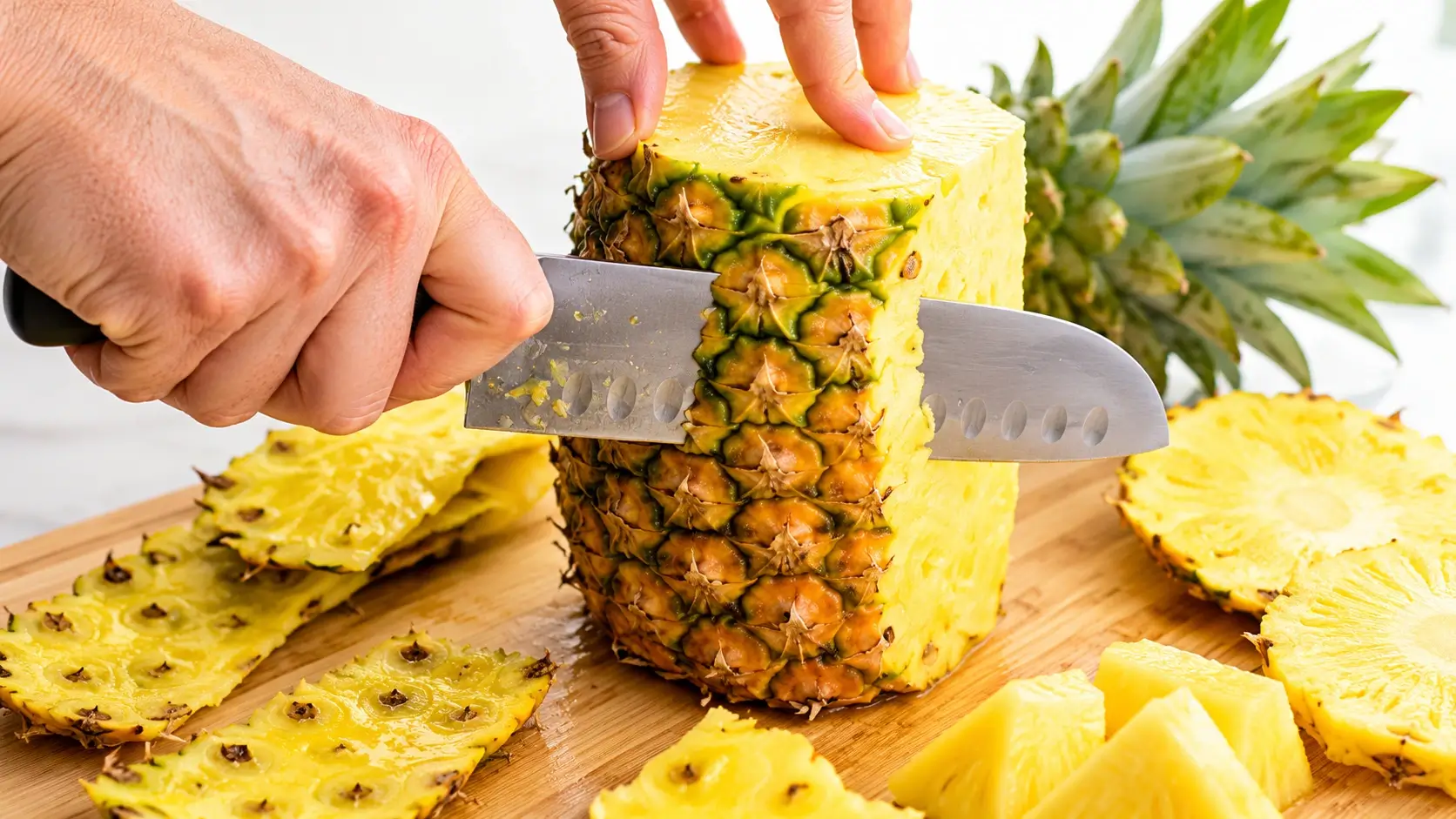
Step 1: Remove The Skin And Core
Peel the pineapple completely and discard the tough center, crown, and leaves.

Step 2: Cut Small Pieces
Slice the soft flesh into tiny cubes appropriate for your dog’s mouth and size.

Step 3: Offer a Small Taste
Introduce one piece and watch for unusual symptoms before offering pineapple again. Don’t force your dog to eat pineapple if they don’t like it. Some dogs enjoy sweet fruit, while others prefer their regular treats.
What Happens If a Dog Eats Too Much Pineapple?
Eating too much pineapple can cause digestive upset. Your dog may develop loose stools, vomiting, gas or abdominal discomfort due to the fruit’s sugar, fiber and acidity. If your dog eats more pineapple than intended:
- Remove the remaining fruit.
- Check whether they ate any skin or core.
- Make fresh water available.
- Monitor for vomiting, diarrhea, or discomfort.
- Contact your veterinarian if your dog ate a large amount or develops symptoms.
Persistent vomiting significant lethargy a swollen or painful abdomen or difficulty passing stool requires prompt veterinary attention. If your dog ate large pieces of core or skin don’t wait for symptoms before seeking veterinary advice.
Can Puppies Eat Pineapple?
Puppies may be able to tolerate tiny amounts of fresh pineapple but it isn’t a necessary part of their diet. Their digestive systems can be sensitive especially during dietary changes. If your puppy is old enough to eat solid food and is otherwise healthy ask your veterinarian before introducing unfamiliar treats.
For puppies that are allowed pineapple:
- Offer only a very small piece of soft flesh.
- Remove all skin and core.
- Avoid canned or dried pineapple.
- Introduce only one new food at a time.
- Watch for diarrhea or vomiting.
Pro Tip: A complete puppy food should remain the foundation of their diet.
Final Thoughts
So can dogs eat pineapple? Yes most healthy dogs can safely enjoy a few small pieces of fresh pineapple as an occasional treat. The key is proper preparation and moderation. Remove the tough core, skin and leaves then serve only the soft yellow flesh in bite-sized pieces. Avoid canned pineapple in syrup, dried pineapple, and sugary pineapple desserts. Pineapple isn’t essential for your dog’s health but if your pet enjoys it and tolerates it well a little fresh pineapple can be a tasty change from their usual treats.