
Yes, dogs can eat ripe red tomatoes in small amounts. The soft fleshy part of a fully ripe tomato is generally safe for dogs. However unripe green tomatoes and the leaves stems and vines of tomato plants contain naturally occurring compounds that can be harmful. If your dog steals a small piece of ripe tomato from your salad, there’s usually no reason to panic. But if they’ve been chewing on tomato plants in your garden that’s a different situation. The important thing is knowing which parts are safe how much to offer and when a tomato snack could become a problem.
Are Tomatoes Safe For Dogs?
Tomatoes aren’t automatically dangerous for dogs. The risk depends on how ripe they are and which part of the plant your dog eats. Fully ripe tomatoes are considered non-toxic and can be offered occasionally in small portions. Green tomatoes and the plant’s leaves and stems should be avoided. Here’s a quick comparison:
| Tomato type | Safe For Dogs? |
| Ripe red tomatoes | Yes, in moderation |
| Ripe cherry tomatoes | Yes, cut into pieces |
| Ripe grape tomatoes | Yes, cut into pieces |
| Raw ripe tomatoes | Yes, in small amounts |
| Plain cooked ripe tomatoes | Generally yes |
| Unripe green tomatoes | No |
| Tomato leaves and stems | No |
| Seasoned tomato sauce | Avoid |
| Canned tomatoes | Check ingredients plain only |
Even safe tomatoes should be an occasional treat rather than a regular part of your dog’s meals.
Can Dogs Eat Different Types of Tomatoes?
Not all tomatoes are served the same way. Some are small enough to swallow whole, while others are cooked, canned or mixed with seasonings.
Can Dogs Eat Cherry Tomatoes?
- Yes, dogs can eat fully ripe cherry tomatoes in moderation.
- Cherry tomatoes are small and juicy, but their round shape can create a choking risk, particularly for small dogs.
- Wash them remove the stems and cut them into smaller pieces before serving.
Can Dogs Eat Grape Tomatoes?
Ripe grape tomatoes are generally safe for dogs when served plain. Like cherry tomatoes, they should be cut into manageable pieces. Avoid serving them whole to puppies or dogs that tend to swallow food without chewing.
Can Dogs Eat Raw Tomatoes?
- Yes Raw, fully ripe tomatoes are safe for most healthy dogs in small quantities.
- Wash the tomato, remove its stem and leaves and offer a small piece of the flesh.
- There’s no need to cook a ripe tomato before sharing it with your dog.
Can Dogs Eat Cooked Tomatoes?
- Dogs can eat plain cooked tomatoes made from fully ripe fruit, provided they’re free from harmful ingredients.
- The problem usually comes from how tomatoes are prepared. Garlic, onions, excessive salt, and rich sauces can turn an otherwise safe ingredient into an unsuitable meal for your dog.
Can Dogs Eat Green Tomatoes?
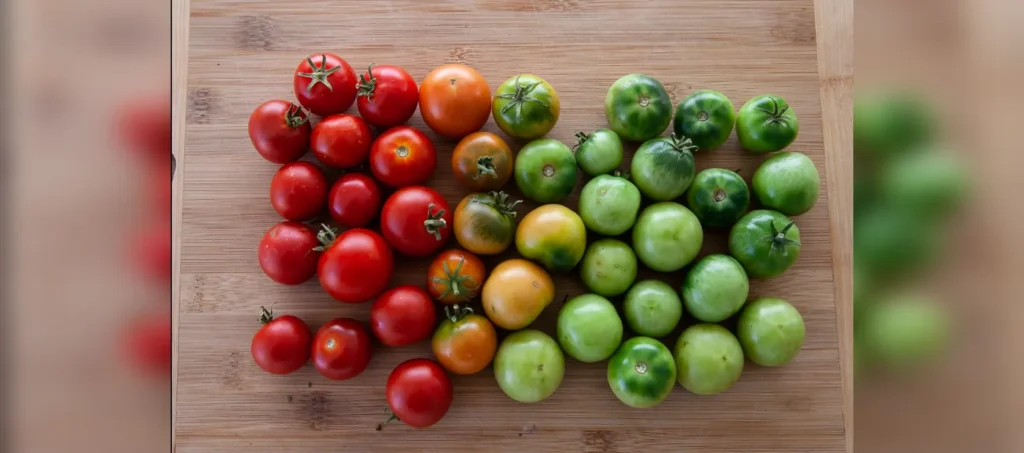
- No Unripe green tomatoes contain higher concentrations of tomatine and related glycoalkaloids than ripe tomatoes.
- These compounds can cause digestive upset and after significant exposure, weakness or neurological symptoms.
Keep your dog away from green tomatoes growing in the garden.
Can Dogs Eat Roma Tomatoes?
Yes fully ripe Roma tomatoes are generally safe in small amounts. Remove the green parts and cut the tomato into bite-sized pieces. Roma tomatoes don’t require any special preparation beyond the usual precautions.
Can Dogs Eat Yellow Tomatoes?
- A fully ripe yellow tomato can generally be treated like a ripe red tomato. The key is maturity, not color alone.
- Some tomato varieties naturally ripen to yellow or orange. Don’t confuse them with unripe green tomatoes.
- If you’re unsure whether a tomato is fully ripe, it’s better not to offer it.
Can Dogs Eat Baby Tomatoes?
Yes, if they’re fully ripe. Baby tomatoes are usually cherry or grape varieties. Remove any stems and slice them into smaller pieces before feeding, especially for puppies and small breeds.
Are Tomatoes Good for Dogs?
Ripe tomatoes contain several nutrients that support general health, including vitamins, fiber and antioxidants. However dogs eating a complete and balanced diet don’t need tomatoes to meet their nutritional requirements.
1. Vitamins A, C And K
Tomatoes contain vitamin C, vitamin K and carotenoids that the body can convert to vitamin A. These contribute to normal bodily functions although tomatoes shouldn’t be relied on as a primary nutrient source for dogs.
2. Antioxidants
Tomatoes contain lycopene, the pigment responsible for the red color of many ripe varieties. Lycopene acts as an antioxidant, but there’s limited evidence that occasional tomato treats provide specific health benefits for dogs.
3. Fiber For Digestion
The fiber in tomatoes contributes to normal digestive function. However, too much tomato can cause loose stools or an upset stomach, especially in dogs with sensitive digestion.
4. Water Content
Tomatoes contain plenty of water, making them a refreshing occasional snack. They aren’t a substitute for fresh drinking water or a balanced diet.
Bottom line: Ripe tomatoes offer some nutritional value, but their biggest benefit is simply providing a little variety as an occasional treat.
Why Are Green Tomatoes Toxic To Dogs?
- Tomatoes belong to the nightshade family, which includes potatoes and eggplants.
- The green parts of tomato plants contain naturally occurring glycoalkaloids, particularly tomatine. These substances help protect the plant but can be harmful to dogs when consumed in sufficient quantities.
- As tomatoes ripen, their tomatine levels fall significantly. This is why fully ripe tomatoes are generally safe while unripe green tomatoes and tomato plant material should be avoided.
- The ASPCA confirms that ripe tomato fruit is non-toxic, while the plant itself can cause poisoning.
Are Tomato Leaves And Stems Poisonous To Dogs?
Yes Tomato leaves, stems, vines and flowers contain higher concentrations of potentially harmful compounds. If you grow tomatoes at home, keep your dog away from the plants. Curious dogs may chew leaves or fallen green tomatoes while exploring the garden.
Symptoms Of Tomato Poisoning In Dogs
Tomato poisoning is uncommon but eating substantial amounts of unripe tomatoes or tomato plant material can cause illness. Symptoms may include:
- Vomiting or diarrhea
- Excessive drooling
- Loss of appetite
- Unusual tiredness or weakness
- Difficulty walking or poor coordination
- Dilated pupils
- Tremors
- Changes in heart rate in severe cases
Symptoms depend on the amount eaten, the dog’s size and its overall health. If your dog develops weakness, tremors, trouble walking or other concerning symptoms, seek veterinary attention promptly.
How Much Tomato Can Dogs Eat?
There isn’t a universally recommended tomato serving size for dogs. A small piece of ripe tomato is enough for a first taste. Larger dogs may tolerate slightly more, but tomatoes should remain an occasional treat.
| Dog size | Suggested approach |
| Small dogs | Start with one tiny, bite-sized piece |
| Medium dogs | Start with a small piece |
| Large dogs | Start with one or two small pieces |
| Puppies | Ask your veterinarian before introducing tomatoes |
These are cautious starting suggestions, not established veterinary dosage guidelines. Remember that treats, including tomatoes, should make up no more than about 10% of your dog’s daily calories. The remaining calories should come from a complete and balanced diet. Dogs with sensitive stomachs, medical conditions or prescription diets may need to avoid tomatoes entirely.
How To Safely Feed Tomatoes To Dogs
If your dog enjoys tomatoes, a little preparation can help make snack time safer.
- Choose fully ripe tomatoes. Avoid unripe fruit and anything with attached green plant material.
- Wash them thoroughly. Rinse off dirt and potential pesticide residues.
- Remove leaves and stems. Never serve tomato vines or other plant parts.
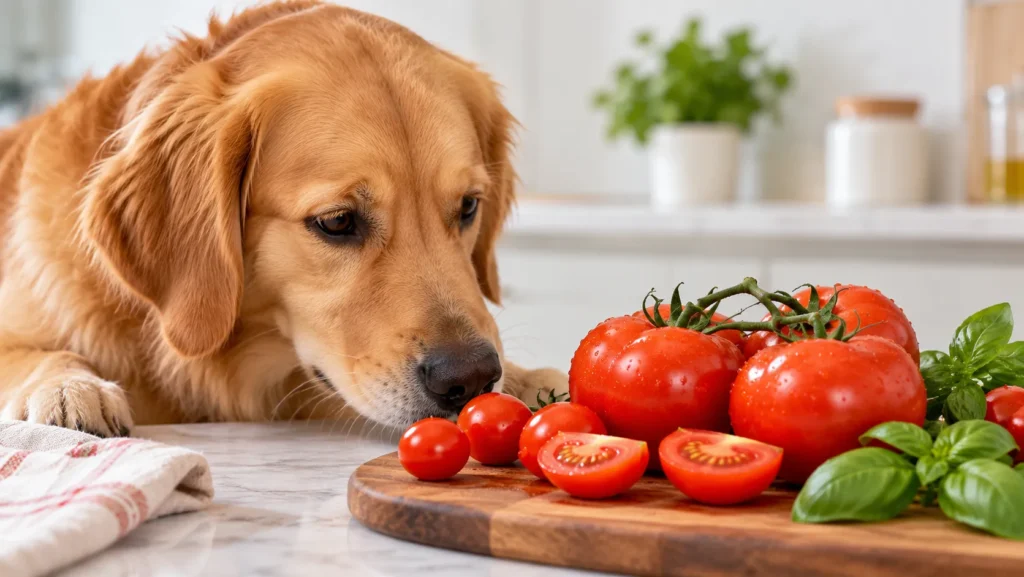
- Cut into small pieces. This reduces choking risks, particularly with cherry and grape tomatoes.
- Serve plain. Skip added salt, garlic, onion, butter, and seasonings.
- Start small. Watch for vomiting, diarrhea, itching, or other unusual reactions.
For a simple snack offer a small piece of ripe tomato by itself or mix a little chopped tomato into your dog’s regular food.
Can Dogs Eat Tomato Sauce And Other Tomato Products?
Fresh tomatoes are one thing but processed tomato foods need extra caution.
Can Dogs Eat Tomato Sauce?
Plain tomato sauce made only from ripe tomatoes is not inherently toxic to dogs. However, many store-bought and homemade sauces contain onions, garlic, added salt, and seasonings. Onion and garlic are toxic to dogs, so seasoned tomato sauce is best avoided.
Can Dogs Eat Canned Tomatoes?
Plain canned ripe tomatoes without added seasonings may be safe in small quantities. Check the label carefully for garlic, onions and excess sodium. Fresh ripe tomatoes are usually the simpler option.
Can Dogs Eat Tomato Soup?
It’s best not to share tomato soup with your dog. Many recipes contain garlic, onions, cream, salt and other ingredients that make them unsuitable for dogs.
Can Dogs Eat Sun-Dried Tomatoes?
Sun-dried tomatoes made from ripe fruit aren’t automatically toxic. However, they’re concentrated and often preserved in oil, salt or seasonings. They aren’t an ideal dog treat. Offer a little fresh ripe tomato instead.
Can Dogs Eat Ketchup?
Ketchup isn’t recommended for dogs. Although a tiny accidental lick of ordinary ketchup may not cause a problem, it often contains added sugar, salt and other ingredients that offer no nutritional benefit to dogs.
What to Do if Your Dog Eats Green Tomatoes
Discovering that your dog has been eating tomatoes from the garden can be worrying. What matters most is identifying exactly what they consumed. If your dog eats an unripe tomato, tomato leaves, or stems:
- Remove access to the plant so they can’t eat more.
- Check what parts were eaten and estimate the amount.
- Contact your veterinarian or a pet poison control service promptly for advice.
- Watch for vomiting, weakness, diarrhea, drooling, or changes in behavior.
- Do not induce vomiting or give home treatments unless instructed by a veterinarian.
In the United States, you can contact the ASPCA Animal Poison Control Center at 888-426-4435 or Pet Poison Helpline at 855-764-7661. Consultation fees may apply. A small bite of ripe tomato is usually harmless but consuming green plant material requires greater caution.
Final Thoughts
So can dogs eat tomatoes? Yes, as long as they’re fully ripe, plain, and served in small amounts. A little red tomato can be a harmless treat for a healthy dog, but the green fruit, leaves and stems are best kept off the menu. And while it’s tempting to share leftover pasta sauce or a bite of tomato soup, those foods often contain ingredients dogs shouldn’t eat. If your dog enjoys the occasional piece of tomato there’s no need to make it complicated. Keep the portion small, prepare it safely and pay attention to how your dog responds.