
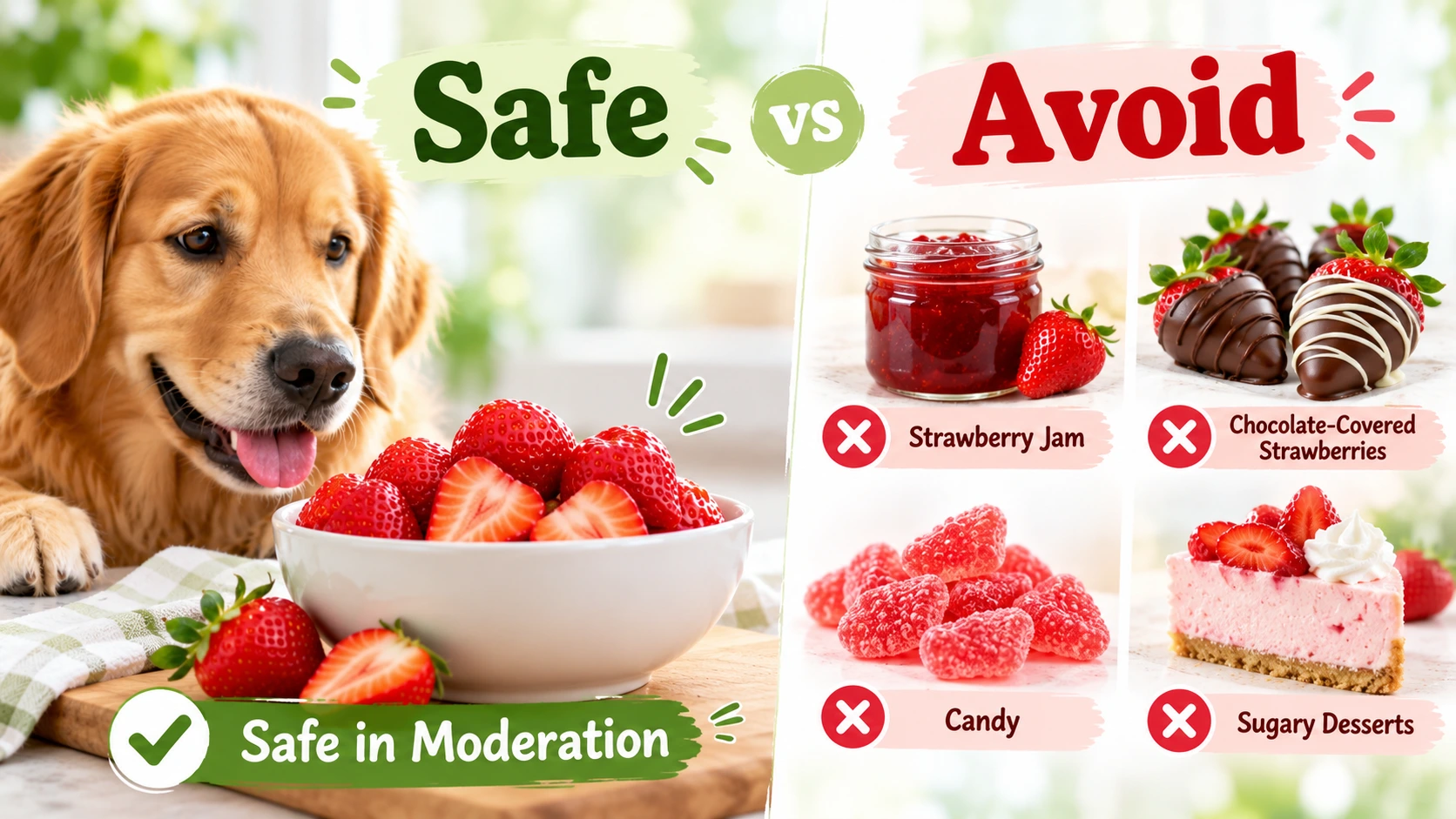
Yes, dogs can eat strawberries. Fresh properly prepared strawberries can be an occasional treat for most healthy dogs. The important part is how much you give and how you prepare them.
Strawberries contain fiber, vitamin C, water and antioxidants, but they also contain natural sugar. They should therefore be treated as a snack rather than a regular replacement for your dog’s complete food. keeping treats such as strawberries to no more than about 10% of a dog’s daily calories
Quick Answer
| Question | Answer |
| Can dogs eat strawberries? | Yes |
| Are strawberries toxic to dogs? | No |
| Can puppies eat them? | Usually yes, in small pieces |
| Can dogs eat frozen strawberries? | Yes, if appropriately cut |
| Can dogs eat strawberry leaves? | Best removed |
| Can dogs eat strawberry stems? | Best removed |
| Can dogs eat canned strawberries? | Avoid them |
| Can dogs eat strawberry ice cream? | Not recommended |
| Can dogs eat strawberries every day? | Small amounts may be tolerated, but they are better treated as an occasional snack |
Are Strawberries Safe For Dogs?
For most healthy dogs, fresh strawberries are considered safe when served in moderation. They are not considered toxic to dogs. The bigger concerns are excessive portions, natural sugar, digestive upset and choking especially if a small dog is given a whole strawberry.
Washing strawberries, removing the leaves and stems and cutting the fruit into appropriately sized pieces before feeding it to a dog. So if your dog is staring at you while you’re eating a bowl of strawberries, sharing a small plain piece is generally fine. Just don’t hand over the whole bowl.
Are Strawberries Good For Dogs?
Strawberries can provide some useful nutrients, although your dog should already receive their essential nutrition from a complete and balanced dog food.
Strawberries naturally provide:
- Fiber
- Vitamin C
- Antioxidants
- Potassium
- Water
- Several vitamins and minerals
Strawberries contain antioxidants, fiber, vitamin C and plenty of water. Think of strawberries as a bonus treat not a nutritional supplement your dog needs.
Fiber
Dietary fiber can support normal digestion. However, suddenly giving your dog a large amount of fruit can have the opposite effect and cause loose stool or an upset stomach.
Antioxidants
Strawberries contain naturally occurring antioxidants. These compounds are one reason berries are commonly included among dog-safe fruits.
High Water Content
Fresh strawberries contain plenty of water, making them a refreshing snack, particularly during warmer weather. That doesn’t mean strawberries should replace your dog’s water bowl of course.
How To Prepare Strawberries For Dogs
Preparation is simple.
1. Wash Them
Rinse fresh strawberries thoroughly before serving them. Washing helps remove dirt and residues that may be present on the surface. Cleaning strawberries before offering them to a dog.
2. Remove The Green Top
Remove the stem and leafy green portion. The leaves aren’t generally considered the desirable part to feed. They are harder to digest than the soft fruit and offer little reason to include them.
3. Cut Them Into Small Pieces
How small depends on your dog’s size. For a tiny breed cut the strawberry into several bite-sized pieces. A larger dog may comfortably handle bigger pieces, although dogs that gulp food should still receive smaller pieces.
4. Start With a Small Amount
If your dog has never eaten strawberries before, don’t start with several berries. Offer one small piece and see how your dog handles it.
How Many Strawberries Can Dogs Eat?
There isn’t one perfect strawberry serving for every dog. A Chihuahua and a Great Dane clearly shouldn’t receive the same portion.
A better principle is to keep strawberries and other treats within your dog’s overall treat allowance. Veterinary nutrition guidance commonly recommends that treats make up no more than about 10% of daily calories, while most nutrition should come from complete and balanced dog food.
As a simple starting point:
| Dog Size | Starting Portion |
| Extra-small dog | 1–2 small slices |
| Small dog | 2–3 small slices |
| Medium dog | A few slices |
| Large dog | Several slices |
| Extra-large dog | A small handful of appropriately cut pieces |
These aren’t medical prescriptions. Your dog’s appropriate portion can change according to weight, diet, activity level and health.
Can Small Dogs Eat Strawberries?
Yes small dogs can eat strawberries but portion size and choking risk matter more.
- Cut the fruit into small pieces rather than giving a toy breed one large strawberry.
- A whole berry can be surprisingly large relative to a small dog’s mouth.
Can Puppies Eat Strawberries?
Healthy puppies can generally have small amounts of plain strawberry once they are eating solid food, but their main nutrition should come from appropriately formulated puppy food. Start with a tiny, soft piece. Because puppies have smaller mouths and may gulp unfamiliar foods, chopping or mashing the berry can make it easier to serve safely.
Can Dogs Eat Fresh Strawberries?
Yes. Fresh strawberries are one of the simplest forms to offer your dog. Wash them, remove the tops, chop them into suitable pieces and serve them plain.
Avoid adding:
- Sugar
- Chocolate
- Syrup
- Whipped cream
- Sweeteners
Plain is better.
Can Dogs Eat Frozen Strawberries?
Yes, dogs can eat plain frozen strawberries, but preparation matters. Cutting them into appropriately sized pieces rather than offering a large frozen berry that could become a choking hazard. You can also let frozen pieces soften slightly before feeding them. Frozen strawberries can be particularly useful as an occasional summer treat.
Can Dogs Eat Whole Strawberries?
Larger dogs may be capable of chewing a whole strawberry, but cutting strawberries is generally safer. For small dogs, puppies, senior dogs or dogs that swallow food quickly, whole berries may present an unnecessary choking risk. When in doubt, chop them.
Can Dogs Eat Strawberry Tops?
It’s better to remove the top before giving your dog strawberries. The leafy portion and stem don’t provide the same easy-to-eat texture as the fruit itself and may be harder to digest.
If your dog accidentally eats a small strawberry top, it doesn’t automatically mean there’s an emergency. Monitor your dog and contact your veterinarian if unusual symptoms develop.
Can Dogs Eat Strawberry Leaves?
Strawberry leaves are not something you need to intentionally feed your dog. Remove the leaves when preparing strawberries.
Notes: that strawberry leaves and stems can be difficult to digest and may contribute to gastrointestinal upset.
Can Dogs Eat Dried Strawberries?
Be more careful with dried strawberries. Drying fruit removes much of its water, which makes the sugar and calories more concentrated by weight. Some commercial dried strawberries also contain added sugar. If you want to give your dog strawberries, plain fresh fruit is usually the simpler choice.
Can Dogs Eat Freeze-Dried Strawberries?
Plain, unsweetened freeze-dried strawberries can sometimes be given in very small portions. Always check the ingredient list. Ideally, it should say something simple such as:
Strawberries. Avoid products containing added sugar, chocolate, artificial sweeteners or other unnecessary ingredients.
Can Dogs Eat Strawberries Every Day?
A small strawberry portion may fit into some healthy dogs’ diets regularly, but your dog doesn’t need strawberries every day. Variety and portion control are more important.
If you do offer them frequently, remember that strawberries still count toward your dog’s daily treat allowance. Dogs with diabetes, excess weight, gastrointestinal problems, or other medical conditions may need different dietary restrictions. Fruit with your veterinarian when underlying health conditions are involved.
Risks Of Feeding Strawberries To Dogs
Strawberries are safe for most dogs, but “safe” doesn’t mean unlimited.
Too Much Sugar
Strawberries contain naturally occurring sugar. That’s different from saying strawberries are unhealthy but large amounts are unnecessary particularly for dogs already receiving treats from other sources. Dogs with diabetes should have their diet discussed with a veterinarian before new fruit treats are introduced.
Upset Stomach
Too many strawberries may lead to:
- Loose stool
- Diarrhea
- Gas
- Vomiting
- Stomach discomfort
Introduce new foods gradually.
Choking
Whole strawberries can be a choking hazard for some dogs.
This is especially important for:
- Puppies
- Small breeds
- Senior dogs
- Fast eaters
Pro Tip: Chopping the fruit solves much of this problem.
Food Sensitivity
Any new food can disagree with an individual dog. Stop feeding strawberries and contact your veterinarian if your dog develops concerning symptoms after eating them.
What Strawberry Foods Should Dogs Avoid?
This section is important because strawberry flavored doesn’t mean the same thing as fresh strawberries.
Canned Strawberries
Avoid canned strawberries packed in syrup. They commonly contain much more added sugar than fresh berries. Fresh or frozen strawberries instead of fruit packaged in syrup.
Strawberry Jam
Don’t make strawberry jam a dog treat. Jam typically contains large quantities of added sugar and may contain other ingredients that aren’t appropriate for dogs.
Strawberry Candy
No. Candy has none of the advantages that make fresh strawberry a reasonable occasional dog treat.
Chocolate-Covered Strawberries
Avoid them. Chocolate can be toxic to dogs, making chocolate-covered strawberries unsuitable even though the strawberry itself is safe.
Strawberry Ice Cream
It’s better to skip it. Ice cream typically contains high amounts of sugar and fat and some dogs don’t tolerate dairy well.
Strawberry Yogurt
Commercial strawberry yogurt is different from plain strawberry fruit. Many varieties contain added sugar or sweeteners. If you’re considering yogurt for your dog, check every ingredient first and ask your veterinarian if you’re uncertain.
Important: Watch For Xylitol: Xylitol is an artificial sweetener that can be extremely dangerous to dogs. Never feed your dog a product containing xylito.
Can Dogs Eat Strawberries And Blueberries?
Yes, many healthy dogs can have both strawberries and blueberries in appropriate portions. Both can be offered as occasional fruit treats. The important word is still moderation. If you’re introducing both for the first time consider trying them separately so it’s easier to identify which food caused a reaction if your dog develops digestive upset.
Can Dogs Eat Strawberries And Bananas?
Yes. Plain strawberries and bananas are both dog-safe fruits for most healthy dogs. Bananas are relatively sweet, so combining several fruits doesn’t mean your dog needs a large fruit bowl. Keep the total portion modest.
Calculate Free Dog And Cat weight.
Can Dogs Eat Strawberries And Watermelon?
Generally yes, provided the watermelon is served without seeds or rind and the strawberry is properly prepared. Watermelon flesh can be given to dogs once the rind and seeds are removed. Again, don’t turn several individually safe fruits into one oversized serving.
What Fruits Can Dogs Not Eat?
Knowing which fruits are safe matters, but knowing which ones aren’t safe matters even more.
- One major example is grapes and raisins, which should not be fed to dogs.
- Never assume that because one berry or fruit is safe another one is too.
Pro Tip: Research unfamiliar foods before sharing them with your pet.
What Should I Do If My Dog Eats Too Many Strawberries?
If your dog steals several fresh strawberries, watch for signs of stomach upset.
Possible signs include:
- Vomiting
- Diarrhea
- Abdominal discomfort
- Reduced appetite
- Unusual tiredness
A small dietary mistake may only cause temporary stomach upset, but significant or persistent symptoms deserve veterinary advice. Urgent veterinary attention for serious symptoms such as severe diarrhea, repeated vomiting, weakness, collapse or blood in vomit or stool.
Easy Ways To Give Strawberries To Your Dog
Keep it simple.
You can offer strawberries:
- Fresh and chopped
- Mashed into a tiny portion of regular food
- Frozen in small pieces
- Pureed and frozen in a dog-safe enrichment toy
- Combined occasionally with another dog-safe fruit
You don’t need complicated recipes. For most dogs a small plain strawberry is enough.
Final Thoughts:
So, can dogs eat strawberries? Yes. For most healthy dogs, plain strawberries can be a refreshing occasional treat when they’re washed, the green tops are removed and the fruit is cut into appropriately sized pieces. The biggest rule is moderation. Keep fruit treats small, avoid sugary strawberry products, and remember that strawberries are an extra not a substitute for nutritionally complete dog food. If your dog has diabetes, digestive problems food sensitivities or another medical condition check with your veterinarian before making strawberries a regular part of their diet.