
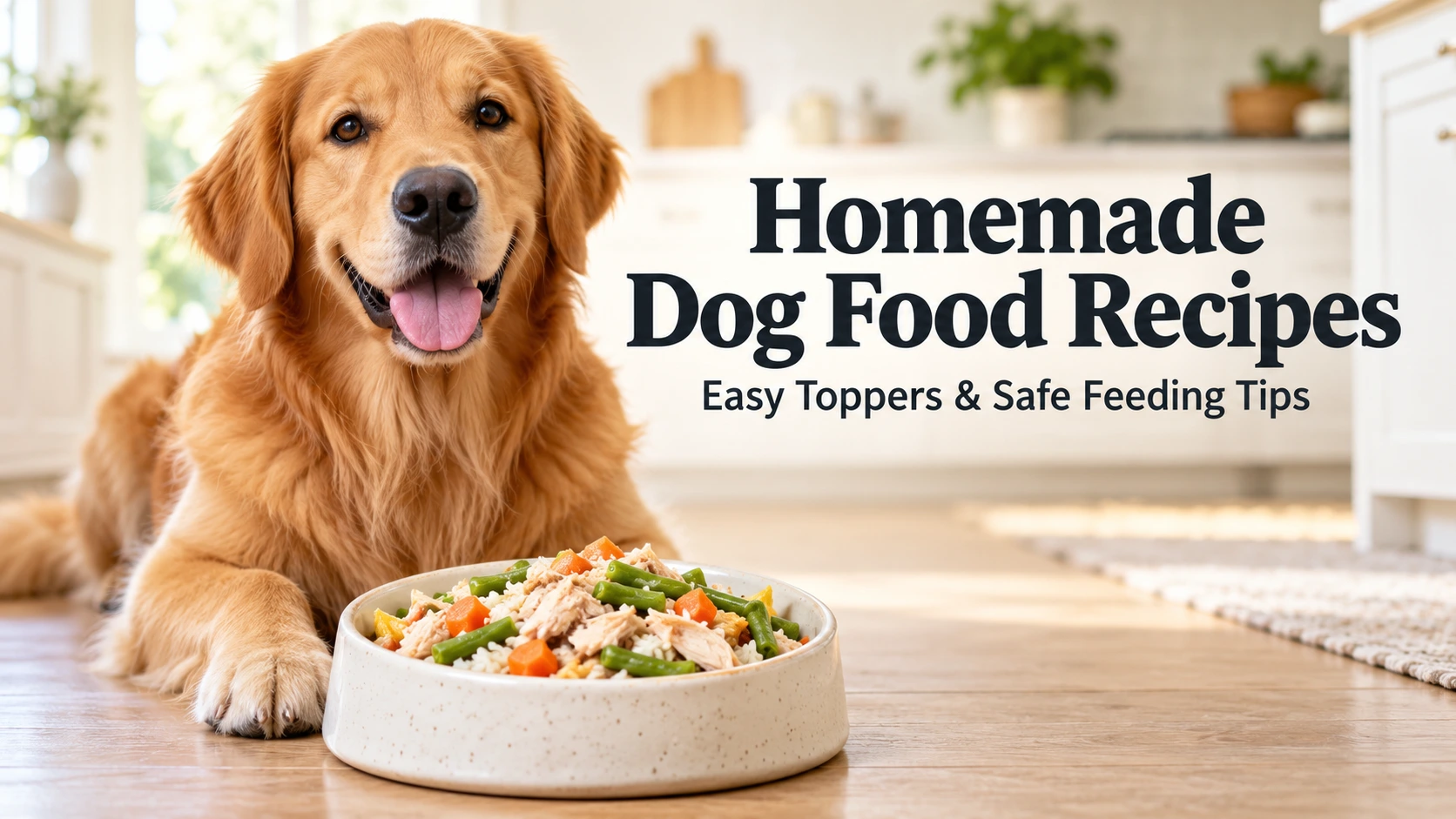
Cooking for your dog can be a simple way to add variety to their bowl. Plain chicken, rice and cooked vegetables can make an appealing addition when you want to offer something homemade. However fresh ingredients do not automatically provide complete nutrition. The homemade dog food recipes below are occasional toppers for healthy adult dogs not balanced meals or replacements for their regular food. For a fully home-cooked diet start with a recipe formulated for your dog by a board-certified veterinary nutritionist.
Is Homemade Dog Food Good For Dogs?
Homemade food can fit into your dog’s feeding routine when the ingredients, portions, and nutritional balance are appropriate. Preparing food yourself also gives you control over what goes into the bowl.
However, homemade does not automatically mean healthier. In a 2013 UC Davis study of 200 home-prepared dog food recipes, 95% fell short in at least one essential nutrient. This finding applies to the recipes studied rather than every homemade diet. Before you start cooking, decide whether you want to offer an occasional topper or prepare your dog’s entire diet. Those goals require different approaches.
3 Easy Homemade Dog Food Recipes
These small-batch recipes are intended for healthy adult dogs that already tolerate the ingredients. They have not been nutritionally formulated or individually approved by a veterinarian. All quantities are measured after cooking. Use plain ingredients without salt, butter, sauces or seasoning. Each recipe makes a batch not a single serving.
1. Chicken, Rice And Carrot Topper
This simple combination uses three everyday ingredients and is easy to portion.
- ½ cup cooked, skinless, boneless chicken breast
- ½ cup cooked white rice
- ¼ cup cooked carrots
- A little plain water, if needed
- Cook the chicken thoroughly and check carefully for bones.
- Cook the rice separately in plain water.
- Steam or boil the carrots until soft.
- Finely shred the chicken and mash or chop the carrots.
- Mix everything together, adding a little water if needed.
- Let the feeding portion cool before serving.
Offer a measured amount over your dog’s regular complete food. This recipe is not a complete diet or a treatment for vomiting or diarrhea.
2. Turkey, Sweet Potato And Green Bean Topper
This option combines plain turkey with soft vegetables.
- ½ cup cooked lean ground turkey
- ½ cup cooked, peeled sweet potato
- ¼ cup cooked, chopped green beans
- A little plain water, if needed
- Cook unseasoned ground turkey thoroughly in a nonstick pan, using water as needed.
- Drain excess liquid and fat.
- Boil or steam the sweet potato until soft, then mash it.
- Cook the green beans and cut them into small pieces.
- Combine the ingredients and cool the feeding portion.
Choose plain fresh or frozen vegetables without sauces. Draining fat does not establish that a recipe meets the needs of a dog prescribed a low-fat diet.
3. Lean Beef, Rice And Zucchini Topper
For dogs that tolerate beef, this offers another straightforward combination.
- ½ cup cooked lean ground beef
- ½ cup cooked rice
- ¼ cup cooked, finely chopped zucchini
- A little plain water, if needed
- Cook the beef thoroughly without seasoning.
- Drain excess fat.
- Cook the rice in plain water.
- Steam or boil the zucchini until tender.
- Mix the ingredients and cool the portion before serving.
Introduce one new recipe at a time. Stop the new food and speak with your veterinarian if digestive problems develop.
How To Make Homemade Dog Food Nutritionally Complete
A complete homemade diet requires carefully calculated ingredients and supplements. A general combination of meat, rice and vegetables cannot establish that every nutritional requirement has been met. AAHA recommends consulting a board-certified veterinary nutritionist for home-prepared diets and following the resulting recipe exactly. A formulated recipe should specify:
- Exact ingredients and their weights.
- Whether ingredients are weighed raw or cooked.
- The required cooking method.
- Specific supplements and their doses.
- The daily amount to feed.
Do not guess supplement amounts or substitute a human multivitamin. If you are searching for vet-approved homemade dog food recipes, check who formulated the recipe and which dogs it is intended for. Reviewing ingredients for safety is different from formulating a complete daily diet.
How Much Homemade Food Should You Feed?
- Treats and additional foods should generally provide no more than 10% of a dog’s daily calories. This includes homemade toppers, training treats, chews and table scraps combined.
- For example, if your veterinarian sets your dog’s daily intake at 500 calories, the combined allowance for extras would be no more than 50 calories.
- That is a calorie allowance, not a recommendation for a particular number of spoonfuls. Calories vary with the meat, fat content, proportions and cooking method.
- Ask your veterinarian to help calculate portions. Include toppers within the daily calorie budget rather than simply adding them on top of existing meals.
Ingredients To Avoid
Keep your dog’s food separate from seasoned family meals. Some common cooking ingredients can be dangerous for pets.
Avoid:
- Onions, garlic, chives, and their powders.
- Grapes and raisins.
- Chocolate and caffeine.
- Xylitol, found in some sugar-free products.
- Alcohol and raw yeast dough.
- Macadamia nuts.
- Cooked bones.
Check labels on broths, sauces, and seasoning mixes. A plain-looking broth may still contain onion or garlic. If your dog eats a potentially toxic ingredient, contact a veterinarian promptly.
Homemade Food For Dogs With Special Needs
A recipe needs to suit the individual dog. Small and large dogs require different portions, while age, health and activity also affect feeding decisions. Puppies need a diet formulated for growth. The topper recipes above should not replace puppy food.
For dogs with suspected allergies, recurring digestive problems, diabetes, kidney disease or pancreatitis, discuss dietary changes with your veterinarian first. A general recipe cannot be assumed suitable simply because it uses a particular meat or contains few ingredients. Ask before adding toppers to a therapeutic diet too. Follow the prescribed feeding plan and any restrictions.
Cooking And Storage Tips
Careful preparation matters even when food is intended for pets. Cook meat thoroughly. USDA minimum internal temperatures are 165°F for poultry, including ground turkey and 160°F for ground beef. Use a food thermometer.
- Keep Preparation Areas Clean. Wash hands, utensils and surfaces after handling raw meat. Keep raw juices away from cooked ingredients.
- Refrigerate Promptly. Divide food into shallow containers and refrigerate within two hours, or within one hour when temperatures exceed 90°F.
- Use Refrigerated Batches Within Three To Four Days. Freeze portions you will not use in that period and thaw them in the refrigerator.
- Cool Reheated Portions Before Feeding. Reheat leftovers to 165°F, stir thoroughly and let them cool to a comfortable temperature.
Raw meat is not necessary for home cooking. The FDA warns that raw pet food can expose pets and people to harmful bacteria.
Common Homemade Dog Food Mistakes
Several mistakes can make home feeding harder to manage:
- Replacing complete food with an unformulated recipe.
- Changing ingredients or omitting prescribed supplements.
- Serving unmeasured toppers and treats.
- Assuming one recipe suits every dog.
- Using seasoned family leftovers.
- Repeatedly changing food to address persistent symptoms without veterinary assessment.
Consider the full cost before committing to daily home cooking. Ingredients, supplements, professional formulation, preparation time and storage all contribute.
Final Thoughts
Start with a small batch if you want to offer an occasional homemade topper. Keep it plain, measure the portion, and count it alongside other treats. If you want to cook every meal, get a complete recipe formulated for your dog first. You will have exact ingredients, clear portions and a feeding plan you can follow confidently.