
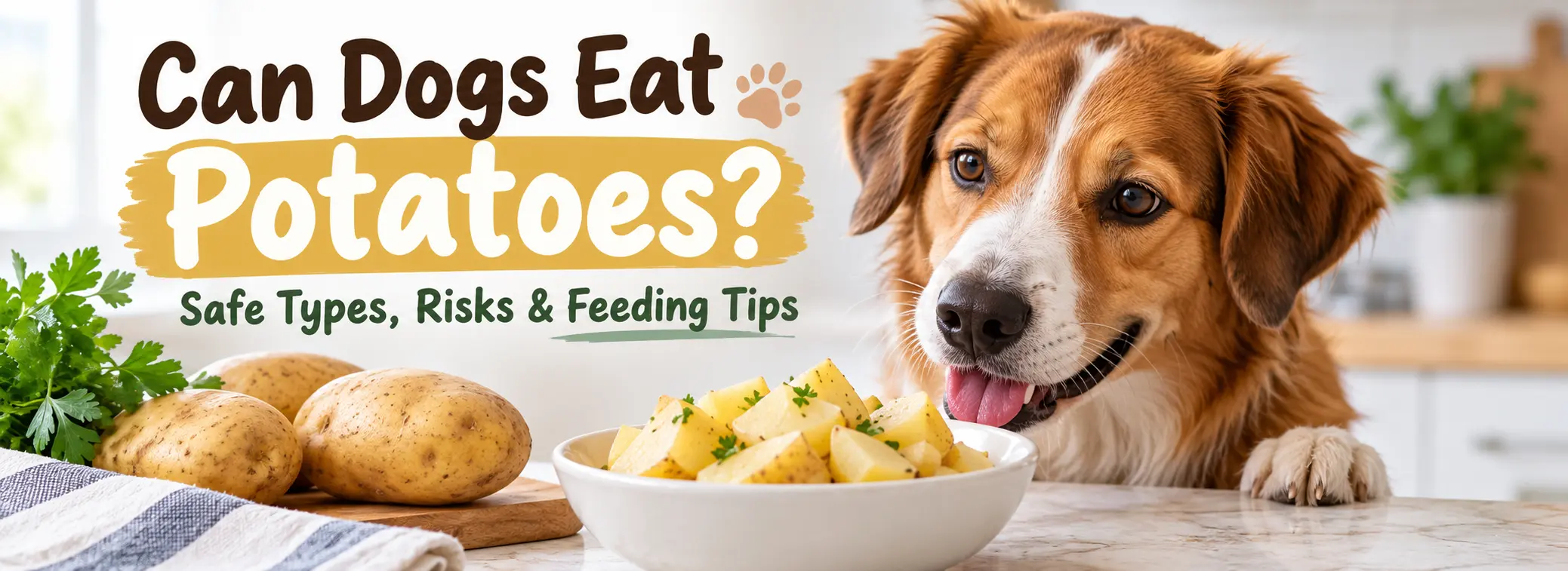
Yes dogs can eat potatoes as long as they are fully cooked, plain and served in small amounts. Boiled, baked, or mashed potatoes without butter, salt, garlic, or other seasonings are generally safe for healthy dogs. However, raw potatoes, green potatoes and potato sprouts should be avoided because they can contain potentially harmful substances, including solanine.
Potatoes may seem like a harmless treat, especially when your dog sits beside you hoping for a bite of dinner. But how you prepare them makes a big difference. Before sharing a potato with your furry friend, it’s important to understand which types are safe, what ingredients to avoid, and how much is appropriate.
Are Potatoes Good For Dogs?
Potatoes can provide some useful nutrients, but dogs don’t need extra potatoes if they’re already eating a complete and balanced diet. Plain, cooked potatoes contain:
- Carbohydrates: Provide energy for everyday activity.
- Potassium: Helps support normal muscle and nerve function.
- Vitamin C: Contributes to the body’s normal antioxidant defenses.
- Vitamin B6: Supports normal metabolism and nervous system function.
- Dietary Fiber: Can help support normal digestion.
These nutrients make potatoes a reasonable occasional snack, although they shouldn’t replace meat, balanced dog food, or other essential dietary components. Potatoes are also relatively rich in starch. Too much can add unnecessary calories or upset your dog’s stomach, particularly if they have a sensitive digestive system.
What Types Of Potatoes Can Dogs Eat?
Not every potato dish belongs in your dog’s food bowl. Some preparations are safe in moderation while others should be avoided.
| Potato Type | Safe for Dogs? | Important Details |
|---|---|---|
| Plain boiled potatoes | Yes | Fully cooked, unseasoned |
| Plain baked potatoes | Yes | No butter, salt, or toppings |
| Plain mashed potatoes | Yes | No milk, butter, garlic, or onion |
| Cooked sweet potatoes | Yes | Soft, plain, and portion-controlled |
| Raw potatoes | No | Difficult to digest; potential toxin exposure |
| Green or sprouted potatoes | No | Higher levels of toxic glycoalkaloids |
| Potato skins | With caution | Small amounts of non-green, cooked skin only |
| French fries | Avoid | High fat and salt content |
| Potato chips | Avoid | Often salty, oily, and seasoned |
| Potatoes with garlic or onion | No | Contain toxic ingredients |
Pro Tip: The safest everyday choice is a small amount of fully cooked, peeled potato without added ingredients.
Can Dogs Eat Cooked Potatoes?
Yes. Dogs can eat cooked potatoes, provided they’re soft, plain and free from potentially harmful seasonings.
Cooking makes potatoes easier for dogs to chew and digest. Boiling and baking are simple preparation methods that don’t require extra oil or fat. Allow cooked potatoes to cool before serving, and cut them into bite-sized pieces appropriate for your dog’s size.
Can Dogs Eat Boiled Potatoes?
Yes plain boiled potatoes are one of the simplest ways to share potatoes with your dog. Wash and peel the potato, boil it until soft, and allow it to cool. A small piece can then be offered as a treat or mixed into your dog’s regular food.
Pro Tip: Avoid adding salt, butter, sauces, or seasoning to the cooking water.
Can Dogs Eat Baked Potatoes?
Dogs can eat baked potatoes when they’re thoroughly cooked and served plain. The main concern is usually the toppings rather than the potato itself. Baked potatoes prepared for people often contain sour cream, cheese, bacon, garlic butter, or other high-fat ingredients. These additions can cause digestive upset, and some may be toxic. For your dog, set aside a small portion before adding toppings.
Can Dogs Eat Red, White or Russet Potatoes?
- Yes. Red, white, yellow, and russet potatoes can generally be offered under the same basic rules.
- The color or variety is less important than the potato’s condition and preparation. Choose fresh potatoes without green areas or sprouts, cook them thoroughly, and serve them plain.
- Discard potatoes that have turned green or sprouted rather than trying to make them suitable for your dog.
Can Dogs Eat Mashed Potatoes?
Yes, dogs can eat mashed potatoes if they’re made from plain, fully cooked potatoes. However, ordinary mashed potatoes from your dinner table may contain ingredients that aren’t suitable for dogs. Typical recipes include butter, milk, cream, salt, garlic, or onion powder. Excessive butter and cream may cause gastrointestinal problems and can contribute to pancreatitis risk in susceptible dogs. Garlic and onion are toxic to dogs.
If you want to make dog-friendly mashed potatoes, simply boil a peeled potato and mash it with a little plain water. You can offer a small spoonful as an occasional treat.
Can Dogs Eat Instant Mashed Potatoes?
- It’s better to avoid packaged instant mashed potatoes unless you’ve carefully checked the ingredients.
- Many instant varieties contain sodium, dairy ingredients, flavorings, or garlic and onion seasonings.
- Plain dehydrated potato without problematic additives isn’t automatically toxic, but freshly cooked potato is usually easier to prepare without unnecessary ingredients.
Can Dogs Eat Raw Potatoes?
No. Raw potatoes should not be intentionally fed to dogs. Raw potatoes contain glycoalkaloids, including solanine, which are naturally occurring compounds found in potatoes. Their concentrations can be particularly high in green areas and sprouts.

Raw potatoes are also harder to digest and may cause stomach discomfort. Possible symptoms after consuming problematic potatoes include vomiting, diarrhea, weakness, lethargy, and, in severe cases, neurological abnormalities.
What Happens If a Dog Eats a Raw Potato?
The risk depends on the potato’s condition, the amount eaten, and your dog’s size and health. If your dog accidentally eats raw potato:
- Remove any remaining potato from their reach.
- Check whether it was green, sprouted, or visibly damaged.
- Note the approximate quantity and time of ingestion.
- Contact your veterinarian or a pet poison-control service for advice, particularly if the potato was green or sprouted.
- Seek urgent veterinary care if your dog develops vomiting, marked weakness, tremors, or other concerning symptoms.
Do not induce vomiting or try home remedies unless a veterinarian or poison-control professional instructs you to do so.
Can Dogs Eat Potato Skins?
- Cooked potato skins aren’t automatically toxic, but they’re not the best part of a potato to feed your dog.
- Even properly cooked skins can be tougher to chew and digest, especially for small dogs.
- The bigger concern is green skin or potatoes with sprouts, which may contain elevated levels of solanine and related compounds.
- For a safer treat, remove the skin before cooking and serving. This reduces unnecessary digestive and choking risks.
Can Dogs Eat Sweet Potatoes?
Yes dogs can eat sweet potatoes when they’re fully cooked and served without added ingredients. Sweet potatoes are different plants from ordinary white potatoes. They’re often used in dog foods and treats because they contain dietary fiber and useful nutrients.
Orange-fleshed sweet potatoes provide beta-carotene, which the body can convert into vitamin A. They also contain carbohydrates and potassium. Boiled, baked, or steamed sweet potatoes can make a suitable occasional treat for many healthy dogs.
Can Dogs Eat Raw Sweet Potatoes?
Raw sweet potatoes aren’t recommended for dogs. Although they don’t present the same solanine concern as ordinary green potatoes, raw sweet potatoes can be difficult to chew and digest. Large pieces can also create a choking or intestinal obstruction risk. Cook them until soft before serving.
Can Dogs Eat Sweet Potato Skin?
- Removing sweet potato skin is generally the safer option.
- The skin isn’t inherently poisonous, but its fibrous texture may be difficult for some dogs to digest.
- Peel the sweet potato, cook it thoroughly and serve it mashed or in small pieces.
Are Sweet Potatoes Better Than Regular Potatoes For Dogs?
Both can be suitable occasional treats, but they have different nutritional profiles.
| Nutritional Feature | Regular Potatoes | Sweet Potatoes |
|---|---|---|
| Main carbohydrate | Starch | Starch |
| Fiber | Provides some fiber | Provides fiber |
| Beta-carotene | Generally low in white varieties | Higher in orange varieties |
| Potassium | Present | Present |
| Best preparation | Cooked, peeled, plain | Cooked, peeled, plain |
| Appropriate frequency | Occasional | Occasional |
Sweet potatoes offer additional beta-carotene, but this doesn’t mean every dog should eat them instead of regular potatoes. The best choice depends on the dog’s nutritional needs, tolerance, and any underlying health conditions.
How Much Potato Can a Dog Eat?
- Potatoes should be a small treat rather than a regular replacement for balanced dog food.
- A useful general rule is that all treats and extras combined should account for no more than 10% of your dog’s daily calories. The remaining calories should come from a nutritionally complete diet.
- There’s no single serving size that works for every dog. A Chihuahua and a Golden Retriever have very different calorie needs.
- For a first taste, offer a small bite or two of plain cooked potato. Watch for digestive changes before considering another serving.
- Keep portions especially small for puppies, overweight dogs and dogs with underlying medical conditions.
Can Dogs Eat Potatoes Every Day?
A little cooked potato isn’t necessarily harmful, but feeding it every day isn’t usually necessary. If potatoes become a large part of your dog’s meals, they can displace important nutrients from a properly balanced diet.
Repeatedly adding starchy extras may also lead to unwanted weight gain. For most healthy dogs, potatoes are better treated as an occasional addition rather than a daily dietary staple.
Full Guide Can Dogs Have Blueberries?
Can Dogs With Diabetes or Kidney Disease Eat Potatoes?
Dogs with medical conditions may need stricter dietary management.
Dogs With Diabetes
Potatoes contain substantial amounts of starch, which can affect blood glucose levels. For dogs with diabetes, even plain cooked potatoes should only be offered if their veterinarian approves.
Dogs With Kidney Disease
Potatoes contain potassium, and some dogs with kidney disease require careful potassium management. Whether potatoes fit into a kidney-friendly diet depends on blood test results, the disease stage, and the prescribed feeding plan. Don’t add potatoes to a veterinary kidney diet without professional guidance.
Dogs With Pancreatitis
Plain boiled potatoes are naturally low in fat, but that doesn’t automatically mean they’re appropriate for every dog with pancreatitis. Mashed potatoes containing butter, cream or fatty toppings are particularly unsuitable. Dogs recovering from pancreatitis should follow their veterinarian’s feeding instructions rather than receive new table foods.
Can Potatoes Cause Heart Problems In Dogs?
You may have heard concerns about potatoes in grain-free dog food and their possible relationship to canine dilated cardiomyopathy (DCM), a disease affecting the heart muscle. The U.S. Food and Drug Administration has investigated reports of DCM involving certain diets containing high proportions of ingredients such as peas, lentils and sometimes potatoes.
However the FDA has not established that potatoes themselves cause DCM. The potential dietary relationship is complex, and many reported diets contained large amounts of legumes.
This investigation concerns long-term dietary formulations, not evidence that an occasional small serving of cooked potato causes heart disease. If potatoes or other starches make up a large part of your dog’s regular diet, discuss the overall food formulation with your veterinarian.
Full Guide Can Dogs Eat Strawberries?
How To Prepare Potatoes Safely For Dogs
Preparing a dog-friendly potato doesn’t require any special ingredients.
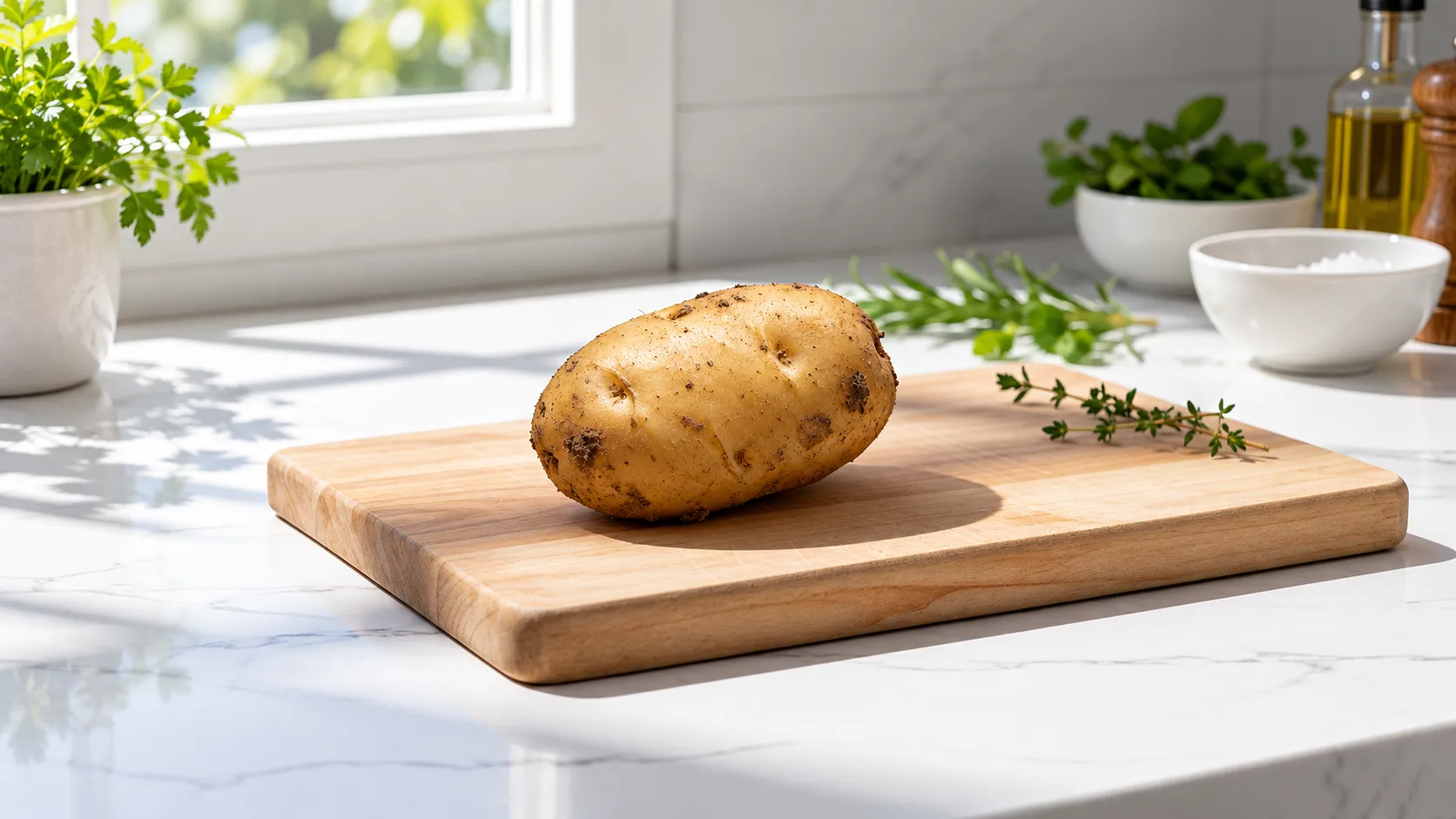
Step 1: Choose a Fresh potato
Pick a firm potato without green areas, sprouts, or signs of spoilage.
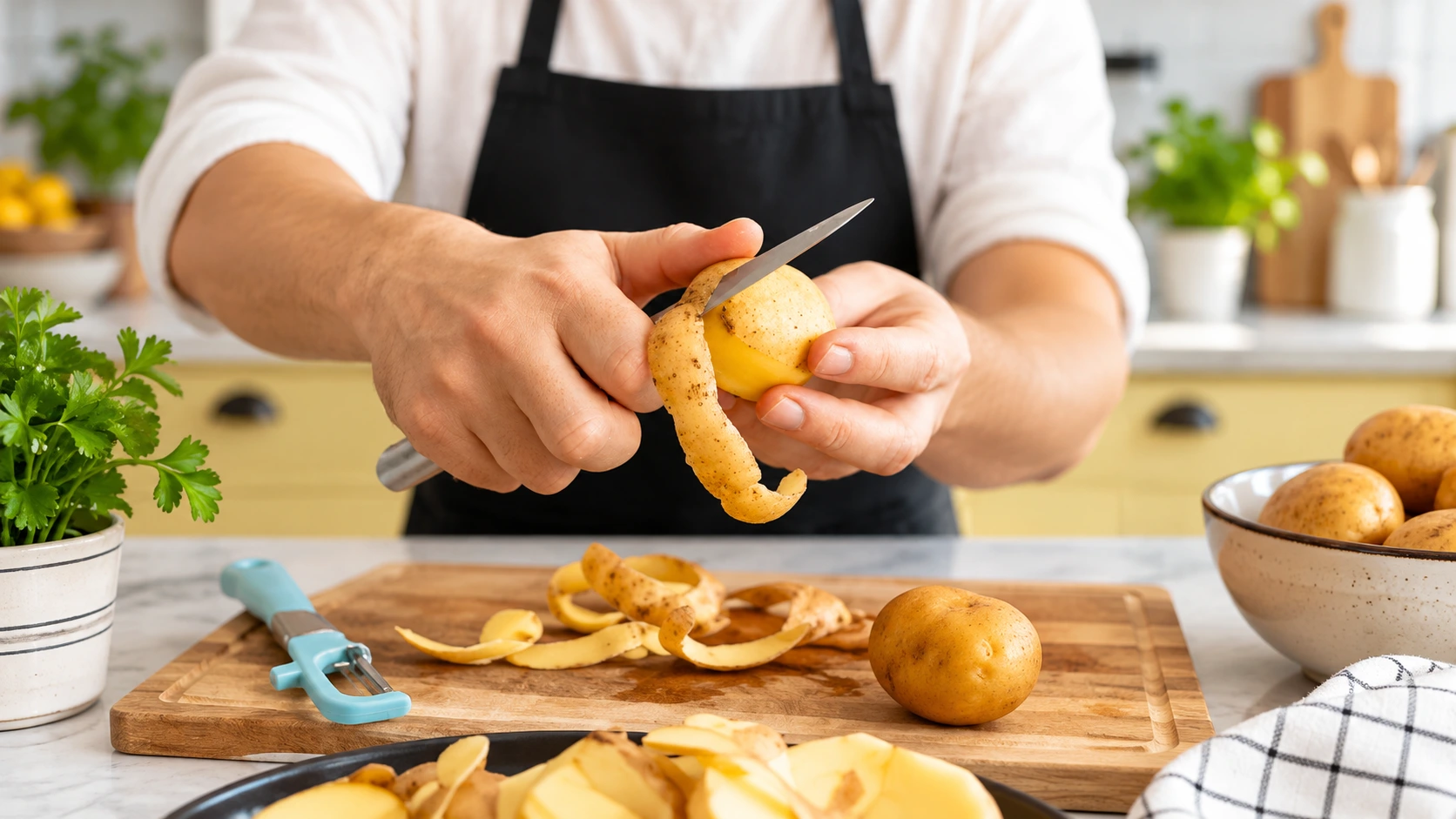
Step 2: Wash And peel
Rinse the potato thoroughly and remove its skin to make it easier for your dog to digest.
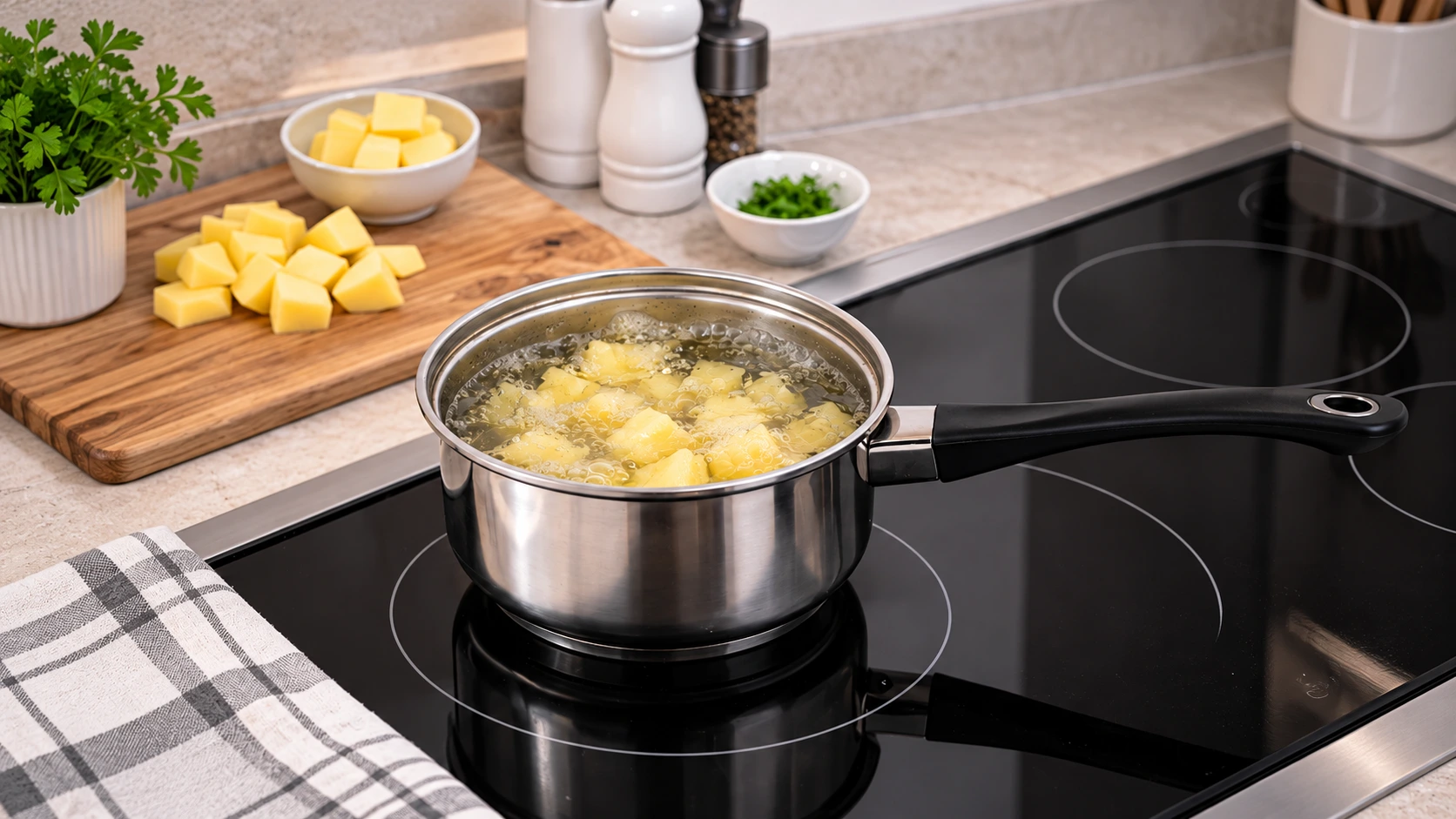
Step 3: Cook Until Soft
Boil, steam, or bake the potato thoroughly without salt, oil, or seasoning.
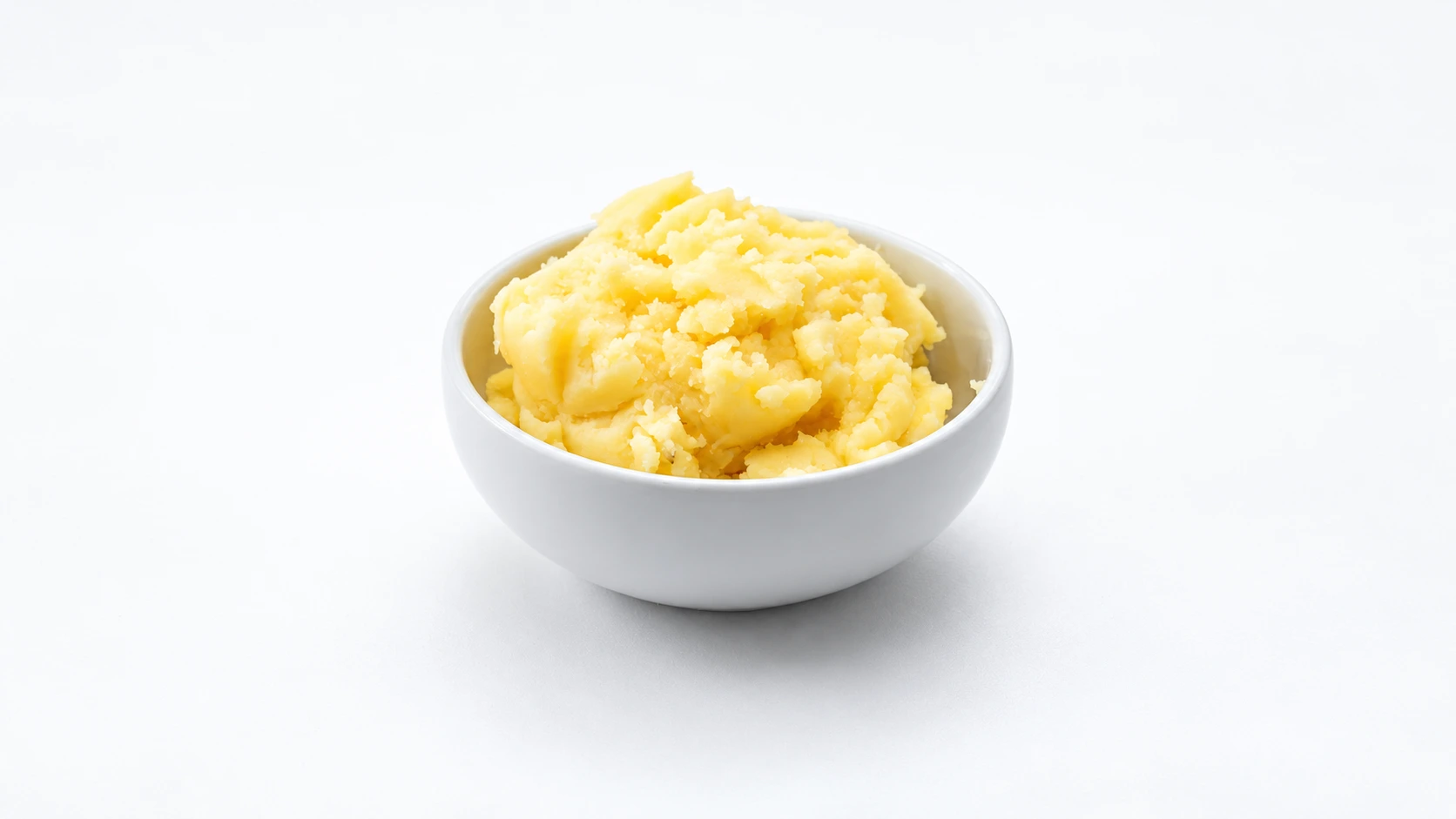
Step 4: Cool And serve
Mash or cut the potato into bite-sized pieces and offer a small portion alongside your dog’s normal food. Never serve potatoes hot enough to burn your dog’s mouth.
Potato Dishes Dogs Should Avoid
Some popular potato foods are inappropriate for dogs because they contain excess fat, salt or potentially toxic ingredients.
Can Dogs Eat French Fries?
French fries aren’t recommended for dogs. Their high fat and salt content can cause digestive problems and adds unnecessary calories.
Can Dogs Eat Potato Chips?
Potato chips are best avoided. They’re often heavily salted and may contain onion, garlic, or other seasonings.
Can Dogs Eat Potatoes With Butter?
A small amount of butter isn’t automatically poisonous, but fatty foods can cause stomach upset and may contribute to pancreatitis in vulnerable dogs. Plain potatoes are a safer alternative.
Can Dogs Eat Potatoes With Gravy?
It’s best to avoid gravy unless the ingredients have been checked and a veterinarian confirms it’s suitable. Many gravies contain onion, garlic, large amounts of salt or excess fat.
What If My Dog Accidentally Eats Potatoes?
Not every accidental potato snack is an emergency. A dog eating a small piece of plain, cooked potato is generally less concerning than a dog swallowing green potato pieces or garlic-seasoned mashed potatoes. The most important details are:
- What type of potato was eaten?
- Was it raw, green, sprouted, or cooked?
- Did it contain garlic, onion or other seasonings?
- How much did the dog eat?
- Is the dog showing symptoms?
If your dog ate green or sprouted potatoes, a potentially toxic seasoning, or an unusually large amount, contact your veterinarian or animal poison control promptly. In the United States, you can contact the ASPCA Animal Poison Control Center at (888) 426-4435. Consultation fees may apply.
Seek immediate veterinary care for severe weakness, repeated vomiting, tremors, collapse, or difficulty breathing.
Final Thoughts:
Potatoes can be a safe occasional treat when they’re fully cooked, plain, and served in small portions. Boiled or baked potatoes are simple choices, while raw, green, fried, or heavily seasoned potatoes are best kept off your dog’s menu. Your dog’s everyday nutrition should still come from a complete and balanced diet. When in doubt, check with your veterinarian before introducing something new.
Medical Disclaimer: This article provides general pet nutrition information and is not a substitute for professional veterinary advice. Consult your veterinarian about your dog’s individual dietary needs, particularly if they have a medical condition.