

A GSP dog short for German Shorthaired Pointer, is an intelligent, affectionate and highly energetic hunting breed known for its athletic ability, loyalty and distinctive spotted coat. Originally developed in Germany, these versatile dogs are now popular with active American families, hunters, runners and outdoor enthusiasts.
But there’s something worth knowing before bringing one home German Shorthaired Pointers need much more than a quick morning walk and a comfortable place to sleep. A GSP can be a wonderful family companion, but its strong hunting instincts, high exercise requirements, and need for daily mental stimulation aren’t suitable for every household.
This guide covers everything prospective owners need to know about the GSP dog breed, including temperament, size, lifespan, puppy prices, training, health concerns, and whether German Shorthaired Pointers can live safely with children, cats, and other pets.
GSP Dog Breed Overview
| Breed characteristic | Details |
|---|---|
| Full breed name | German Shorthaired Pointer |
| Common abbreviation | GSP |
| Country of origin | Germany |
| Breed group | Sporting |
| Male height | 23–25 inches |
| Female height | 21–23 inches |
| Male weight | 55–70 pounds |
| Female weight | 45–60 pounds |
| Average lifespan | 10–12 years |
| Coat type | Short, smooth, dense |
| Common colors | Liver, liver and white, black and white, roan |
| Temperament | Friendly, intelligent, energetic, affectionate |
| Exercise needs | Very high |
| Grooming needs | Low to moderate |
| Trainability | High with consistent training |
| Best suited for | Active owners and families |
These measurements and physical characteristics reflect the typical breed standards of the German Shorthaired Pointer (GSP).
What Is a GSP Dog?
- The German Shorthaired Pointer is a medium-to-large sporting dog originally bred to locate, point, and retrieve game.
- The breed developed in Germany during the 19th century when hunters wanted a versatile companion that could work across different landscapes and perform several hunting tasks.
- Unlike breeds developed for one specific job, GSP dogs were designed to track scents, locate birds, retrieve game, and work both on land and in water.
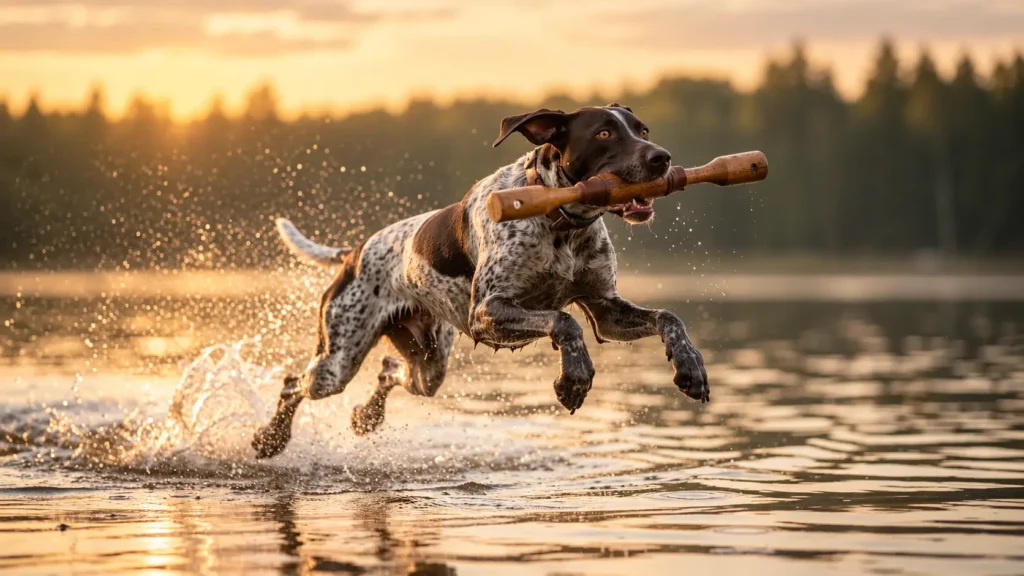
- Today, they still excel at hunting but also participate in agility, dock diving, obedience competitions, hiking, and other physically demanding activities.
- Their versatility is one reason they’re attractive to experienced dog owners.
However, hunting ability also brings a strong prey drive. A GSP might suddenly become intensely interested in a squirrel, rabbit or bird, even during an otherwise calm walk.
GSP Dog Temperament and Personality
German Shorthaired Pointers are often described as affectionate dogs with almost endless enthusiasm. Their personalities combine friendliness, intelligence, curiosity, and a strong desire to stay involved in family activities.
Are GSP Dogs Friendly?
- Most well-socialized GSP dogs are outgoing and affectionate with their families.
- They often enjoy meeting people, exploring unfamiliar environments, and playing with other dogs.
- However, friendliness depends on genetics, upbringing, early socialization, and individual personality.
- A GSP that receives little exercise or training may become overly excited, jump on visitors or struggle to settle indoors.
Are German Shorthaired Pointers Intelligent?
Yes. GSP dogs are intelligent working dogs that generally learn new commands quickly. Their intelligence makes them well suited for obedience training, scent work, and problem-solving activities. However an intelligent dog isn’t automatically an easy dog. If a German Shorthaired Pointer becomes bored, it may find its own entertainment by chewing household objects, digging or repeatedly demanding attention.
Full Guide Bernese Mountain Dog Size, Lifespan, Temperament & Care
Are GSP Dogs Aggressive?
German Shorthaired Pointers are not generally characterized as an inherently aggressive breed. However, individual dogs can develop fearful, reactive, or aggressive behavior depending on their experiences, health, and environment. Chasing wildlife is also different from aggression toward people. Early socialization, appropriate exercise, reward-based training and responsible supervision can help build stable behavior.
If a GSP shows persistent growling, biting or dangerous reactivity, consult a veterinarian and a qualified behavior professional.
GSP Dog Size, Weight And Appearance
German Shorthaired Pointers are muscular, athletic dogs with a lean body, deep chest, long legs, and naturally floppy ears. Their physical structure allows them to run, swim, and remain active for extended periods.
How Big Does a GSP Dog Get?
Adult males typically reach 23–25 inches at the shoulder and weigh 55–70 pounds. Females are slightly smaller, generally reaching 21–23 inches and weighing 45–60 pounds.
| Growth stage | What to expect |
|---|---|
| 8–12 weeks | Rapid growth and early social development |
| 3–6 months | Noticeable increases in height and coordination |
| 6–12 months | Adolescent growth and increasing athletic ability |
| 12–18 months | Many approach adult height and continue filling out |
| 18–24 months | Some continue developing muscle and physical maturity |
Growth rates vary, so these stages are general rather than strict milestones. A veterinarian can help assess whether your puppy is growing appropriately.
GSP Dog Colors and Coat Patterns
The German Shorthaired Pointer has a short coat that may appear in several attractive colors and patterns. Common variations include:
- Solid liver (reddish brown)
- Liver and white
- Liver roan
- Black and white
- Black roan
- Patched or ticked coats
Black GSP dogs are also recognized under the AKC’s listed breed color options. Color alone doesn’t determine a dog’s intelligence, temperament, health, or hunting ability.
Are GSP Dogs Good Family Dogs?
- Yes, German Shorthaired Pointers can make excellent family dogs when their exercise and training needs are met.
- They frequently develop close relationships with household members and enjoy participating in family activities.
- Families who enjoy hiking, camping, outdoor play, and regular exercise may find this breed especially rewarding.
However, their energy can be overwhelming in less active households.
Are GSP Dogs Good With Kids?
- GSP dogs can be affectionate and playful with children, particularly when raised with appropriate boundaries.
- However, their size and excitement can lead to accidental knocks or rough play.
- Young children should always be supervised around dogs, regardless of breed.
- Teach children to respect the dog’s resting space, avoid pulling ears or tails, and never disturb a dog while eating.
Can a GSP Dog Live With Cats?
- A German Shorthaired Pointer may learn to live peacefully with cats, but its strong prey drive makes introductions particularly important.
- Some dogs raised with cats develop comfortable relationships. Others remain highly interested in chasing them.
- Owners discussing very different experiences, including successful mixed-pet homes and situations where separation remains necessary.
- For safer introductions, begin with separate spaces, scent exchanges, barriers, and controlled meetings with the dog on a leash.
- Give the cat elevated escape routes and dog-free areas. Reward calm behavior and never allow chasing to become a game.
- Do not leave the animals together unsupervised until their behavior has been carefully assessed. Some GSPs may never be safe around cats without separation.
How Much Exercise Does a GSP Dog Need?
Exercise is one of the biggest responsibilities of owning a German Shorthaired Pointer. These dogs were bred to spend long hours working outdoors, so their activity requirements are considerably higher than those of many companion breeds.
Daily Exercise Requirements
- A healthy adult GSP typically needs substantial daily physical activity, often including two dedicated exercise sessions.
- Depending on the individual, this may involve extended walks, running, swimming, safe off-leash play, and training.
- There isn’t one universally correct number of minutes for every GSP.
- Age, physical condition, weather and fitness level all matter.
A useful routine could include:
| Time | Activity |
|---|---|
| Morning | Brisk walk and scent exploration |
| Midday | Short obedience session or puzzle feeder |
| Afternoon | Fetch, swimming, hiking, or supervised play |
| Evening | Relaxed walk and settling exercises |
Pro Tip: Adjust exercise intensity to the dog’s health and conditioning. Puppies need age-appropriate activity rather than forced long-distance running.
Best Activities For German Shorthaired Pointers
GSP dogs often enjoy running, hiking, swimming, scent games, retrieving, agility, and obedience training. Activities that combine physical exercise with problem-solving are especially useful. For example, hiding a favorite toy and asking your dog to find it engages both its nose and brain.
Why Mental Stimulation Matters
A dog can be physically exhausted but still struggle to relax. GSP owners repeatedly mention the importance of teaching calm behavior instead of constantly increasing the amount of exercise. That makes settling exercises, puzzle feeders, and short training sessions valuable additions to an active routine.
GSP Dog Training How To Raise a Well-Behaved Pointer
German Shorthaired Pointers are generally eager to learn, but their enthusiasm and hunting instincts can make training challenging. Early training should prioritize the behaviors needed for everyday safety and family life.
Start With Basic Commands
- Teach essential commands such as sit, stay, come, leave it, drop it, and place.
- Use treats, toys, praise, and other rewards to reinforce successful behavior.
- Keep sessions short and engaging, especially for puppies.
Focus on Recall Training
- Recall is particularly important because GSP dogs may become distracted by moving wildlife.
- Begin training in a quiet indoor environment, progress to a fenced area, and then practice with a long line in more distracting locations.
- Never assume that good recall at home means your dog is safe off-leash near roads or wildlife.
Teach Your GSP To Relax
- High-energy dogs also need to learn how to rest.
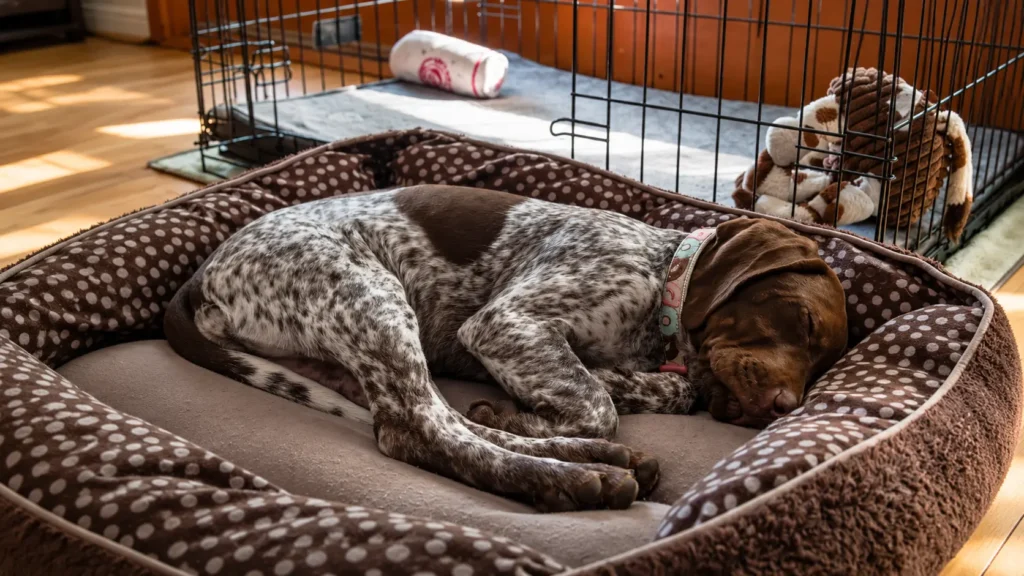
- Reward your dog for lying calmly on a mat or bed. Gradually increase the time spent settling without constant entertainment.
This helps develop an indoor routine where exercise and rest both have a place.
Avoid These Common Training Mistakes
- Allowing chasing behavior to become a habit
- Using harsh punishment instead of teaching alternatives
- Expecting puppies to concentrate for too long
- Skipping early socialization
- Providing exercise without mental enrichment
- Assuming the dog will naturally become calm with age
The AKC particularly emphasizes early obedience training and socialization, noting that adolescence can be challenging for this breed.
GSP Dog Lifespan And Common Health Problems
German Shorthaired Pointers generally live between 10 and 12 years, although individual dogs may live longer or shorter lives. Nutrition, genetics, preventive veterinary care, exercise and overall health can influence longevity.
Hip Dysplasia
Hip dysplasia occurs when the hip joint develops abnormally, potentially causing discomfort, stiffness, or reduced mobility. Symptoms may include difficulty standing, reluctance to jump, and changes in walking or running. Responsible breeders should provide appropriate hip screening information for breeding dogs.
Gastric Dilatation-Volvulus (Bloat)
- Bloat, particularly gastric dilatation-volvulus (GDV), is a serious emergency that can affect deep-chested breeds such as GSPs.
- Warning signs may include unsuccessful attempts to vomit, abdominal swelling, restlessness, weakness, and excessive drooling.
- Suspected GDV requires immediate emergency veterinary treatment. Do not wait for symptoms to resolve.
- Ask your veterinarian about individual risk factors and whether preventive gastropexy is appropriate.
Cane Corso Size, Temperament, Lifespan & Complete Guide
Eye Conditions
German Shorthaired Pointers can develop inherited eye problems, including progressive retinal atrophy and cone degeneration. Responsible breeding programs use recommended eye examinations and relevant DNA testing to identify potential risks.
Heart Conditions
Some German Shorthaired Pointers develop cardiac conditions that may affect their long-term health. Veterinary checkups and appropriate screening of breeding dogs can help identify certain problems. According to the German Shorthaired Pointer recommended breeding evaluations include hips, elbows, eyes, cardiac health and cone degeneration testing.
Best Dog Food For GSP Dogs
- German Shorthaired Pointers need balanced nutrition that supports their activity level, body condition, and life stage.
- A growing GSP puppy has different nutritional requirements from a highly active adult or senior dog.
- Choose a complete and balanced dog food formulated for the appropriate life stage.
What Should You Feed a GSP Dog?
Look for a diet that provides adequate protein, essential fats, vitamins, minerals, and energy. Consider the following when selecting food:
- Age and growth stage
- Current weight and body condition
- Daily activity level
- Food sensitivities or diagnosed medical conditions
- Veterinary dietary recommendations
An active hunting dog may require more calories than a less active household companion, even when both dogs weigh the same.
How Often Should You Feed a GSP?
- Young puppies generally require more frequent meals.
- As they grow, feeding frequency can gradually decrease according to veterinary guidance.
- Many healthy adult GSP dogs do well with two measured meals daily.
- Avoid vigorous activity around mealtimes and discuss GDV prevention with your veterinarian.
Can GSP Dogs Eat Human Food?
- Certain plain, dog-safe foods can be offered occasionally in small portions.
- However, onions, grapes, raisins, chocolate, xylitol, and other toxic ingredients must be avoided.
- Human food should not replace a nutritionally balanced canine diet.
Can Dogs Eat Potatoes? Safe & Unsafe Types Explained
GSP Dog Grooming and Shedding
German Shorthaired Pointers have relatively straightforward grooming needs, making coat maintenance easier than with many long-haired breeds. However, their short coats do shed.
Do GSP Dogs Shed a Lot?
Yes, German Shorthaired Pointers shed throughout the year, with shedding sometimes becoming more noticeable during seasonal changes. Their short hairs can stick to clothing, carpeting, and furniture.
Brushing with a grooming glove or soft-bristle brush every few days helps remove loose hair.
How Often Should You Bathe a GSP?
- Bathe your GSP when necessary, using a mild shampoo designed for dogs.
- Frequent unnecessary bathing can dry the skin.
- Check the ears regularly, especially after swimming, because moisture and debris may contribute to irritation.
- Keep nails trimmed and brush teeth using dog-safe dental products.
Are GSP Dogs Hypoallergenic?
- No. German Shorthaired Pointers are not considered hypoallergenic.
- Their coats shed, and allergens can be present in dander and saliva.
- People with dog allergies should spend time around individual dogs before deciding whether the breed is suitable.
GSP Dog Price How Much Does a German Shorthaired Pointer Cost?
The price of a GSP puppy in the United States depends on the breeder, location, pedigree, health testing, and demand. There is no single nationally fixed price. Breeders who perform recommended health screenings, provide early puppy care, and maintain responsible breeding practices may charge more than sellers who provide little documentation.
Factors That Influence GSP Puppy Prices
| Factor | How It Affects Cost |
|---|---|
| Breeder reputation | Established breeding programs may charge more |
| Health testing | Screening and veterinary care add to breeding costs |
| Pedigree | Proven working or competition lines may be priced differently |
| Location | Availability and regional demand influence prices |
| Puppy age | Age and training may affect the asking price |
| Registration | Documentation and breeding agreements can affect cost |
A low purchase price should not be the deciding factor.
Always request health documentation and understand the breeder’s contract before paying a deposit.
Where Can You Find GSP Puppies For Sale?
Prospective owners can begin with the German Shorthaired Pointer Club of America’s breeder listings. The club provides breeder contacts across the United States, but listings are not guarantees of breeder quality. You can also explore breed-specific rescue organizations through the GSPCA rescue resources.
GSP Dog Puppies What First-Time Owners Should Know
GSP puppies are curious, playful and quick learners. They’re also prone to chewing, exploring, and becoming overstimulated as they develop. Before bringing one home, prepare a safe resting area, suitable chew toys, food and water bowls, a comfortable harness, and secure outdoor access.
GSP Puppy Socialization
Introduce your puppy to different environments, sounds, people, and everyday experiences in a controlled, positive way. Socialization should emphasize safety and confidence rather than overwhelming the puppy with constant interactions. Discuss vaccination status and safe socialization opportunities with your veterinarian.
Great Pyrenees Dog Size, Temperament, Lifespan & Care Guide
How Much Exercise Does a GSP Puppy Need?
- Puppies require appropriate movement, play and exploration, but their developing joints shouldn’t be exposed to excessive repetitive impact.
- Avoid forcing a young puppy into prolonged runs or strenuous exercise.
- Short training sessions, gentle play, scent games and supervised exploration provide opportunities for physical and mental development.
When Do GSP Puppies Calm Down?
- German Shorthaired Pointers often remain energetic well into adulthood.
- The adolescent period, particularly between approximately six months and three years, can be challenging.
- Maturity and consistent training can improve behavior, but owners shouldn’t expect the breed’s natural energy to disappear.
GSP Hunting Dog Why Is This Breed So Popular With Hunters?
The German Shorthaired Pointer is recognized for its versatility in the field. Its strong sense of smell, athletic endurance, and ability to locate and retrieve game make it a capable hunting companion.
What Can GSP Dogs Hunt?
German Shorthaired Pointers have traditionally been used for hunting upland game birds and other small game. They are especially associated with activities such as pointing, retrieving, tracking, and locating game by scent.
What Does Pointing Mean?
Pointing is a hunting behavior in which a dog becomes still and directs its body toward the location of game. This allows a hunter to identify where a bird or other target may be hiding. A German Shorthaired Pointer may naturally demonstrate pointing behavior even without formal hunting training.
Can a GSP Be a Good Pet Without Hunting?
Absolutely a GSP doesn’t need to participate in hunting to enjoy a fulfilling life. However, owners must provide suitable alternatives that satisfy its need for activity and mental engagement. Scent work, retrieving games, agility and structured outdoor activities can provide positive outlets for natural instincts.
What Are The Negatives Of Owning a GSP Dog?
German Shorthaired Pointers have many appealing qualities, but prospective owners should understand the challenges.
| Potential challenge | What owners should expect |
|---|---|
| High energy | Needs substantial daily exercise |
| Strong prey drive | May chase wildlife or smaller animals |
| Separation difficulties | Some struggle with being left alone |
| Excitable behavior | May jump or become overly playful |
| Boredom-related destruction | Needs training and enrichment |
| Shedding | Short hairs can collect on furniture |
| Recall challenges | Wildlife can be highly distracting |
Can You Leave a GSP Dog Alone?
Some adult GSPs can learn to remain comfortable alone for reasonable periods, while others struggle with separation-related distress.
Leaving a young puppy alone or confined for an entire workday is generally inappropriate without suitable breaks, care, and supervision. Gradual independence training, predictable routines, and appropriate enrichment may help. Dogs showing severe distress when alone should be assessed by a veterinarian or qualified separation-anxiety professional.
Are German Shorthaired Pointers Good Apartment Dogs?
A GSP may adapt to apartment living if its substantial exercise, enrichment, and training needs are consistently met. However, apartment living can be especially challenging for owners who cannot provide sufficient daily activity. A house with a fenced yard can help, but a yard alone doesn’t replace exercise, companionship, or training.
Male vs Female GSP Dogs
Male German Shorthaired Pointers are generally larger than females. However, size is only one consideration when choosing a dog.
| Feature | Male GSP | Female GSP |
|---|---|---|
| Average weight | 55–70 lb | 45–60 lb |
| Average height | 23–25 in | 21–23 in |
| Energy needs | Very high | Very high |
| Trainability | Generally high | Generally high |
| Grooming | Similar | Similar |
| Family suitability | Depends on individual | Depends on individual |
There is no reliable rule that every male GSP is more affectionate or that every female is easier to train. Individual temperament, health, breeding, and socialization matter more than sex alone.
Is a GSP Dog Right For You?
A GSP may be a good fit if you: Enjoy an active lifestyle, have time for daily training and exercise, appreciate outdoor activities, and want an affectionate companion involved in family life. Consider another breed if you: Prefer a low-energy dog, are away from home for long periods without suitable care, cannot provide regular physical activity, or have small pets that cannot be safely separated from a high-prey-drive dog.
A GSP can be an outstanding companion for the right household. The important consideration isn’t whether the breed looks appealing, but whether your lifestyle can meet its needs throughout its life.
Final Thoughts
The GSP dog is a remarkable combination of intelligence, athleticism, loyalty and affection. German Shorthaired Pointers can be excellent family companions and versatile working dogs, but they require time, consistent training, and meaningful daily activity.
Before choosing a GSP puppy, think carefully about your schedule, living environment, experience and willingness to maintain an active routine. If you can provide the attention and exercise this breed needs, a German Shorthaired Pointer may become a deeply rewarding companion for many years.