
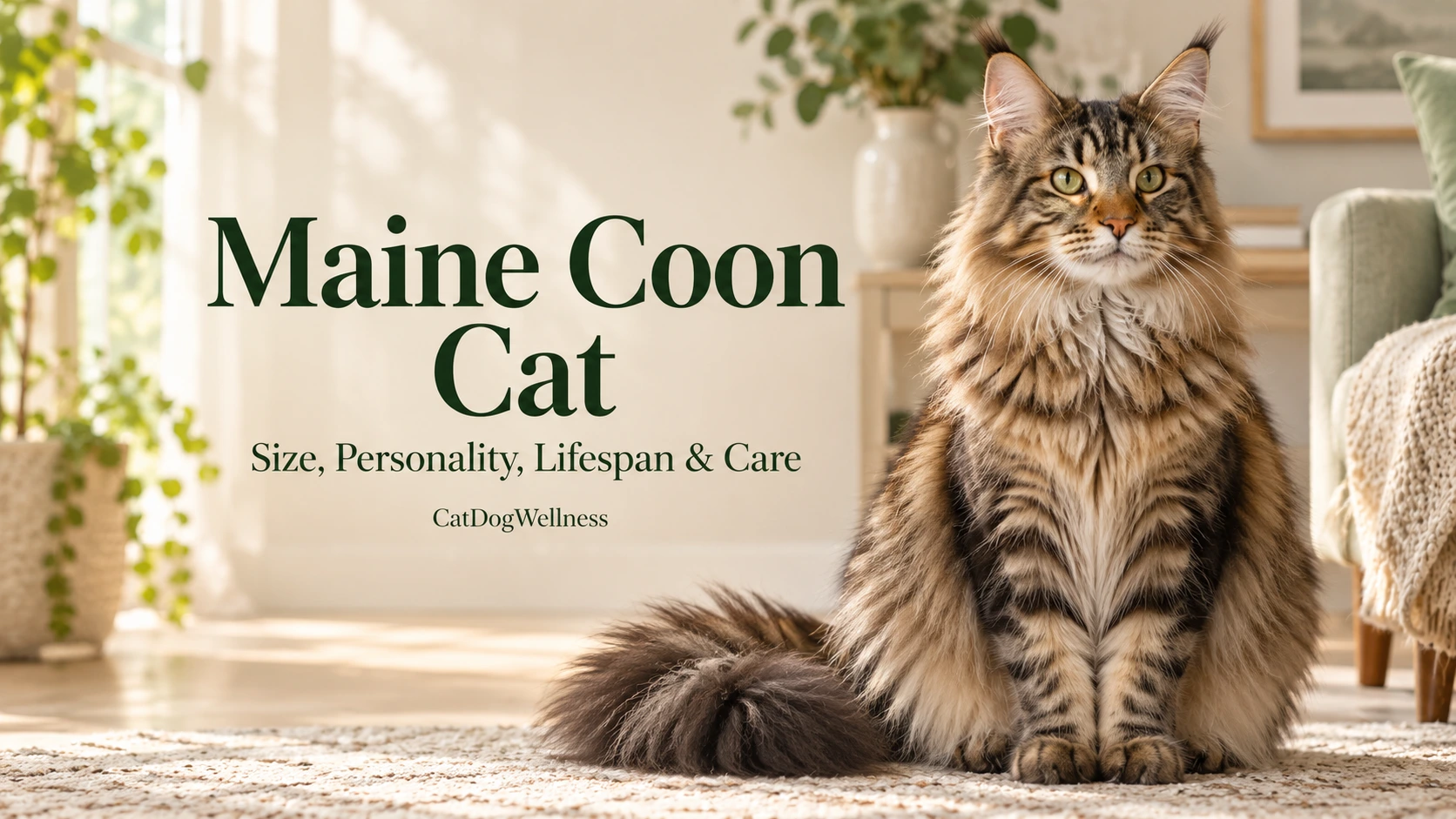
A Maine Coon can make an ordinary house cat look surprisingly small. With a shaggy coat, tufted ears and a tail that seems to go on forever, this breed certainly knows how to get your attention. But size is only part of its appeal. Maine Coons are often affectionate, playful companions who enjoy being involved in everyday life. Some follow their people from room to room, quietly supervising everything from laundry to dinner preparations. Before bringing one home, it helps to understand how big these cats can get what their coat needs and why choosing a responsible breeder matters.
What Is a Maine Coon Cat?
The Maine Coon is a large domestic cat breed associated with the northeastern United States, particularly Maine. Its sturdy frame and thick coat reflect its history as a working cat in a cold climate. Recognizable features include a long, rectangular body, broad chest, bushy tail and large, tufted paws. Despite that rugged appearance, the breed is widely known for its friendly temperament. Maine Coons became Maine’s official state cat in 1985. The International Cat Association
How Big Do Maine Coon Cats Get?
Maine Coons are among the largest domestic cat breeds. Their long bodies and full coats can make them look even bigger than their weight suggests. TICA’s breed introduction gives these approximate adult weight ranges:
| Maine Coon | Approximate Adult Weight |
| Male | 13–18 pounds |
| Female | 9–13 pounds |
Larger individuals exist and CFA notes that mature males can reach or exceed 20 pounds. Females are generally smaller. A healthy Maine Coon should have an appropriate body condition for its frame. Feeding extra food to create a “giant” cat can lead to excess weight rather than healthy growth.
When Is a Maine Coon Fully Grown?
Maine Coons mature slowly. Breed organizations describe full development as taking approximately three to four years, so a young adult may still have some filling out to do.
Maine Coon Personality Are They Good Family Cats?
Maine Coons tend to be sociable, curious and interested in their surroundings. Many enjoy staying close to their people without necessarily wanting to sit on a lap. They can be good companions for families with children and other pets, although every cat has its own comfort level. A friendly breed reputation does not replace gentle handling or gradual introductions.
Their intelligence is another appealing trait. Some learn fetch, respond to reward-based training, or enjoy exploring in a harness. Chirps and trills are also commonly associated with the breed, giving some Maine Coons a surprisingly small voice for such a large cat.
Maine Coon Colors And Patterns
Brown tabby may be the classic Maine Coon look, but it is far from the only option. These cats come in many colors and patterns including:
- Black
- White
- Blue, gray
- Red, orange
- Silver tabby
- Brown tabby
- Tortoiseshell
- Bicolor
- Smoke
TICA recognizes a wide variety of appearances, while excluding pointed coloration from its Maine Coon breed description. A black Maine Coon, orange Maine Coon and silver Maine Coon belong to the same breed. Coat color alone does not establish a cat’s ancestry or predict its personality.
How Long Do Maine Coon Cats Live?
While VCA and PDSA give 12–15 years. These ranges describe general expectations, rather than a promise for an individual cat. That variation is worth remembering when comparing breed guides. A kitten’s family health history and ongoing veterinary care deserve more attention than a single lifespan number.
How Much Does a Maine Coon Cat Cost?
There is no fixed Maine Coon price across the United States. The amount depends on the breeder, location, age, pedigree, health screening and what is included in the purchase. For one current example, LMCooNCat advertises most pet kittens at approximately 3,000–3,500. This is one breeder’s published range not a nationwide average.
Before comparing prices ask what each includes:
- Veterinary examination and vaccination records
- Registration and pedigree documentation
- Health screening results for the parents
- Microchipping
- Spay or neuter arrangements
- A written contract and return policy
The purchase price is only the beginning. Food, litter, grooming equipment, preventive care, a suitable carrier and unexpected veterinary treatment all belong in the budget.
Maine Coon Grooming And Shedding
- That beautiful coat needs regular attention. CFA recommends combing two or three times a week, while PDSA advises daily coat attention to reduce knots and tangles. The right routine depends on how easily your individual cat’s coat mats.
- Start gently and keep sessions comfortable. Check areas where fur rubs together, particularly behind the legs and around the underside.
- Maine Coons do shed and grooming becomes especially useful during seasonal coat changes. Regular combing helps remove loose fur before it collects around the house. Most do not need routine baths, according to CFA.
What Should a Maine Coon Eat?
- A Maine Coon needs complete and balanced cat food appropriate for its life stage. A breed-specific formula is an option, but it is not the only suitable choice.
- For US products, look for a nutritional adequacy statement indicating that the food meets the needs of your cat’s life stage. Portion sizes should account for age, body condition, activity and health. A veterinarian can help adjust the amount as your cat grows.
- Being a large breed does not mean a Maine Coon should have unlimited food. The aim is steady development and a healthy body condition.
Maine Coon Health Problems To Understand
Knowing the breed’s health risks helps you ask better questions before choosing a kitten.
- Hypertrophic Cardiomyopathy or HCM: This heart condition causes abnormal thickening of the heart muscle. An identified genetic variant is associated with increased risk in Maine Coons. Genetic testing provides useful information, but a negative result for that variant does not exclude every possible cause of HCM. Discuss appropriate heart screening with your veterinarian.
- Hip Dysplasia: Abnormal hip development can affect mobility and contribute to joint discomfort. Cornell notes that Maine Coons appear more susceptible and that obesity can increase pressure on the supporting structures of the hips.
- Spinal Muscular Atrophy: This inherited neurological condition can cause muscle weakness and an unsteady gait. Affected kittens often show signs at around three to four months of age.
Ask to see actual screening records and discuss the parents’ medical history. A general statement that kittens are healthy gives you less useful information.
Is a Maine Coon Right For Your Home?
- A Maine Coon may suit you if you enjoy an interactive cat and have time for grooming, play and companionship.
- Plan for equipment that accommodates an adult cat’s size. A strong climbing frame, stable scratching posts and room to play are particularly useful for this active breed.
- Think about the daily routine as carefully as the kitten photos. A coat you enjoy brushing, a manageable care budget and a personality that fits your household matter more than finding the biggest cat available.
Conclusion
A Maine Coon brings plenty of presence into a home, but the everyday moments are often what make the breed special a curious companion beside your desk, a soft chirp at dinner time or an enthusiastic helper during chores. If you can commit to regular grooming, suitable equipment and thoughtful health care, a Maine Coon may be a wonderful companion. Choose for health and temperament first and let the impressive size be a bonus.