
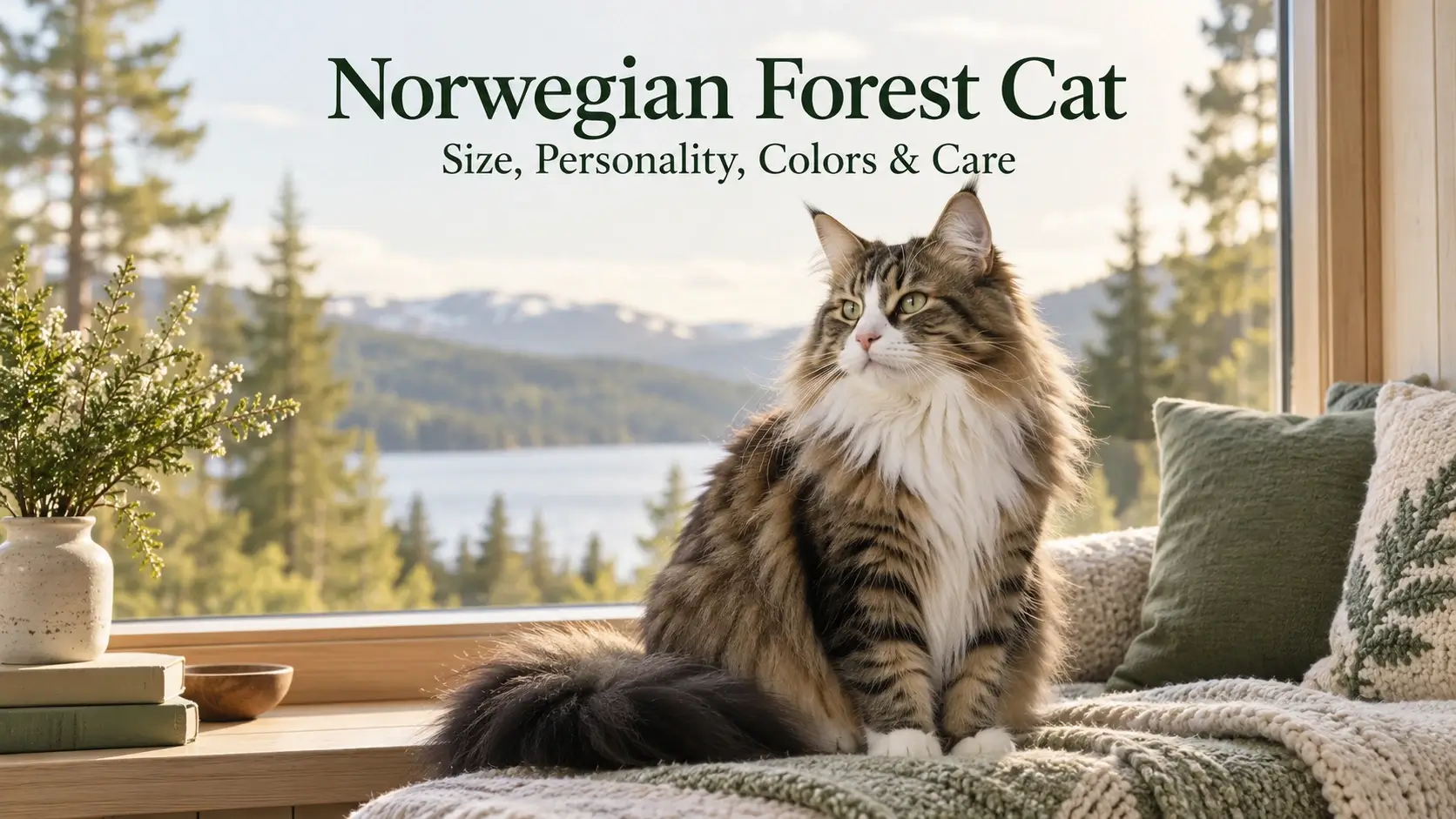
Norwegian Forest Cat Size, Personality, Colors, Price And Care
A Norwegian Forest Cat can make an ordinary windowsill look like a wildlife portrait. With a thick ruff, a sweeping tail and an alert expression, this breed certainly knows how to get noticed. But choosing one involves more than falling for that beautiful coat. Known affectionately as the Wegie, this Norwegian breed offers an appealing mix of companionship and independence. Here is what to know about its size, personality, colors, care needs and the questions to ask before bringing one home.
What Is a Norwegian Forest Cat?
The Norwegian Forest Cat is a natural domestic breed from Norway. Its sturdy build and protective double coat reflect its development in a cold environment. In Norway, it is called the Norsk Skogkatt, meaning Norwegian forest cat.
Stories connect these cats with Norse mythology and Viking ships, although the breed’s exact origins are uncertain. Its modern recognition is easier to document the Cat Fanciers’ Association granted championship status in 1993. The breed’s distinctive features include a triangular head, a straight nose profile, tufted paws and a long, bushy tail. A fluffy coat alone does not establish that a cat belongs to this breed.
Norwegian Forest Cat Size And Weight
How big does a Norwegian Forest Cat get? TICA lists adult females at approximately 8–12 pounds and adult males at 12–18 pounds. Individual cats vary and their substantial coats can make them appear larger than they really are.
| Feature | Typical guide |
| Adult female weight | 8–12 pounds |
| Adult male weight | 12–18 pounds |
| Full maturity | Can take up to five years |
| Overall build | Muscular, substantial, and athletic |
This is a slow-maturing breed. A one-year-old may still have considerable filling out to do. However, slow maturity does not mean a cat needs unlimited kitten food for five years ask your veterinarian when to adjust its diet. Searches for a giant Norwegian Forest Cat can create unrealistic expectations. Do not chase an unusually high weight. Ask your vet to assess body condition rather than using online photos as a growth target.
Norwegian Forest Cat Personality
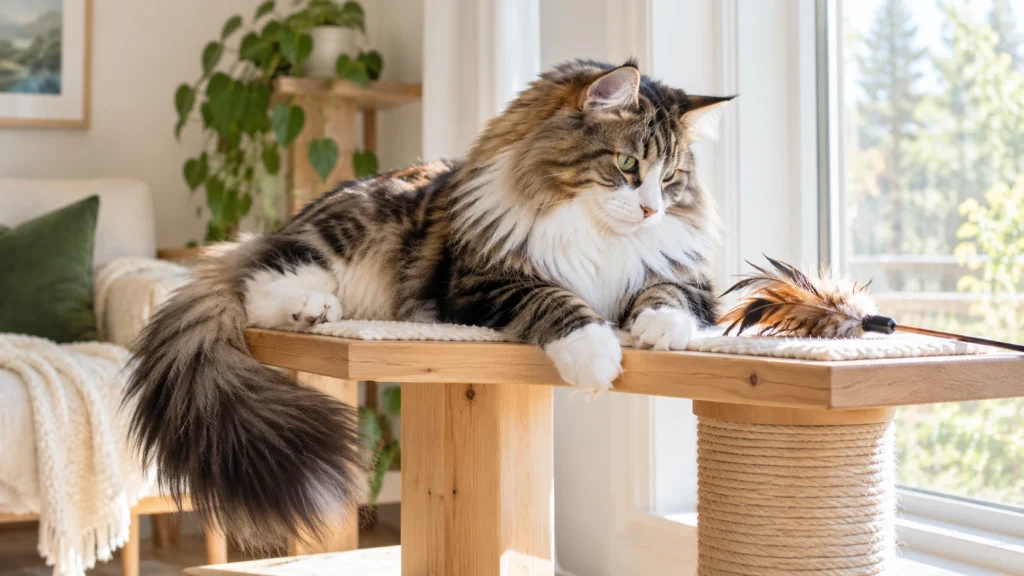
Norwegian Forest Cats generally enjoy family company while retaining an independent streak. Your cat may settle beside you, follow you between rooms or supervise dinner preparations without wanting to be carried around. They are intelligent, moderately active cats with a fondness for climbing. A sturdy cat tree gives them somewhere appropriate to perch and watch the household. Some communicate with soft chirps as well as meows.
They can get along with children, other cats, and dogs, but introductions and individual temperament matter. Give every pet space to retreat, and teach children to let the cat approach rather than picking it up repeatedly. A breed description is a useful starting point not a personality guarantee.
Norwegian Forest Cat Colors and Patterns
There is no single Norwegian Forest Cat color. The breed comes in numerous shades and patterns, including:
- Black: A solid dark coat.
- Blue: The gray shade often described as a gray or grey Norwegian Forest Cat.
- Red: Commonly called orange.
- White: A solid white coat.
- Tabby: Striped or swirled markings in several colors.
- Black And White: Sometimes described as tuxedo when the markings resemble formalwear.
- Tortoiseshell And Calico: Multicolor combinations calico includes white.
- Silver And Smoke: Additional coat variations.
Color names describe appearance, not separate breeds. Likewise, a tuxedo coat does not prove Norwegian Forest ancestry. Registration bodies have rules about accepted colors and patterns GCCF excludes certain shades and the Siamese pointed pattern.
Norwegian Forest Cat vs Maine Coon
Both breeds have impressive coats, tufted ears and substantial bodies, so it is easy to confuse them. Head shape and nose profile are more useful clues than fluffiness.
| Feature | Norwegian Forest Cat | Maine Coon |
| Origin | Norway | United States |
| Head | Triangular | Longer head with a square muzzle |
| Nose profile | Straight | Gently concave |
| Coat | Dense double coat | Shaggy, with uneven lengths |
These features help explain breed standards, but they cannot authenticate an unknown cat’s ancestry. A large domestic longhair may resemble either breed.
Norwegian Forest Cat Lifespan
GCCF gives a typical lifespan of 14–16 years. This is a general guide, not an expiry date individual health and circumstances vary. If you are choosing a kitten, think beyond the first few months. Plan for a long commitment that includes ongoing food, grooming, veterinary care and suitable arrangements when you travel.
Grooming And Shedding
That beautiful coat needs regular attention. Start with weekly brushing and combing, then increase the frequency during heavier seasonal shedding. Pay attention to areas where tangles develop, including behind the ears and around the legs. Keep sessions short and gentle so grooming becomes familiar. If the coat is tightly matted, arrange professional help rather than pulling at the skin or cutting close to it with scissors.
You should also prepare for loose hair on clothes and furniture. A Norwegian Forest Cat is a better choice for someone comfortable with regular coat care than someone hoping for a shed-free home.
Feeding Your Norwegian Forest Cat
Choose a complete and balanced cat food appropriate for your cat’s life stage. In the United States check the nutritional adequacy statement on the label rather than relying only on front-of-bag marketing.
Portions should suit the individual cat’s activity, body condition and health. A large frame does not automatically justify a constantly full bowl. Include treats in the daily food allowance, provide fresh water and discuss portion changes with your veterinarian. Supplements are generally unnecessary with a complete, balanced diet unless your vet identifies a need.
Health Questions To Ask Before Buying
Ask about documented health screening rather than accepting a general healthy parents claim. One important inherited condition in Norwegian Forest Cats is glycogen storage disease type IV, or GSD IV. UC Davis offers a DNA test for the breed’s known variant. The disease is recessive a carrier can appear healthy while passing the variant to offspring. Request the parents actual test results and ask a veterinarian to explain anything unclear. A clear result for one genetic condition does not guarantee lifelong health or replace routine veterinary examinations.
Full Guide Cat Health And Wellness.
Norwegian Forest Cat Price And Adoption
There is no universal Norwegian Forest Cat price. PetMD’s published breed guide reports that prices can start around $1,000, with show-quality pedigrees costing considerably more. Treat this as a reference point, not a verified current quote for every US breeder. When comparing Norwegian Forest kittens for sale, ask what the fee includes: veterinary records, registration documents, vaccinations and any spay or neuter agreement. Request a written contract and clear answers about health screening before paying a deposit. For adoption, contact shelters and breed-focused rescues about availability. If a listing says Norwegian Forest Cat mix, ask whether that description comes from known parentage or simply the cat’s appearance.
Is This Breed Right For You?
Before deciding consider whether you can provide regular grooming, daily interaction, sturdy climbing furniture and ongoing veterinary care. Meet the individual cat where possible and ask about its behavior in a home Practical pet care advice. The right match depends on the routine you can offer and the cat’s actual needs. A beautiful photograph is only the beginning of that decision.
Conclusion
The Norwegian Forest Cat has plenty of visual appeal, but living with one means making room for more than a magnificent tail. Choose with grooming time, household fit and long-term care in mind. Before committing, meet the cat, review its records and ask questions about anything the seller or rescue cannot clearly explain.