
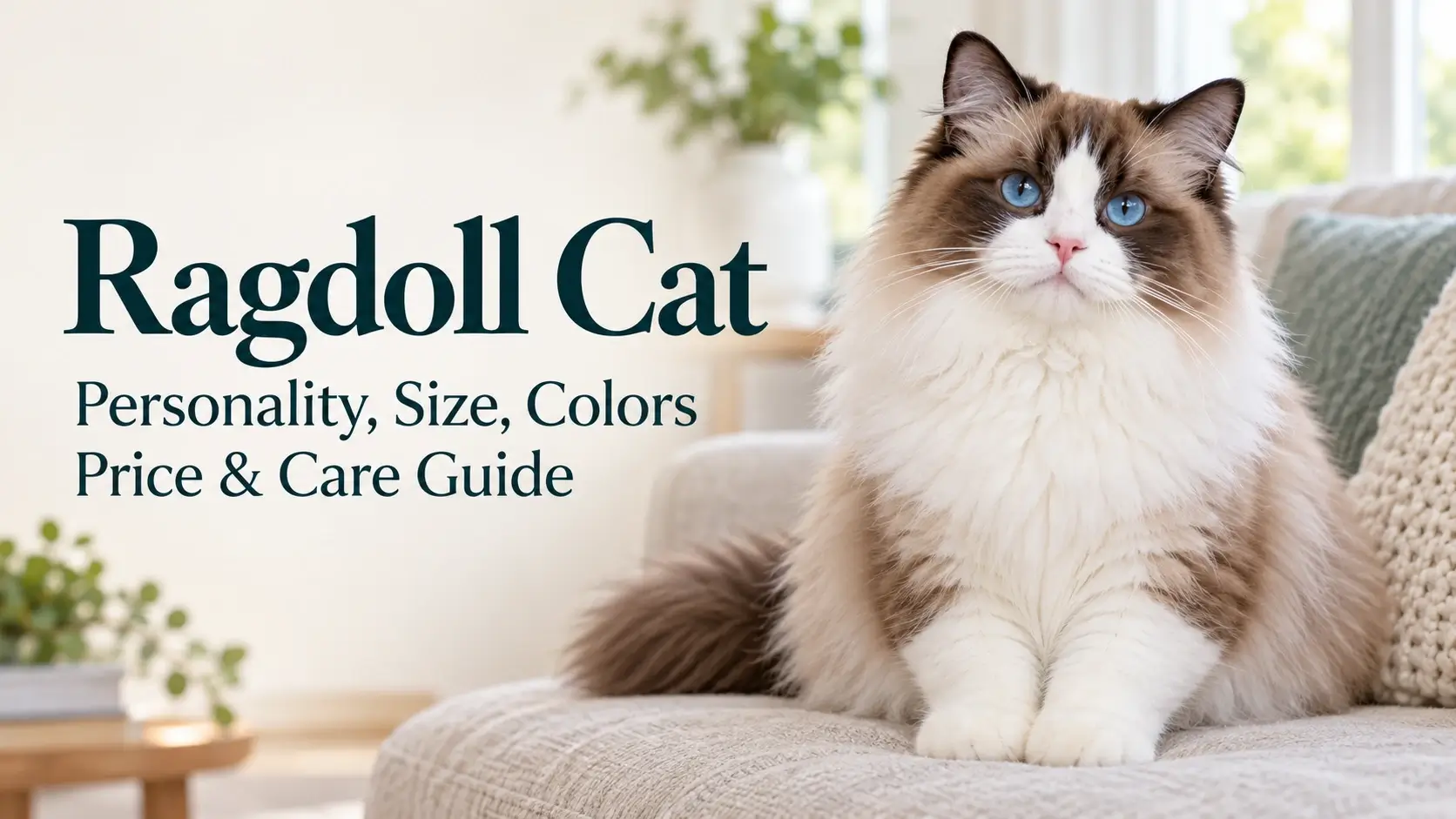
Ragdoll Cat Personality, Size, Colors, Price & Care
A Ragdoll cat can make an ordinary evening feel a little more comfortable. These big, blue-eyed cats are known for enjoying human company, whether that means settling nearby or following someone from room to room. Their soft coats attract attention, but their affectionate personalities are often what win people over. Before bringing one home, though, look beyond the fluffy photos. A Ragdoll needs grooming, play, companionship and a realistic budget for lifelong care. This guide covers the breed’s size, temperament, colors, lifespan and costs including a few misleading claims worth knowing about.
What Is a Ragdoll Cat?
The Ragdoll is a large semi-longhaired cat breed developed by Ann Baker in Riverside, California, during the 1960s. A white domestic longhaired cat named Josephine was central to its beginnings. The name comes from the tendency of some cats to relax when picked up. That does not mean every Ragdoll enjoys being carried or that these cats feel pain differently. Always support their bodies and respect their attempts to move away.
If you are still comparing options explore this guide to popular cat breeds and their personalities to see how size grooming needs and activity levels vary.
Ragdoll Cat Breed At a Glance
| Trait | What to Expect |
| Origin | California, United States |
| Adult size | Large; males are generally heavier than females |
| Typical female weight | Approximately 10–15 pounds |
| Typical male weight | Approximately 15–20 pounds |
| Coat | Semi-longhaired |
| Eyes | Blue under traditional Ragdoll breed standards |
| Personality | Often affectionate, relaxed, and people-oriented |
| Lifespan | Approximately 12–17 years; individual lifespans vary |
| Grooming | Regular combing, with extra attention when needed |
Weight ranges are a guide not a target every cat should reach.
Ragdoll Cat Personality Affectionate, With a Playful Side
Ragdolls have a reputation for being gentle companions. Many enjoy being involved in household activities, and some learn games such as fetch. They are generally less vocal and energetic than particularly demanding breeds although kittens can be lively.
They often do well with children and other pets, but breed tendencies do not guarantee compatibility. Introduce animals gradually, supervise children and give the cat somewhere quiet to retreat. It helps to meet the individual cat before deciding. A kitten advertised as a future perfect lap cat may grow into an adult who prefers sitting beside you. Both can be affectionate the difference is how they choose to show it.
For a more talkative breed to compare the Siamese cat personality and care guide
Ragdoll Cat Size How Big Do They Get?
A full-grown Ragdoll is a substantial cat. TICA lists adult females at approximately 10–15 pounds and males at 15–20 pounds. They also mature slowly and may take around four years to reach their full size.
When preparing your home think about that adult body rather than the tiny kitten in front of you. Check the dimensions and weight capacity of carriers, scratching posts and cat trees. Choose a litter box that gives the cat room to turn comfortably. Their coat can make body shape difficult to judge. Ask your veterinarian to assess body condition instead of assuming a heavier cat is simply a bigger Ragdoll.
Ragdoll Cat Colors And Patterns
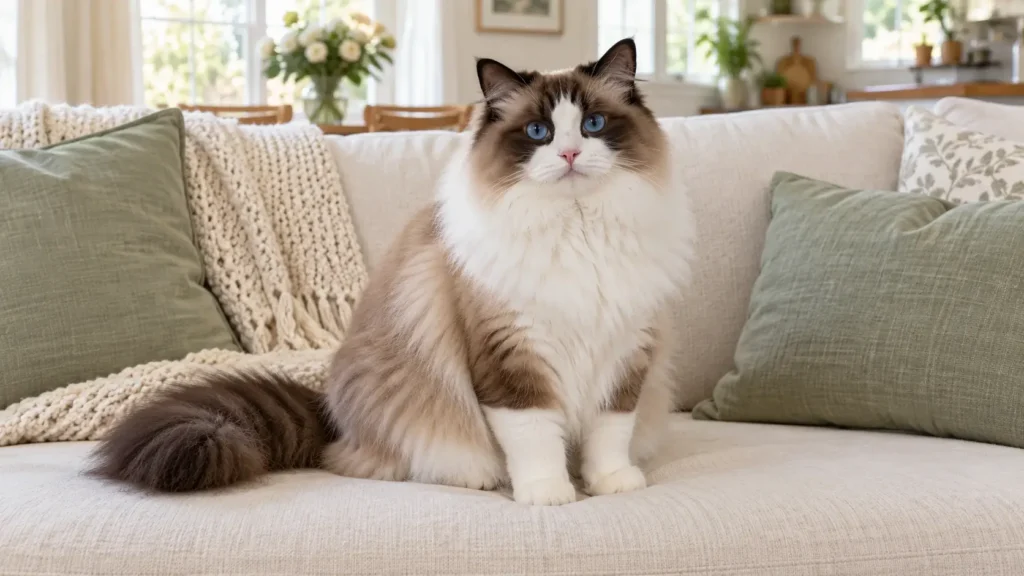
Color describes the shade of the markings pattern describes their arrangement. Under CFA standards, the six point colors are seal, blue, chocolate, lilac, red and cream. Point markings can also feature lynx striping or tortie coloring. Seal points are deep brown, while blue points appear gray. Chocolate, lilac, red and cream describe other point shades. These explain searches such as brown Ragdoll, grey Ragdoll or orange Ragdoll. Colorpoint, mitted and bicolor describe different arrangements of markings and white areas.
What About Black, Cinnamon or Tuxedo Ragdolls?
Those terms appear in listings and searches, but they do not automatically describe cats meeting traditional Ragdoll show standards. CFA specifies pointed coloring and blue eyes solid black, cinnamon and tuxedo are not standard color or pattern names. Ask which registry and breed classification the seller means. A color label or fluffy appearance alone cannot establish pedigree.
Ragdoll Cat Lifespan
The GCCF lists a Ragdoll cat lifespan of approximately 12–17 years. Some cats live longer, while illness or other circumstances can shorten that time. Think of ownership as a commitment through changing life stages. Before adopting, consider how you would handle travel, moving, daily care and unexpected veterinary expenses over the years ahead.
How Much Does a Ragdoll Cat Cost?
There is no single nationwide Ragdoll cat price. Age, location pedigree and the services included can all affect the amount a seller asks. For concrete U.S. examples checked in October 2026, Lapdolls lists kittens at $2,700, including spay or neuter and microchipping. PurrCozi Kitties publishes a 3,500–5,000 kitten pricing range for 2026. These are individual sellers’ advertised prices not a national average or an endorsement.
Compare the complete package before comparing prices. Ask what the fee includes, when registration documents are supplied and which veterinary records you will receive. The purchase price is only the beginning. Build a separate budget for food, litter, routine veterinary care, supplies, pet sitting and unexpected treatment. Get local quotes rather than relying on a generic monthly figure.
Ragdoll Cat Adoption And Choosing a Breeder
If you are searching for a Ragdoll cat for adoption, contact shelters and breed-focused rescues about their current availability. Ask whether a breed label is supported by records or based on appearance. A cat without documented ancestry can still be a wonderful companion. When considering a breeder use these questions to guide the conversation:
- Can I see relevant health-screening results for the parents?
- What veterinary care has the kitten received?
- Can I meet the kitten in person or through a live video call?
- What does the written agreement cover?
- What support is available if a problem develops?
- What happens if I can no longer care for the cat?
Treat these as checks to complete before paying a deposit. Attractive photos and registration claims should lead to further questions not replace them.
How To Care For a Ragdoll Cat
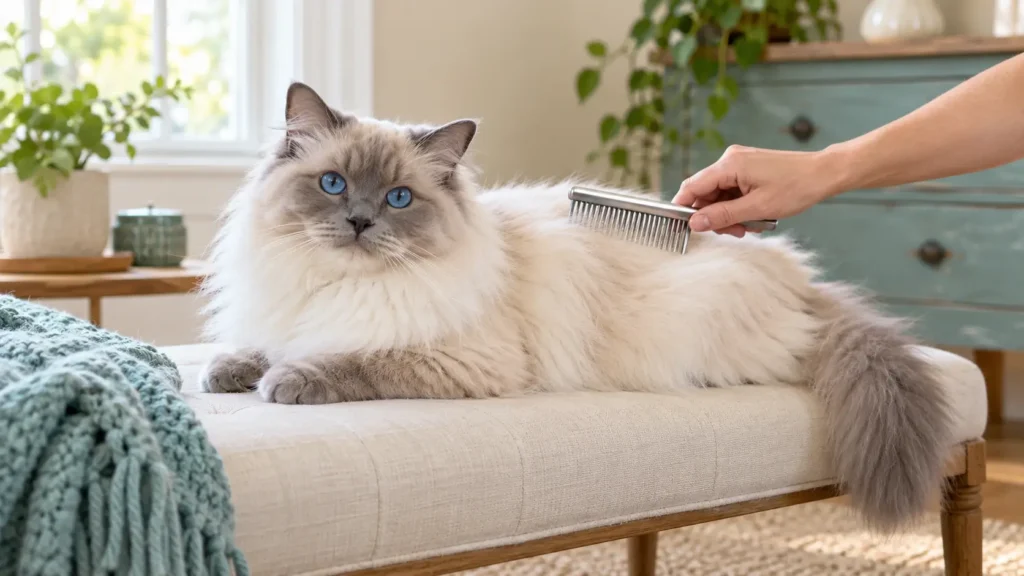
- Coat Care: Start with gentle combing once or twice a week, checking for tangles. Adjust the routine to the individual coat some cats need more attention.
- Food And Portions: Choose complete and balanced food appropriate to the cat’s life stage. Measure meals, include treats in the daily allowance and discuss portions with your veterinarian. A large frame is not a reason to keep increasing the food bowl.
- Daily Setup: Provide separate places to eat, rest, scratch and use the litter box. A quiet settling-in room can make the first days easier to manage. Introduce the rest of the home at the cat’s pace.
- Companionship: Look at your actual weekly schedule. Plan who will provide meals, litter cleaning, interaction and care when you are away. Buying more toys cannot replace having someone available to look after the cat.
Ragdoll Cat Health What Should Owners Know?
One inherited concern is hypertrophic cardiomyopathy (HCM), a disease involving thickening of the heart muscle. UC Davis offers testing for a Ragdoll-associated genetic variant. However a negative result for that variant does not rule out every cause of HCM. Ask for documented parental results and discuss appropriate heart assessment with a veterinarian. Do not interpret DNA tested as a promise that a kitten will never become ill. Ask what was tested whose results you are seeing and what those results actually mean.
Are Ragdoll Cats Hypoallergenic?
No cat breed is reliably allergen-free. Cat allergens are proteins associated with saliva, skin flakes, and other secretions; coat length does not determine whether a person will react. A soft coat or less visible shedding does not make a Ragdoll safe for someone with cat allergies. If allergies could affect your decision speak with an allergist before committing to a cat.
Inherited conditions are only one part of health care. For an everyday symptom owners may encounter, the guide to a cat’s runny nose, possible causes and warning signs explains when nasal discharge warrants veterinary attention.
Is a Ragdoll Cat Right For You?
A Ragdoll may suit someone who wants an affectionate companion and can make time for grooming and daily interaction. Before deciding, ask yourself whether you have room for adult-sized equipment a dependable care arrangement and a budget that extends beyond bringing the kitten home. Choose the individual cat whose temperament fits your household. A calm adult with a known personality may be easier to assess than a kitten chosen mainly for its markings.
Conclusion
The appeal of a Ragdoll goes beyond blue eyes and a beautiful coat. For the right household, this affectionate breed can become a much-loved part of everyday life. Take time to meet the cat, check health records, and plan for ongoing care. A good match matters far more than an unusual color or a perfect kitten photo.